

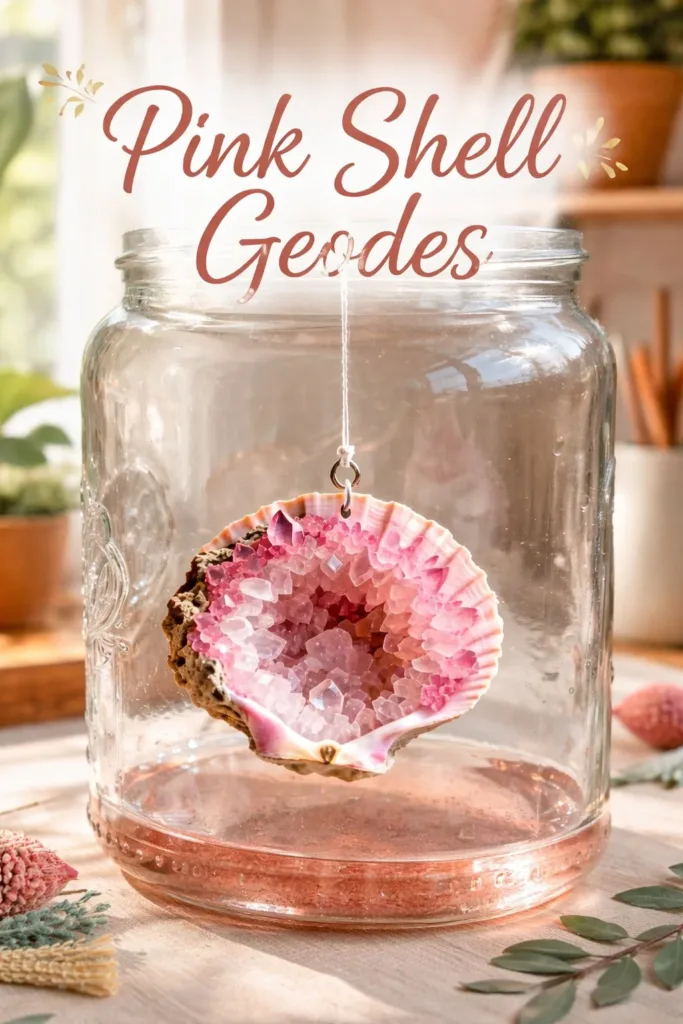
The sun slips low and soft through a curtained window as I hold a small shell cupped in my palm. It feels cool, slightly rough where the ridges meet the smooth inner curve. A gentle pink blush pools at the heart of the shell like a remembered sunset. As I press tiny crystals into the curve and pour a slow bead of resin, the studio shrinks to the sound of quiet breathing, the scent of warm honey soap, and the weight of being present with my hands.
I sometimes link projects together so their stories live beside one another; if you enjoy textures like this, you might like my piece on pink crystal eggshell geodes which explores similar tactile rhythms.
The Quiet Joy of Making Pink Shell Geodes
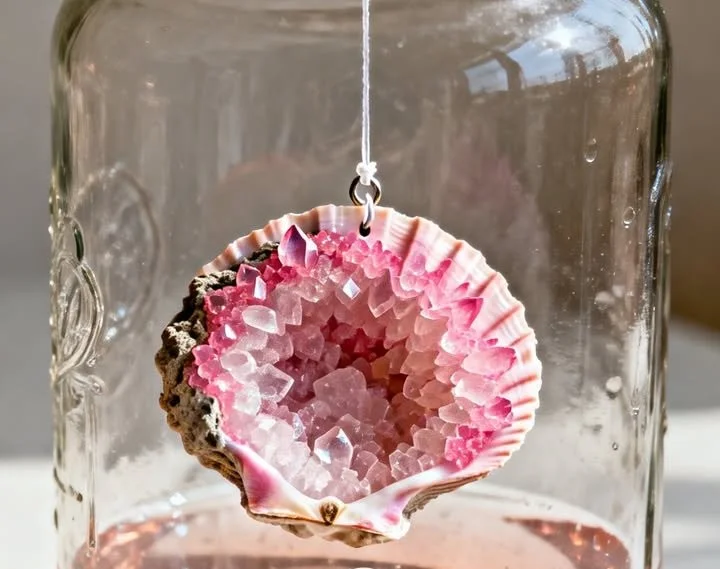
This craft asks you to slow down and notice. Pink Shell Geodes give you small surfaces to care for, soft tones to arrange, and tiny decisions to make that feel meaningful. The act of filling a scallop or conch half with tiny crystals or beads asks you to work with touch more than speed.
I make these when I want the kind of calm you carry in a pocket. The weight and coolness of shells, the whisper of crystals shifting, and the gradual clarity of resin setting form a gentle ritual. You will find a rhythm in sorting pinks by shade, in choosing where to nestle a larger crystal, and in breathing through the twenty to thirty minutes the resin thickens. This rhythm helps attention narrow to a pleasant, tactile point.
People tell me they use these pieces as small offerings on nightstands, as tabletop anchors for meditation, or as soft gifts. The process helps you notice texture, light, and how small things can feel rich. If you enjoy the seaside hush or the memory of a favorite beach day, making these quiet geodes brings that memory into a steady, tangible form.
The Flow of Making Pink Shell Geodes
Before you gather tools, picture the movement. You will sort, place, pour, and wait. You will tilt and smooth. You may press a fingertip to check warmth or steadiness. The work moves from active arranging to patient watching as resin cures.
I like to imagine an hour for one small geode. The first twenty minutes are deliberate and sensory. You will touch glassy crystals, hear tiny clicks as they settle, and see light open in the shells. The middle hour asks patience while the resin clears. The end offers a slow reveal when you lift the piece and see depth where there was only surface before.
If you like other shell or crystal projects, you might enjoy the textures explored on this page about pink eggshell crystal geodes, which uses a similar sense of layering and color play.
Materials You’ll Need
- Clean shell halves or small shallow shells, either natural or white-dyed, one per geode. (easy to find or salvage from craft stores)
- Clear casting resin and a slow hardener, small epoxy or UV resin for thin pours. (safety note: resin needs ventilation)
- Pink mica powder or powdered pigment, a few shades for depth. (substitute-friendly)
- Small crystal chips, clear quartz points, or glass beads in pinks and neutrals. (optional)
- Fine glitter or flake for a faint sparkle. (optional, use sparingly)
- Mixing cups, wooden stir sticks, disposable gloves, and a slow cure mat or silicone. (easy to find)
- Tweezers, toothpicks, or a fine metal pick for placement. (helpful for small pieces)
- A level surface or small blocks to prop shells so resin sits evenly. (practical)
- Isopropyl alcohol and lint-free cloths for cleaning. (safety and finish)
- A respirator rated for organic vapors if you use larger resin volumes. (safety; recommended)
I encourage you to gather these on a tray so you can move slowly and keep a calm pace. If you want a softer process, choose fewer crystal options and focus on one or two shades of pink.
Step-by-Step Directions
Prepare your space and shells. Wipe each shell on both sides with isopropyl alcohol. Work on a level board and arrange shells on a silicone mat to catch drips.
Sort your crystals and pigments by touch and tone. Spend a few quiet minutes choosing pieces that feel right together.
Mix a small batch of clear resin in a disposable cup. Stir slowly and steadily to reduce bubbles, keeping the motion gentle.
Tint a little resin with a soft pink mica for a wash. Test the color on a scrap piece until it reads like a pale blush.
Pour a thin base layer into the shell to seal pores. Watch the liquid settle; tilt slightly if it needs to spread.
Place larger crystal pieces with tweezers into the still-wet base. Press subtly to anchor them, listening for the soft click as they meet resin.
Scatter smaller chips and a whisper of glitter around focal stones. Use a toothpick to nudge chips into pleasing pockets and crevices.
Add a few drops of clear resin over crystals to create depth. Keep pours shallow to avoid overflow; the resin will self-level.
Remove any surface bubbles with a warm tool or gentle heat. Move slowly and patient, pulling bubbles to the surface without haste.
Let the piece cure undisturbed for the recommended time. Place it somewhere quiet and check after the resin feels firm to touch.
If you want a higher gloss, sand lightly and pour a thin topcoat. Sand in gentle circles and clean before applying another clear layer.
Wait a full cure period before handling frequently. Trust the resin; the final clarity often improves over seventy-two hours.
Each step invites you to notice small changes. The smell, the sheen, the way light hits a crystal. Keep a steady breath and allow the work to slow you down.
Bringing Pink Shell Geodes Into Your Space
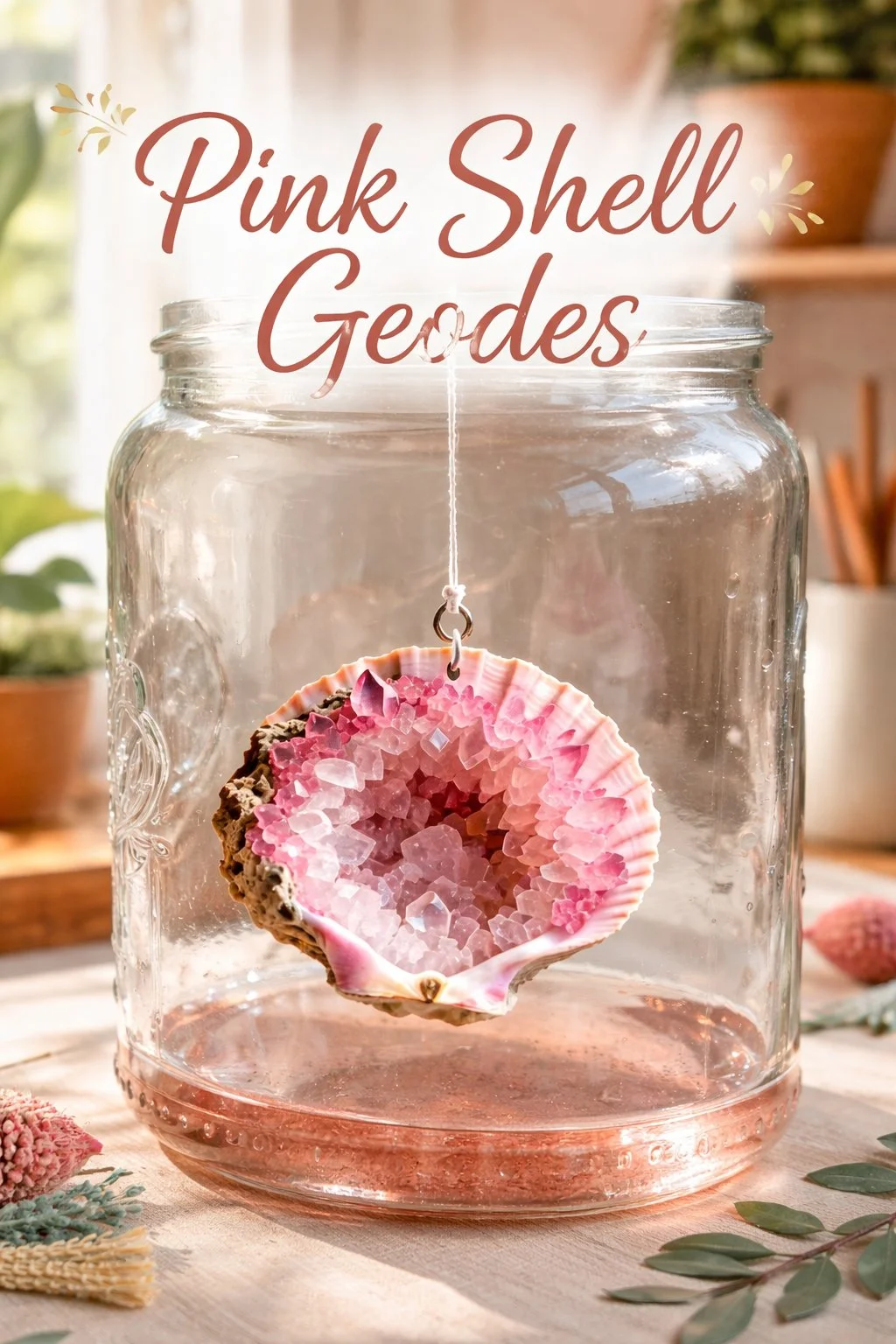
Once finished, these geodes sit quietly in the room and ask very little. They catch morning light and offer a soft focal point.
Set one beside a favorite book to invite a slow read. Place a few on a shallow wooden tray with a tiny candle for evening calm. I like a pair on my bedside shelf so the last and first things I see each day reflect soft pink warmth.
You can nest several in a ceramic bowl to create a small landscape. Visitors often reach out to touch one, drawn by the contrast of matte shell and glossy crystal. These pieces make thoughtful gifts because they present a tactile story. If you keep a collection, rotating them across spaces refreshes the feeling of the room with small, gentle gestures.
If you want inspiration for arranging crystal and shell art, take a look at how similar pieces balance texture and light on my page about crystal eggshell geodes where I discuss placement and display ideas.
How to Store or Reuse Pink Shell Geodes
Store finished geodes in a lined box or on a soft shelf to avoid scratches. Wrap each piece in acid-free tissue or a cloth if you keep many together.
If you make a mistake or want a new look, you can remove crystals carefully. Soak a geode in warm soapy water to loosen resin edges only if the resin is not fully cured.
For temporary reuse, you can nest geodes on a small bed of sand in a shallow dish. This keeps them clean and gives every piece a miniature landscape to rest within.
Avoid prolonged exposure to direct sun if your resin has any colorants. Some pigments might fade over many months of intense UV, so shade helps preserve tone.
If a surface becomes dull, a gentle clean with a soft cloth and mild soap usually restores shine. For deeper scratches, light polishing compounds for resin work well when used carefully.
What I’ve Learned While Making This
I learned to trust pauses. Early on I rushed small placements and felt frustrated. When I slowed, the pieces opened up and the making itself felt like the reward.
I also learned how gentle choices change a piece. A single, slightly darker crystal can shift the whole mood. Listen to what the materials want. Shells often suggest where to place a focal stone by the way they cup and catch light.
Resin taught me patience and respect for ventilation. I now mix only what I need, work in small batches, and accept that clarity comes with time.
Sometimes the best pieces come when I embrace imperfections. Tiny bubbles, a stray flake, a slightly uneven tilt can become character. I share variations and gentle tips on my page about pink seashell crystals which show how embracing small quirks leads to charming results.
Try inviting someone to sit beside you while you make. I have made my favorite geodes in shared quiet, with tea and the slow sound of conversation. It feels like offering a small, quiet ritual to another person.
FAQs About Pink Shell Geodes
Will resin ruin delicate shells?
Not usually. Sealing shells with a thin base layer protects them from staining and strengthens thin edges. Choose shells without major cracks, and handle fragile ones with extra care.
Can I use natural pigments instead of mica?
Yes. Very fine powdered pigments and dye concentrates work well. Mica adds shimmer, while dyes give flatter color. Combine them sparingly to avoid cloudiness.
Is resin safe to use at home?
Resin can be safe if you follow basic precautions. Work in a well-ventilated space, wear gloves, and consider a respirator for larger pours. Keep resin away from children and pets while curing.
How do I fix a bubble that forms after curing?
Small surface bubbles sometimes appear. Sand the area gently and apply a thin topping coat of resin. Work slowly and keep the room warm and still to prevent new bubbles.
Can I make these with children?
Young children can enjoy sorting crystals and choosing colors. Reserve the resin work for adults, and use non-toxic substitutes like clear glue for kid-friendly variations.
A Quiet Closing Thought
Making Pink Shell Geodes offers more than a finished object. It gives you an hour or more of intentional touch, of choosing texture and tone, and of practicing calm focus. Each small piece holds light differently, and that way of holding light can remind you how much beauty fits into a palm.
Keep this practice gentle. Let the materials guide you and accept that each piece will carry its own soft imperfections. When you lift a finished geode to the light, breathe in the quiet of the moment and feel how a small, handmade object can steady your day.
Conclusion
For a soft, textiles-forward inspiration that pairs beautifully with shell tones, see the fabric I often reach for, Crescent Plaid Fabric in Shell Pink by Rebecca Atwood, which complements these projects with gentle warmth: Crescent Plaid Fabric in Shell Pink – Rebecca Atwood Designs.
If you prefer to start with a premade geode half for a quicker path to the tactile work, this large pink-dyed Moroccan geode half provides a ready-made cup to hold your crystals and resin: Pink Dyed Opened Moroccan Geode Half (Large) – Kids Love Rocks.
Thank you for letting your hands slow down with this project. May these materials bring warmth and quiet to your making.
PrintPink Shell Geodes
Create beautiful pink shell geodes using natural shells, clear resin, and colorful crystals for a calming craft experience.
- Prep Time: 20 minutes
- Cook Time: 30 minutes
- Total Time: 50 minutes
- Yield: 1 geode
- Category: Craft
- Method: Crafting
- Cuisine: N/A
- Diet: N/A
Ingredients
- Clean shell halves (scallop or conch)
- Clear casting resin
- Pink mica powder or powdered pigment
- Small crystal chips or glass beads in pinks and neutrals
- Fine glitter (optional)
- Mixing cups and wooden stir sticks
- Disposable gloves
- Silicone mat or slow cure mat
- Tweezers or toothpicks
- Isopropyl alcohol
- Respirator rated for organic vapors (if necessary)
Instructions
- Prepare your space and shells. Wipe each shell on both sides with isopropyl alcohol.
- Work on a level board and arrange shells on a silicone mat to catch drips.
- Sort your crystals and pigments by touch and tone.
- Mix a small batch of clear resin in a disposable cup.
- Tint a little resin with a soft pink mica.
- Pour a thin base layer into the shell.
- Place larger crystal pieces with tweezers into the still-wet base.
- Scatter smaller chips and glitter around focal stones.
- Add a few drops of clear resin over crystals.
- Remove any surface bubbles with a warm tool.
- Let the piece cure undisturbed for the recommended time.
- If desired, sand lightly and pour a thin topcoat.
- Wait for a full cure period before handling frequently.
Notes
Work slowly and enjoy the calming process of crafting. Store finished geodes properly and avoid direct sunlight to preserve color.