

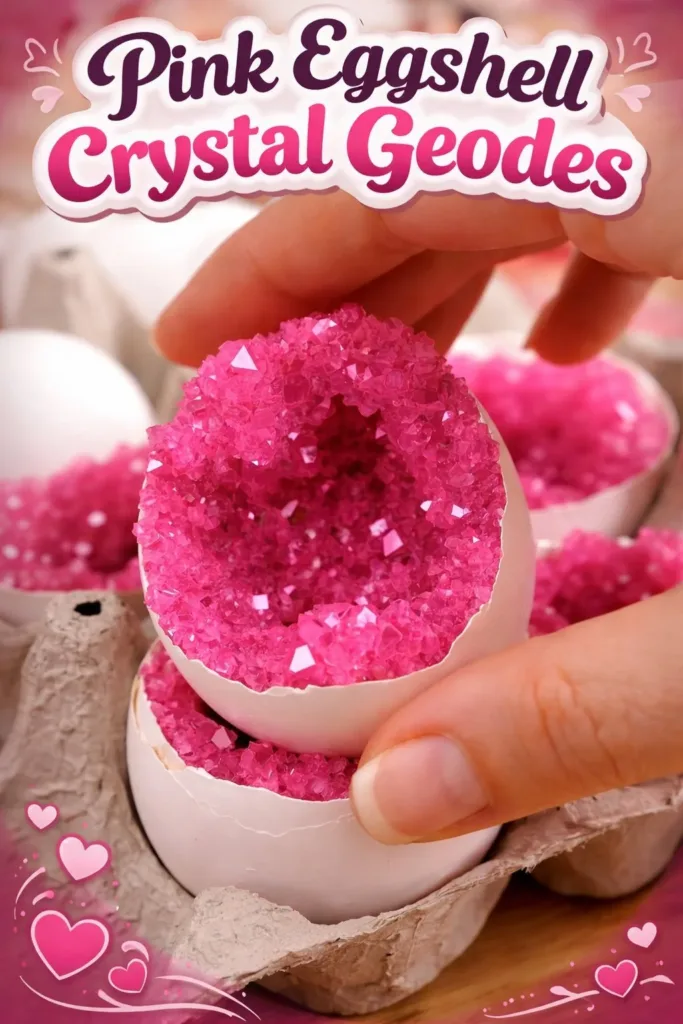
A soft handful of broken eggshells sits in my lap, pale pink under the lamp, and I breathe with the quiet of small rituals. I trace the rough edges with a fingertip and imagine the tiny crystals that will bloom there, a gentle surprise that grows one slow, shimmering layer at a time. Making Pink Eggshell Crystal Geodes feels like tending a miniature landscape, and the tiny weight of a finished piece fits into the palm like a calm secret.
Why Pink Eggshell Crystal Geodes Feels Comforting to Create
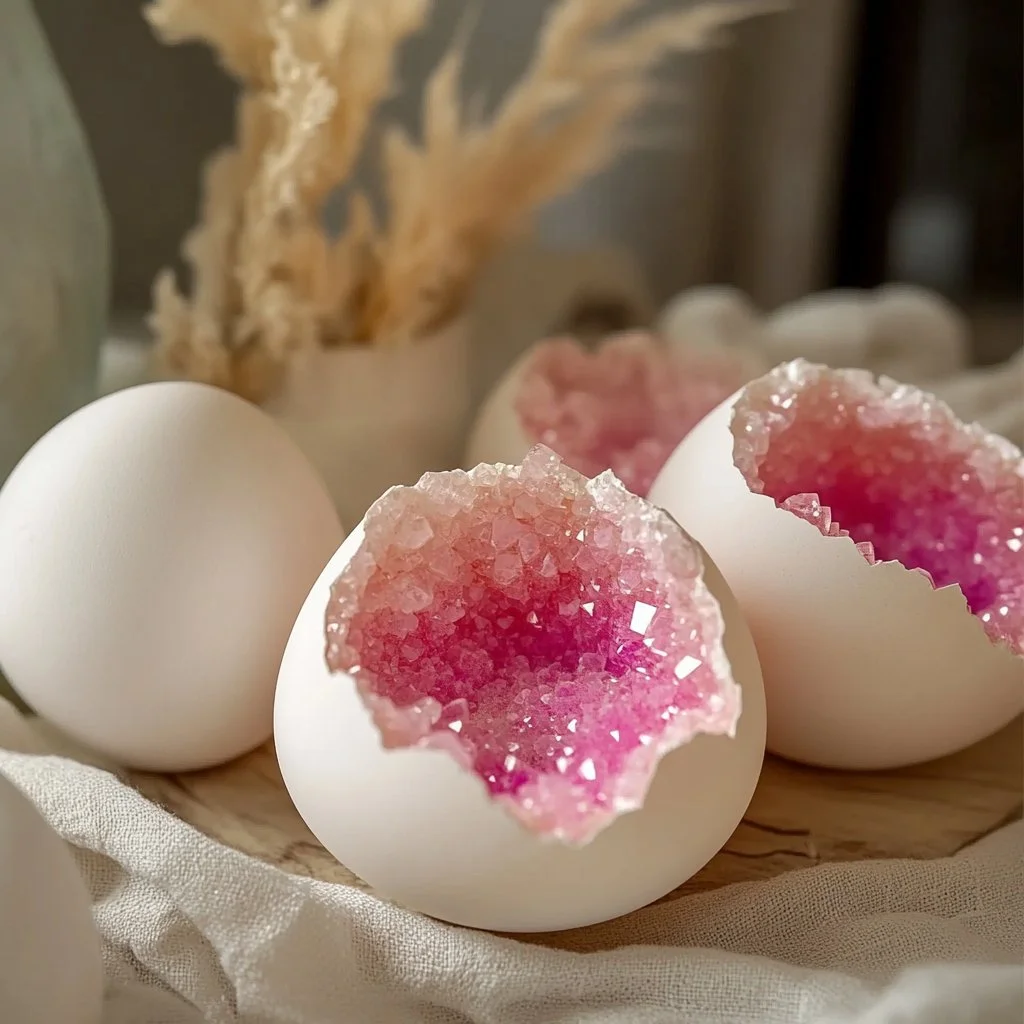
Working with Pink Eggshell Crystal Geodes invites a kind of slow attention that soothes the mind. The shells feel slightly rough and porous under the fingers at first, then smooth and cool as the crystals form. Watching the delicate pink crystals appear feels like listening to rain; the process moves at its own easy pace and asks nothing more than presence.
When I sit down with this project, I notice small sensory comforts. The sound of sugar or borax dissolving in warm water sounds soft and steady. The light catches the crystal edges and throws tiny slivers of glow across the table. These quiet details give the hands something gentle to do and the eyes a small, calming focus.
This project supports a cozy craft habit. It suits a kitchen table, a window seat, or a bedside tray. You can craft slowly with a friend or alone with a mug beside you. The work rewards patience, and the reward feels intimate: each eggshell becomes a tiny geode that holds both texture and light.
I often return to other small crystal experiments for inspiration; you might like a related pattern I tried for delicate heart-shaped crystals at growing crystal pink hearts. That gentle project taught me how much calm attention influences the way crystals grow.
A Gentle Look at the Process
Before you gather anything, picture the rhythm of the making. You break, rinse, dry, and gently color the interiors of eggshell halves. You stir warm solution and breathe in faint mineral warmth. You place shells into a nest of cotton and watch slow granules find a home along the inner curve.
The process feels like a small ritual. You move with soft, repeated gestures that quiet the mind: breaking eggshells into halves with care, tapping them to widen an opening, and spooning a shimmering solution into each cup. The visual rhythm builds as crystals grow from the margins inward, like frost forming on a window.
This craft rewards patience and gentle hands. You do not rush. You observe. You tweak little things – how warm the water feels, how much solution you pour, whether the shell sits level. These choices shape the crystal result, and they teach simple cause and effect through a sensory, satisfying practice.
If you enjoy projects that bloom in stages, you might also like the slow build of a baking soda crystal tree; it uses similar ideas of seed growth and time, described at baking soda crystal growing tree.
Materials You’ll Need
- Clean eggshell halves, well rinsed and fully dry (easy to find).
- Pink food coloring or powdered pigment, a small amount.
- White glue or diluted clear glue (helps crystals anchor).
- Table salt, sugar, Epsom salt, or borax – choose one based on texture you prefer (salt and borax give different crystal shapes).
- Warm water, for dissolving crystals.
- Small plastic cups or a tray for mixing solution.
- Cotton wool or soft nesting material to steady shells while they dry.
- A pipette, dropper, or small spoon for placing solution gently.
- Tweezers or small forceps for careful handling.
- A shallow container to hold your working shells.
- Paper towels and a soft brush for gentle cleaning.
- Protective gloves and old towels, optional but helpful for sensitive hands.
Notes on choice: Borax tends to create larger, more glassy crystals. Table salt and sugar create different textures and often finer structures. I use diluted glue sparingly to give crystals something to cling to. Choose materials based on feel and safety; borax works well if you handle it carefully and keep it away from children and pets.
Step-by-Step Directions
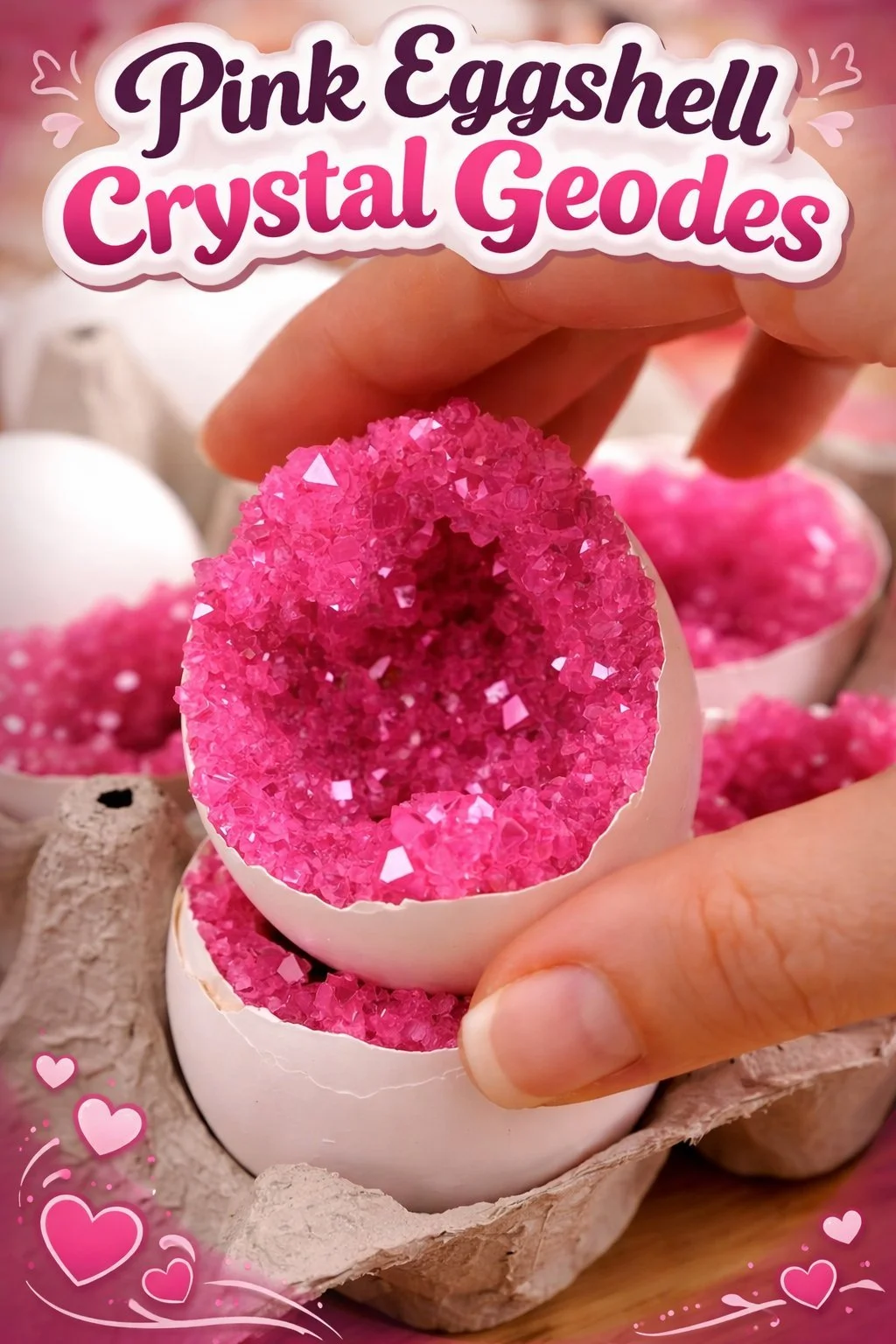
- Prepare your shells with calm care.
Place clean, dry eggshell halves in a soft nest of cotton.
Handle them gently to avoid cracking the edges. - Add a thin glue base.
Brush a light layer of diluted clear glue inside each shell.
This base gives crystals a place to begin and helps them stick. - Mix your crystal solution slowly.
Warm one cup of water and dissolve two to three tablespoons of your chosen crystal material.
Stir until the mixture feels warm and mostly clear. - Color the solution with pink dye.
Add a few drops of pink food coloring or a pinch of pigment.
Stir slowly and watch the soft color spread like a wash. - Fill each shell with the warm solution.
Use a dropper or small spoon and move slowly.
Let the solution rest in the shell without jostling for several minutes. - Place shells in a steady, warm spot.
Nest them in cotton or a shallow tray so they sit level.
Avoid drafts or vibrations that might disturb the forming crystals. - Observe the first crystals form.
Check every hour for the first day and allow small changes to calm your attention.
You will see tiny sparkles along the shell edge where crystals prefer to grow. - Top up with solution as needed.
If the solution level drops, add a few drops at a time.
Keep the surface wet enough for steady growth without overflowing. - Let crystals mature slowly.
Allow three to five days for fuller growth, depending on the material you used.
Revisit them with a gentle mindfulness and note how the texture deepens. - Finish and dry carefully.
Once you feel the crystals look complete, remove shells and let them dry overnight.
Handle them with tweezers and place them on a soft cloth to protect the delicate points. - Clean up with quiet patience.
Discard or compost used solutions responsibly and wipe your workspace.
Store unused materials in labeled containers for future projects.
Each small step invites you to slow down, feel textures, and scan for tiny changes. I recommend a slow rhythm: mix, place, observe, and allow the geodes to develop their own pace.
Bringing Pink Eggshell Crystal Geodes Into Your Space
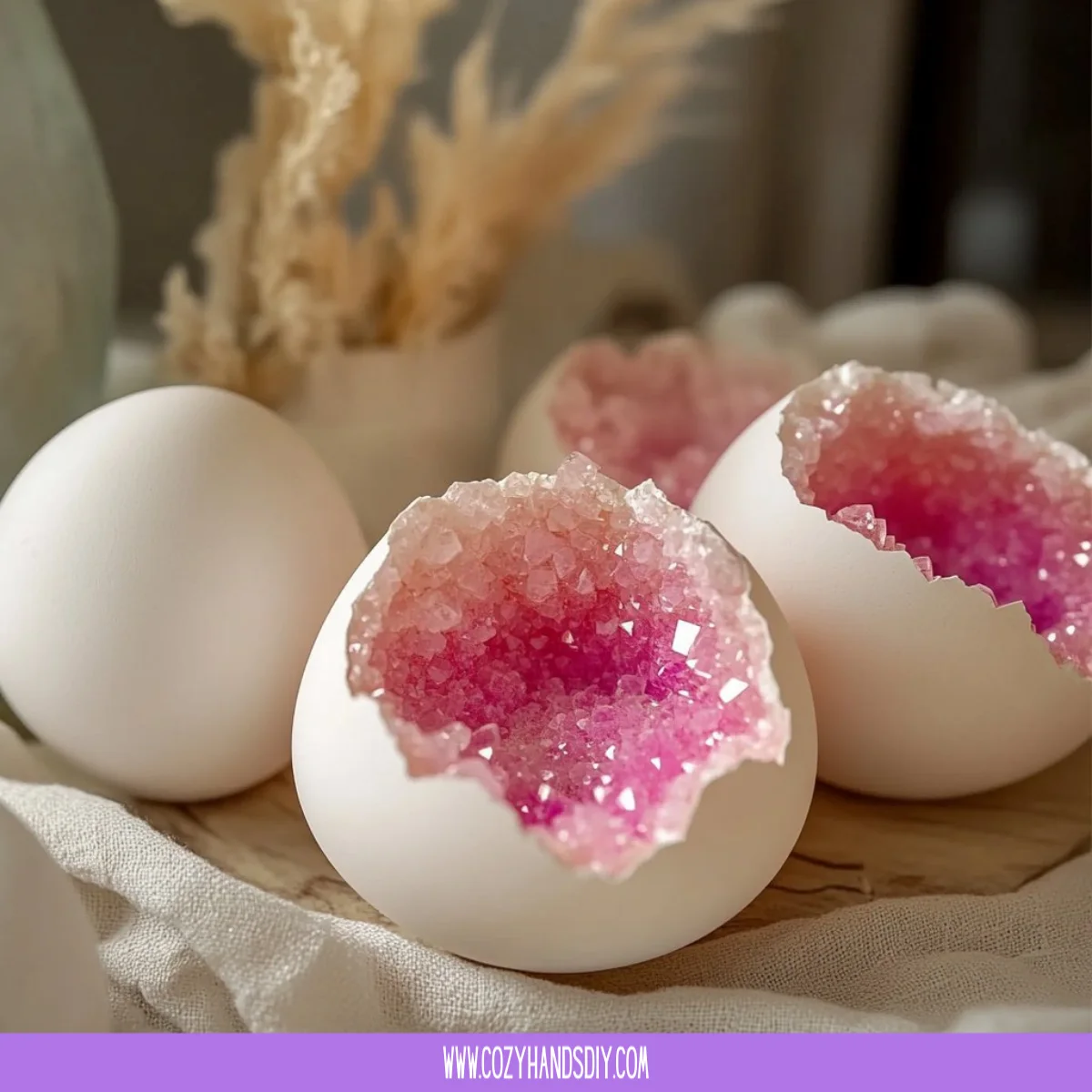
A finished Pink Eggshell Crystal Geode holds a gentle presence. Place one on a small dish near a bedside lamp, and the crystals catch the light in ways that feel intimate. The shells work well in tiny clusters on a windowsill, where morning sun slips in and accentuates the pale pink glow.
You can use these geodes as soft décor for a reading nook. A few arranged in a shallow wooden tray create a quiet centerpiece. I often tuck a single shell into a small glass jar and leave it where I will notice it during a slow moment. The piece feels like a small talisman of deliberate time.
Think of these geodes as more than decoration. They become tools for slow focus. When you find your attention frayed, holding one and following its tiny crystal edges helps you regroup. The tactile coolness and faint roughness invite grounding, and you can return to it whenever you need a gentle pause.
For shared calm, set several geodes on a low table and invite a friend to handle them. People often respond to the same sensory cues: the light catch, the quiet weight, the soft scratch of crystal on ceramic. These small interactions create quiet connections that feel meaningful.
How to Store or Reuse Pink Eggshell Crystal Geodes
Store your geodes in a cool, dry place to preserve their crisp crystalline edges. Wrap them gently in acid-free tissue or a soft cloth, and lay them in a shallow box to prevent crushing. Avoid stacking heavy items on top of them.
If you wish to reuse an eggshell form for another experiment, dissolve the crystals by soaking the shell in warm water and a gentle agitation. Use a soft brush to remove residual crystals and allow the shell to dry completely before starting again. You will notice the shell looks slightly worn after repeated cycles; it still holds charm but may lose fine edges over many uses.
For long-term display, seal the bottoms with a clear, matte varnish if you want to secure the tiny crystal points. This step keeps the structure intact during handling. Use a small brush and work in a ventilated space. I recommend testing the varnish on a spare shell first so you can see how it affects the final sheen.
If you make several geodes, rotate them in and out of display. Change their placement with the seasons to keep the feeling fresh. When they sit tucked away, they feel like quiet notes that you can rediscover.
Gentle Tips & Variations
- Invite soft color changes.
Try adding a tiny amount of deeper pink or a touch of lavender to the mix for subtle gradients. A little pigment creates layers of mood without overwhelming the delicate crystal structure. - Mix crystal substrates.
Combine a small amount of borax with table salt to encourage varied textures. Start with a light trial so you can see how each mix responds to warmth and drying. - Create tiny landscapes.
Place a few shells together on a bed of sand or soft moss for a miniature still life. The contrast between organic shells and crystalline interiors feels comforting and restful. - Use natural dyes.
If you prefer plant-based color, try a gentle infusion of hibiscus or beet juice to tint the solution. Keep the color light; strong dyes can mask the crystalline clarity. - Invite children with supervision.
This project offers sensory richness for older children with careful supervision and marked boundaries. Keep borax and other powdered chemicals out of reach. Make a simplified sugar-salt version and teach safe handling while you work together.
These suggestions exist as gentle invitations, not rules. Try one or two and notice how they change the pace and feeling of your work.
What I’ve Learned While Making This
I learned that small hands and steady attention coax better growth than perfect measurements. Once, I hurried through the mixing step and the crystals turned coarse. I went back and slowed the next batch, stirring by small, circular motions, and the crystals responded with finer, more glasslike points.
I learned to respect drying times. In earlier attempts, I removed shells too soon and tore delicate crystal edges. Now I leave them in a warm, still corner and trust the days it takes for the structure to mature.
I also learned that different materials invite different senses. Borax gives a cool, heavier sparkle. Table salt feels lighter and more feathery. Sugar creates soft, miniature formations that remind me of powdered sugar on a pastry. Each choice nudges the process in a fresh direction, and that variety keeps the practice interesting.
Lastly, I learned to keep a small notebook. I write the day, the mixture, and a short sensory note. These quick observations help me repeat successes and avoid experiments that felt rushed.
FAQs About Pink Eggshell Crystal Geodes
Will borax or salt harm my eggshells?
Borax and salt can both stress thin shells if you soak them for long periods. Use warm water and quick, gentle rinses after the crystals finish. Avoid heavy soaking and handle shells with tweezers when fragile.
How long should I wait to see crystal growth?
You will see initial specks within a few hours. For fuller blooms, expect three to five days. The pace depends on temperature, humidity, and the material you use. Warmer, still conditions speed growth.
Can children help with this project?
Yes, with supervision. Keep borax and powders out of little hands and eyes. Give children tasks like gentle stirring, color mixing, and placing shells in nests. You will model safe handling and create a calm shared ritual.
Why did my crystals look dull instead of shiny?
Dull crystals often indicate impurities or too-cool solution. Use well-dissolved mixtures and warm water to encourage clearer growth. A tiny amount of glue inside the shell can encourage cleaner anchoring points.
Can I use other colors besides pink?
Absolutely. Try soft blues, pale lavenders, or pale greens for different moods. Keep colors subtle so they complement rather than mask the crystalline texture.
A Gentle Note Before You Go
I will leave you with a small invitation. If you choose this project, allow it to move at its own pace. Arrange your space with a soft cloth, a quiet cup, and a light that feels warm to your eyes. Let the act of making be the main event rather than the finished piece. When you walk away and return, you will carry a small calm that keeps.
Conclusion
Thank you for spending this quiet time with Pink Eggshell Crystal Geodes. If you would like a more step-by-step tutorial that uses a different method, you can explore a clear, helpful guide on how to make a crystal geode at step-by-step crystal geode tutorial at Parenting Chaos. For a science-focused look at the egg-based crystal experiment, the Home Science Tools page offers a thoughtful chemistry approach at egg crystal geode experiment guide at Home Science Tools.
I hope you find softness in the making. Keep a small tray of shells to return to, and let each batch remind you that patience and gentle attention create quiet beauty.
PrintPink Eggshell Crystal Geodes
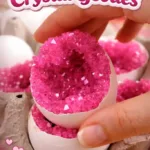
Create delicate and beautiful crystal geodes inside eggshells using simple materials and a touch of patience.
- Prep Time: 15 minutes
- Cook Time: 0 minutes
- Total Time: 5 days
- Yield: 4-6 geodes
- Category: Craft
- Method: Crafting
- Cuisine: N/A
- Diet: N/A
Ingredients
- Clean eggshell halves, well rinsed and fully dry
- Pink food coloring or powdered pigment, a small amount
- White glue or diluted clear glue
- Table salt, sugar, Epsom salt, or borax
- Warm water, for dissolving crystals
- Small plastic cups or a tray for mixing solution
- Cotton wool or soft nesting material
- A pipette, dropper, or small spoon
- Tweezers or small forceps
- A shallow container for shells
- Paper towels and a soft brush for cleaning
- Protective gloves and old towels (optional)
Instructions
- Prepare your shells with calm care. Place clean, dry eggshell halves in a soft nest of cotton.
- Add a thin glue base by brushing a light layer of diluted clear glue inside each shell.
- Mix your crystal solution slowly by warming one cup of water and dissolving two to three tablespoons of your chosen crystal material.
- Color the solution with pink dye by adding a few drops of pink food coloring or a pinch of pigment.
- Fill each shell with the warm solution using a dropper or small spoon.
- Place shells in a steady, warm spot, nesting them in cotton or a shallow tray.
- Observe the first crystals form by checking every hour for the first day.
- Top up with solution as needed if the solution level drops.
- Let crystals mature slowly for three to five days.
- Finish and dry carefully by removing shells and letting them dry overnight.
- Clean up with quiet patience by discarding or composting used solutions responsibly.
Notes
Borax tends to create larger, more glassy crystals. Experiment with different materials for varied textures. Always handle powdered chemicals with care, especially around children and pets.