

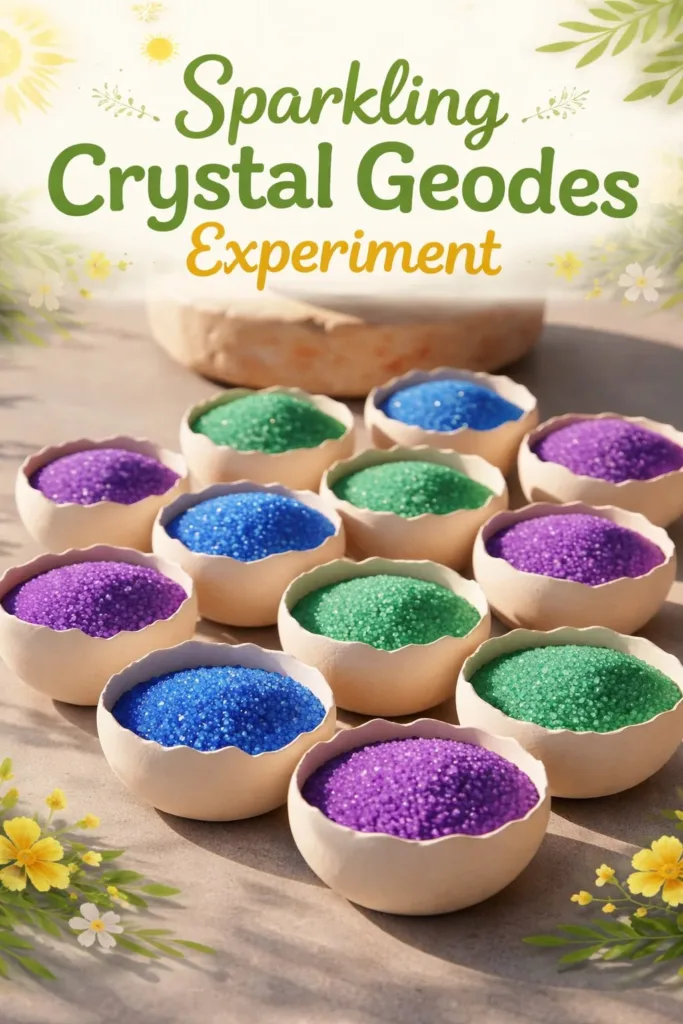
A thin shaft of late afternoon light slips across my worktable, catching on tiny facets of growing crystals. The glass jar hums quietly as the sugar dissolves, and my fingertips still hold the faint warmth of boiled water. I set the eggshells on a soft towel and listen to the slow, steady tick of patience. This is the small comfort of the Sparkling Crystal Geodes Experiment, where simple materials and gentle time make little worlds of color and light.
Why Sparkling Crystal Geodes Experiment Feels Comforting to Create
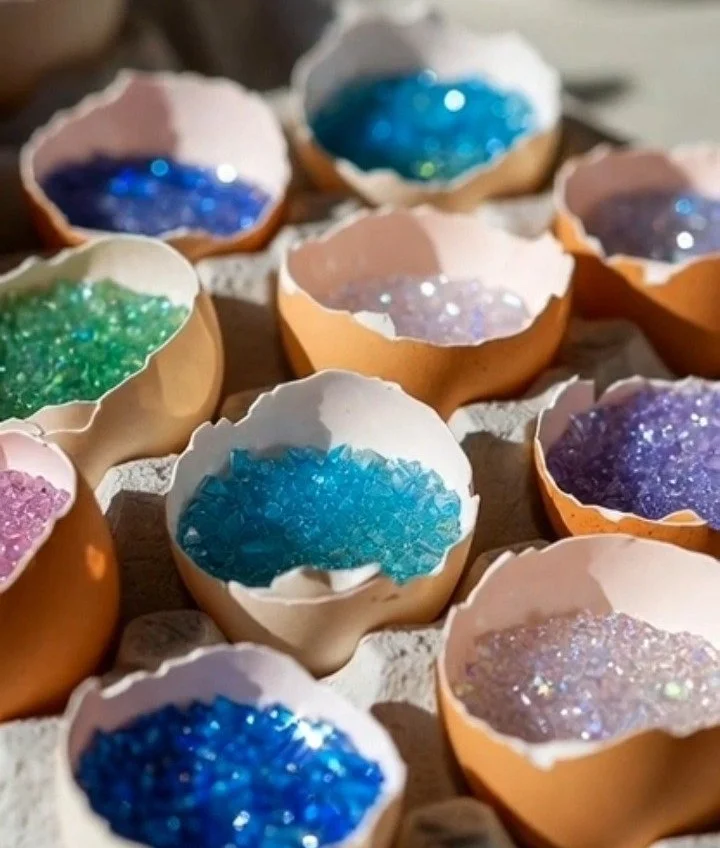
There is something tender about watching a shape take its own time. Making Sparkling Crystal Geodes Experiment slows the hands and settles the mind. The process asks only that you stir, strain, and wait. Each step gives a small, clear result: the sugar dissolves until the liquid looks almost like glass, crystals find a place to begin, and color breathes into tiny caverns.
This craft centers on texture and light. The cool matte of an eggshell sits against warm fingers. A sugar solution moves like silk when you stir it. Crystals grow with a quiet geometry that feels both predictable and a little miraculous. That calm predictability makes the project soothing for restless thinking, and the small sensory details help anchor attention in the present.
If you enjoy gentle science and slow craft, you might like our other crystal projects that draw on similar calm practices. For a related eggshell geode way of working, see this guided project for crystal eggshell geodes on our site crystal eggshell geodes.
How This DIY Comes Together
I set out the jars, spoons, and colors on a soft cloth so each tool and material waits ready. The flow of the work moves in simple phases: prepare the shells, make and color a saturated solution, seed the shells, and allow time for growth. The motion asks for small, repeated gestures. You pour slowly. You stir with a measured rhythm. You tuck shells into warm places and check them with a soft curiosity rather than a rush.
You will hear the faint hiss of boiling and the soft clink of spoon on glass. You will feel the smoothness of the solution as it leaves the ladle and the fragile give of the eggshell rim when you hold it. Visual rhythm matters too. Watching the liquid change from cloudy to clear gives a quiet reward, and little crystals begin as specks that grow into clustered formations. If you have tried other crystal projects, such as our crystal growing experiments, the sense of patient watching will feel familiar and welcome. For more on crystal growth basics, take a look at this gentle crystal growing experiment guide crystal growing experiment.
Materials You’ll Need
- Eggshell halves, rinsed and dried (easy to find; you can use recycled eggshells)
- Granulated sugar (plain, table sugar works well)
- Water
- Small heatproof pot or kettle
- Clear jars or cups for heating and cooling the solution
- Spoons for stirring (metal or heatproof plastic)
- Food coloring or powdered pigment (optional; a few drops per jar)
- Cotton string or fine thread (to suspend inside the shell)
- A small pebble or bead (to anchor the string; optional)
- Tweezers or a small spoon for placing shells (optional)
- A soft towel for cushioning and drying shells
- A small funnel or coffee filter for straining (optional)
- A notebook and pen to note times and colors (optional; helpful for mindful observation)
A gentle note on materials: table sugar dissolves readily and makes beautiful, clear crystals. You can substitute other soluble salts such as alum for different crystal habits, but sugar keeps the method simple, safe, and kitchen-friendly. Pigments add warmth and depth to the crystals. Use a light hand with color; a drop or two goes a long way.
Step-by-Step Directions
- Prepare your work surface and eggshells.
Gently rinse each eggshell half and let it dry on a soft towel. Work slowly when handling them so they do not chip. - Tie the string and anchor it.
Attach a small bead to one end of a short string. This bead helps the string hang upright inside the eggshell. The string should sit just inside the shell without touching the edges. - Make a saturated sugar solution.
Warm equal parts water and sugar in a small pot. Stir slowly as the sugar dissolves. Heat until the liquid becomes clear and just shy of a simmer. You will notice the liquid thicken slightly as it becomes saturated. - Add color and strain if needed.
Remove from heat and add a few drops of food coloring. Stir gently until the tone feels right. If you have visible undissolved bits, pour through a funnel or coffee filter into a clean jar so the solution is smooth. - Pour or spoon solution into shells.
With a steady hand, fill each eggshell half about two thirds full. The surface should sit calm and still. Place the shell in a shallow cup or an egg carton to keep it steady. - Suspend the string so crystals can grow.
Lower the string into the shell so the bead rests on the bottom and the thread stands upright. The string gives crystals a place to form and grow outward from. - Find a warm, quiet place to rest the shells.
Set the shells where they will not be disturbed, in soft light and steady temperature. Cover loosely with a paper towel to keep dust away while letting moisture escape slowly. - Observe and wait with gentle care.
Check your shells after 12 to 24 hours. You will see tiny seed crystals where the solution cools and evaporates. Avoid moving the shells while crystals are forming. Take notes or sketch what you see. - Let growth continue for a few days.
Over three to five days, crystals will thicken and form clusters inside the shells. If the surface becomes too dry, you can add a touch more warm solution. Trust slow time; the most beautiful structures often need patience. - Finish and display.
When the crystals look full and sparkly, let the shells dry fully on a towel. Trim any loose threads with scissors and place the geodes on a soft dish or in a shadow box for display.
Bringing Sparkling Crystal Geodes Experiment Into Your Space
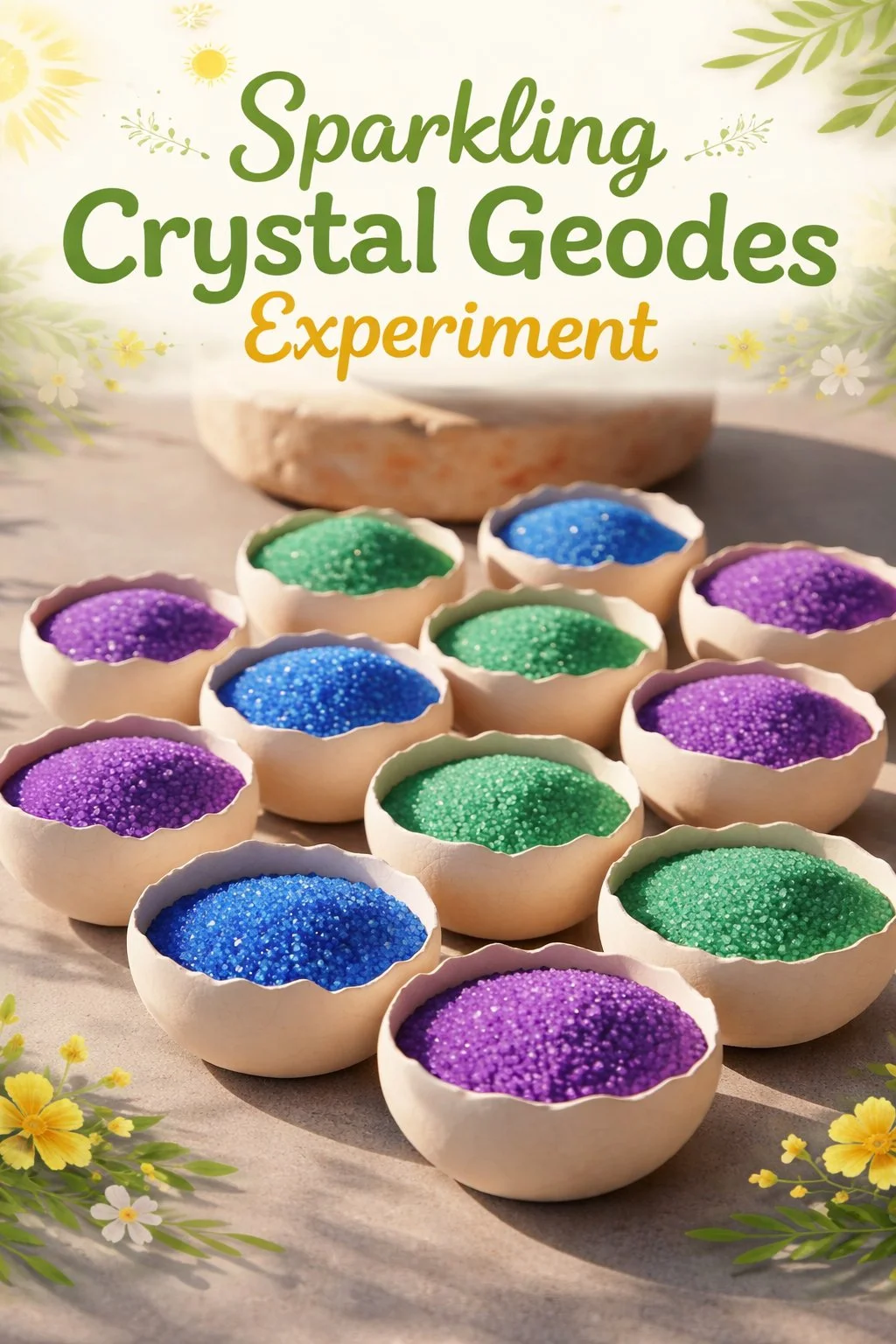
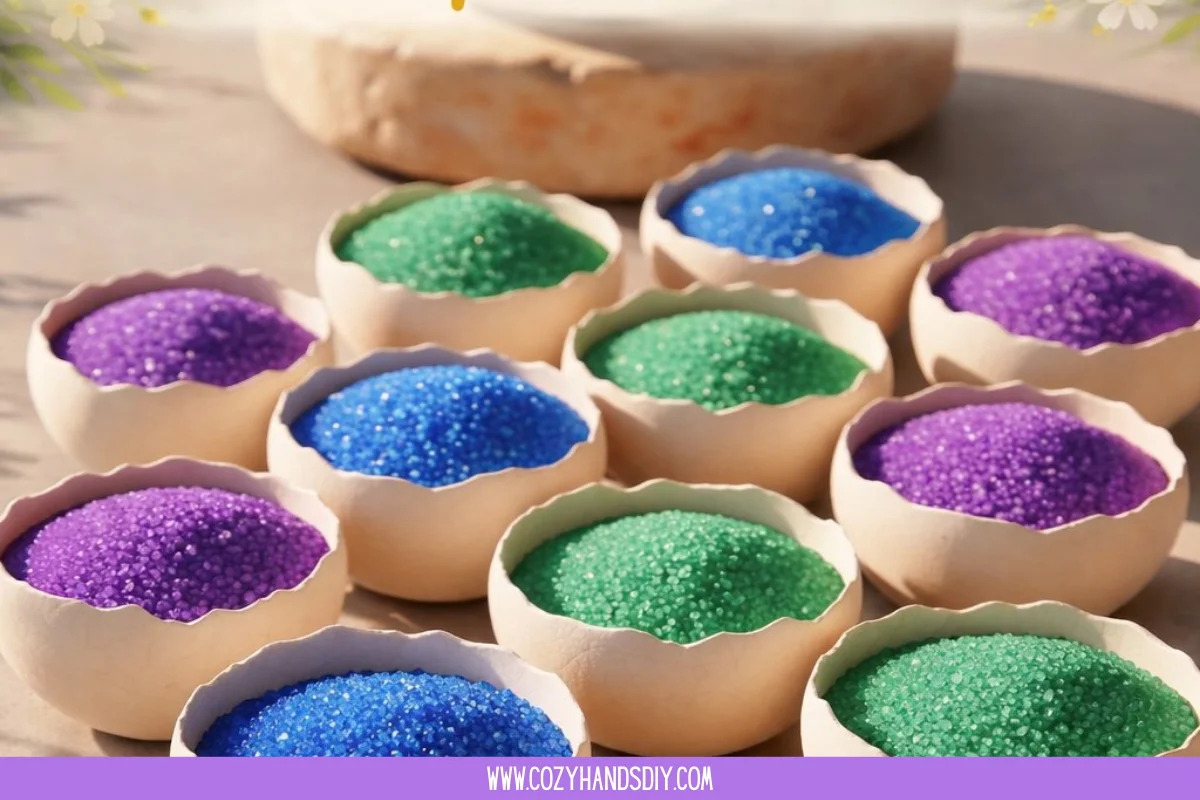
These small geodes make quiet companions on a windowsill, a bedside shelf, or tucked into a bowl with dried flowers. They catch light in gentle ways and invite a closer look when you have a moment to breathe. A single geode on a desk can hold a pause between tasks. Several grouped together create a tiny mineral garden that hums with soft pattern and color.
If you like, frame one in a small box or shadow frame to protect it from dust while still letting light touch the crystals. Another lovely way to enjoy them is during a mindful tea moment. Set a geode nearby, sit quietly with your cup, and notice how the crystals reflect the steam and the light. This small ritual turns the finished piece into a living reminder of slow making.
For other ways to bring crystal projects into daily rhythms, you might enjoy our guide to sugar crystal experiments for simple displays and sensory play sugar crystal experiment guide.
How to Store or Reuse Sparkling Crystal Geodes Experiment
Treat these geodes gently. The crystals can be delicate and sometimes flake when handled roughly. Store them in a cool, dry spot away from direct sunlight to reduce fading of any color. A small lidded box with soft padding keeps them safe and ready to bring out for quiet moments.
If a crystal cluster begins to lose its sparkle or gather dust, you can re-dampen it briefly with a few drops of warm distilled water to rehydrate sugar crystals gently. Allow it to dry again in a protected place so the structure consolidates. For a creative reuse, you can carefully remove the crystals from the shell and use them as accents in small resin pieces or as part of a tiny terrarium scene. Be mindful when experimenting with reuse; sugar crystals can attract pests if stored with organic materials, so keep them in sealed containers if you plan long-term storage.
If you want to grow a new batch, clean the shells thoroughly and sterilize them by rinsing with warm water. You can reuse the same shells multiple times. For a longer lasting effect, consider using small ceramic shells or hollow stones as a sturdier vessel for repeated crystal growth.
Gentle Tips & Variations
- Invite color slowly.
Start with pale tones and add color in small amounts. The low saturation keeps the effect calm and natural. Consider mixing two related hues for subtle depth. - Try different anchors for growth.
Instead of string, tuck a small sprig of dried lavender or a sliver of paper into the shell for the crystals to cling to. This creates a delicate contrast of texture and scent. - Vary temperature for different textures.
A warmer room tends to make larger, more defined crystals while cooler conditions favor finer clusters. Note how the environment changes the look and feel of your geodes. - Use flavored sugar for a sensory twist.
If you want scent as part of the experience, try dissolving a little vanilla sugar or citrus sugar. These add a faint aroma that can make the making moment more tactile. Keep in mind that added organics may alter the clarity and longevity of the crystals. - Turn growth into a short ritual.
Light a candle, set a timer for your observation checks, and write a sentence each time you visit the shells. These small acts make the experiment a mindful practice rather than a task.
FAQs About Sparkling Crystal Geodes Experiment
How long will it take for crystals to form?
You will usually see seed crystals within 12 to 24 hours. Bigger, thicker clusters take three to five days. Growth speed depends on how saturated the solution is and the temperature of the room. Warmer air and a more concentrated solution help crystals grow faster.
Are the materials safe for children?
Yes, the basic materials are safe, but supervise young children closely around hot liquids and fragile eggshells. Use cooled, prepared solution when working with small hands. Explain gentle handling and make a calm space for them to observe rather than touch while crystals grow.
What causes the crystals to form in the shells?
As the sugar solution cools and water slowly evaporates, the liquid becomes supersaturated. That means it holds more sugar than it can keep dissolved. Tiny imperfections or the string give the sugar a place to settle. Crystals form as sugar molecules lock together in regular patterns. The eggshell cavity encourages cluster growth in small, jewel-like formations.
Why are some crystals clear and others cloudy or colored?
Clear crystals form from pure, well-strained solution and steady evaporation. Cloudiness can occur when the solution contains tiny impurities or when it cools unevenly. Color comes from dye molecules trapped in the crystal lattice; adding pigment yields lovely, jewel-like tones.
Can I use other types of sugar or salts?
You can experiment with different soluble substances like alum or borax, but each one grows a distinct crystal shape. Table sugar is simple and kitchen-friendly, producing sweet, rounded clusters. If you try other materials, follow safety guidelines and keep them away from food areas if they are not food-safe.
A Gentle Note Before You Go
You have spent little moments with warm liquid, fragile shells, and patient watching. The Sparkling Crystal Geodes Experiment asks for softness more than precision. Let yourself be curious about small changes and generous with time. The finished geode invites close, slow looking. It holds the memory of your hands and the sound of a gentle stirring.
If you ever want to return to the feel of crystals forming, save a page in your notebook with notes and photos. These small records help you grow your practice and make each new experiment feel familiar and calm. Remember, the quiet joy lives in the making as much as in the display.
Conclusion
If you want to explore another variation that uses eggshells and vivid color, this step-by-step project offers clear photos and child-friendly tips in the DIY Crystal Egg Geodes tutorial on Artsy Fartsy Mama: DIY Crystal Egg Geodes | artsy-fartsy mama. For a deeper look at homemade eggshell geodes with different methods and a helpful how-to, see the Make Eggshell Geodes guide on Little Bins for Little Hands: Make Eggshell Geodes – Little Bins for Little Hands.
Thank you for making slowly today. May your hands stay gentle and your spaces stay calm.
PrintSparkling Crystal Geodes Experiment
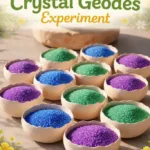
A calming DIY project to create beautiful sparkling crystal geodes using simple materials and patience.
- Prep Time: 20 minutes
- Cook Time: N/A
- Total Time: 5 days
- Yield: 4 geodes
- Category: Craft
- Method: DIY
- Cuisine: N/A
- Diet: N/A
Ingredients
- Eggshell halves, rinsed and dried
- Granulated sugar
- Water
- Small heatproof pot or kettle
- Clear jars or cups for heating and cooling the solution
- Spoons for stirring
- Food coloring or powdered pigment (optional)
- Cotton string or fine thread
- A small pebble or bead (optional)
- Tweezers or a small spoon (optional)
- A soft towel
- A small funnel or coffee filter (optional)
- A notebook and pen (optional)
Instructions
- Prepare your work surface and eggshells.
- Gently rinse each eggshell half and let it dry on a soft towel.
- Attach a small bead to one end of a short string.
- Warm equal parts water and sugar in a small pot.
- Stir slowly as the sugar dissolves until the liquid becomes clear.
- Add a few drops of food coloring and stir gently.
- Pour the solution into the shells, filling them about two thirds full.
- Lower the string into the shell so the bead rests on the bottom.
- Set the shells in a warm, quiet place to rest.
- Check your shells after 12 to 24 hours for seed crystals.
- Over three to five days, let crystals thicken and form.
- Let the shells dry fully on a towel when done.
Notes
These geodes can be delicate; handle them gently. They can be reused multiple times with clean shells.