

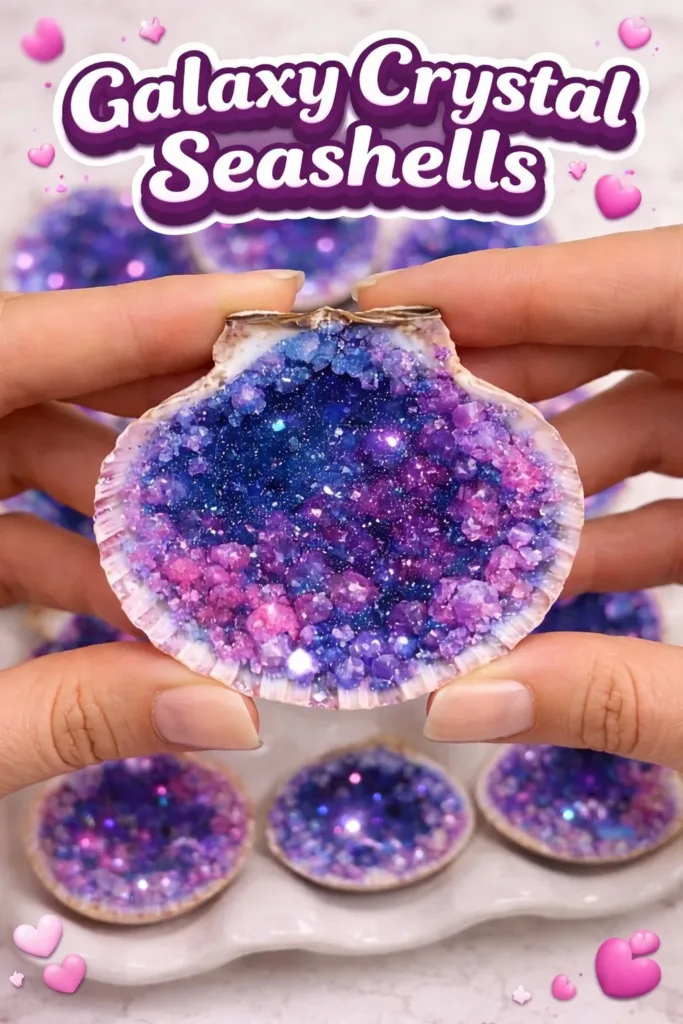
A sea-washed hush settles as you hold a scallop shell cupped in your palm, its ridges cool and familiar. Tiny crystals catch the light like distant stars, and a soft metallic sheen moves across the curve when you tilt it. That quiet shift of color feels like breathing slow and deep. Galaxy Crystal Seashells invite that kind of slow attention, a small ritual of texture, light, and time that soothes busy thoughts and rewards gentle hands. If you have enjoyed projects with a similar hush, you might also like our turquoise crystal seashells guide, which shares a few of the same simple pleasures.
The Quiet Joy of Making Galaxy Crystal Seashells
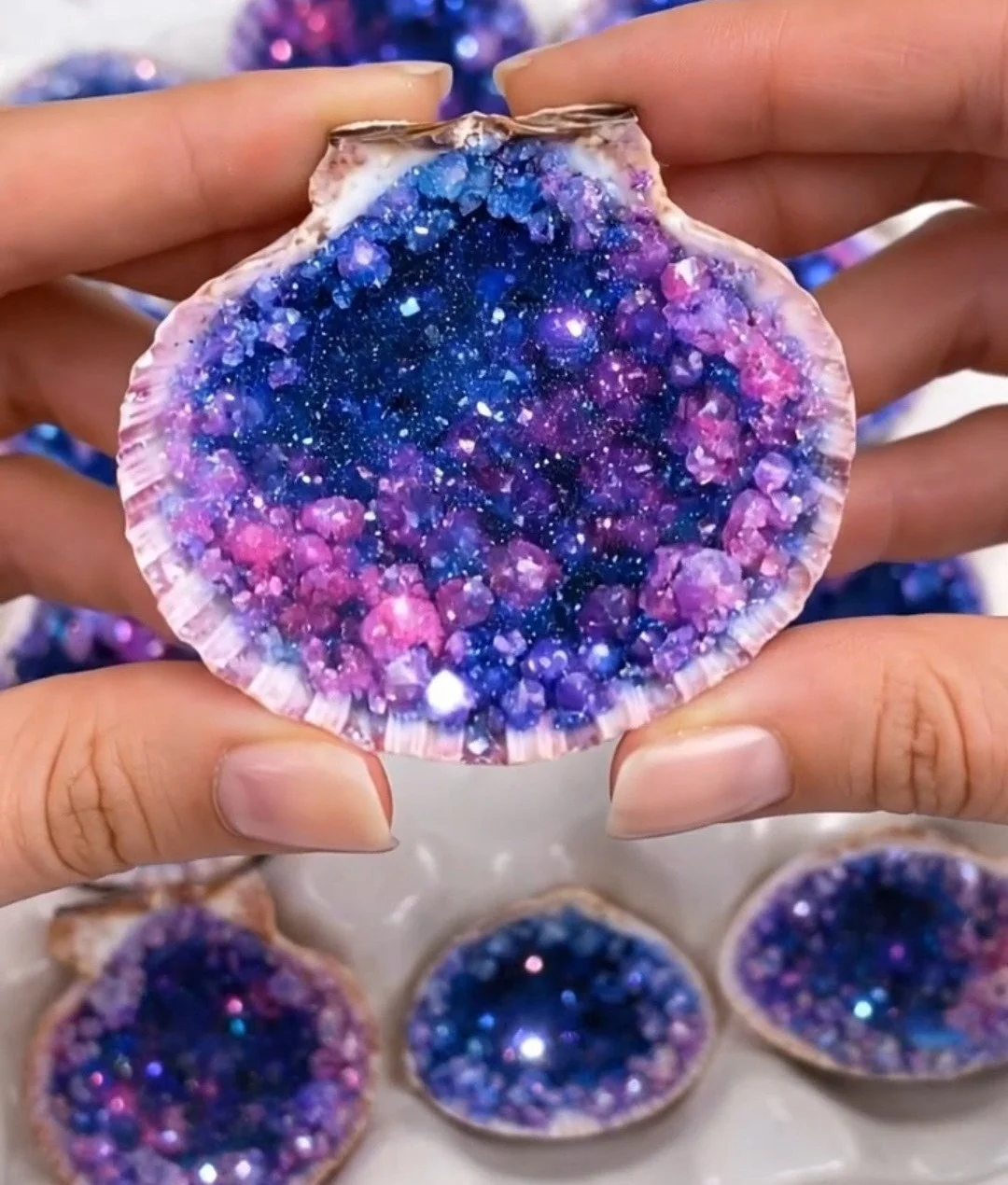
This project gives you a soft place to rest your attention. Making Galaxy Crystal Seashells turns a common beach find into a tiny cosmos of sparkle and form. The work asks you to move slowly, to notice how glue pools and how crystals settle. You trace light across a curved surface. You listen to the faint scrape of a brush and the muffled clink of tiny stones.
This kind of making slows you because it rewards quiet observation. The tactile rhythm press, sprinkle, press again feels like a small, steady pulse. The finished shells bring that calm into the room. They sit on a windowsill, catch morning sun, or rest in a bowl beside a favorite book. They offer a tangible reminder to pause and to enjoy the small, careful gestures that make a space feel cared for.
A Gentle Look at the Process
Before you gather anything, imagine the motions. You will clean and dry shells, mix a few pigments if you choose, apply a thin layer of adhesive, and gently scatter crystals. The movement stays close and deliberate. You do not rush.
You will work with small parts and quiet tools: a soft brush, a shallow tray, and small tweezers or your fingertips. Sound stays muted: a soft clink of crystal on shell, the faint whisper of brush on porcelain. The process rewards niceness to materials. If a crystal falls, pick it up and set it down again. If a bead clusters, ease it apart.
If you like other slow crystal projects, you might find kinship in this technique and in the patient shaping found in the baking soda crystal tree tutorial. Both projects ask you to trust time and subtle chemical textures while you work with small, shining elements.
What You’ll Use to Make Galaxy Crystal Seashells
- Clean seashells, any shape you love (easy to find at craft stores or collected)
- Clear craft glue or jewelry adhesive, thin-flow formula works best (strong and quick-setting)
- Fine and coarse crystal chips or crushed glass in mixed sizes (optional: small rhinestones)
- Iridescent mica powder or fine glitter for a soft shimmer (optional, food-safe mica is gentle)
- Small paintbrush, soft bristles for even glue spread (easy to clean)
- Tweezers or a toothpick for placing tiny crystals (helps with precision)
- Shallow tray or scrap paper to catch excess crystals (recycle paper if you can)
- Clear sealer spray or gloss varnish for protection (use in a ventilated space)
- Cotton gloves or finger protectors if you prefer to avoid sticky hands (optional, simple comfort)
Notes: Most of these supplies feel familiar in the hand. The glue bonds because it fills tiny surface gaps and hardens into a flexible film that holds crystals in place. Mica powder adds light-reflecting particles that catch and scatter sun like a galaxy.
Step-by-Step Directions
- Prepare your shells.
Place shells on a soft towel and wipe them with a damp cloth.
Let them dry fully until they feel room-temperature and dry to the touch. - Lay out crystals and tools.
Arrange crystals by size on a tray so you can reach them without searching.
Keep tweezers and brush nearby to keep movement gentle and steady. - Test placement first.
Arrange crystals on the shell without glue to see how they sit.
Make small adjustments with a toothpick until the composition feels balanced. - Apply a thin base of adhesive.
Use the soft brush to paint a thin, even layer of glue where you want crystals.
Keep the glue shallow so crystals sit on top and show their shapes. - Add larger crystals first.
Use tweezers to place larger chips along ridges or focal points.
Press very gently so they sink slightly into the glue but do not flood surrounding areas. - Fill with finer crystals.
Sprinkle or place small chips and crushed glass into the wet glue.
Work slowly so the smaller pieces nestle beside larger ones, creating texture. - Brush in mica or shimmer.
If you use mica powder, dust it lightly with a soft brush over the wet crystals.
This step adds an inner glow that softens edges and lifts light. - Allow to set undisturbed.
Place shells on a clean surface and leave them somewhere still for several hours.
Avoid moving them during this time so crystals stay where you set them. - Add a second thin adhesive layer if needed.
If any spots feel loose, touch them with more glue and press small crystals into place.
Let this layer cure fully to secure everything. - Seal the surface.
Spray a light coat of clear sealer from a distance in a ventilated room.
Let the sealer dry and cure according to the product instructions for a durable finish. - Final polish and rest.
When fully dry, wipe any excess dust away with a soft cloth.
Sit the finished shell in sunlight or lamplight and notice how the shimmer shifts. - Reflect and name a few shells.
Spend a moment with each piece, noting one small thing you like.
This quiet ritual helps the work feel meaningful beyond its appearance.
Enjoying the Finished Piece
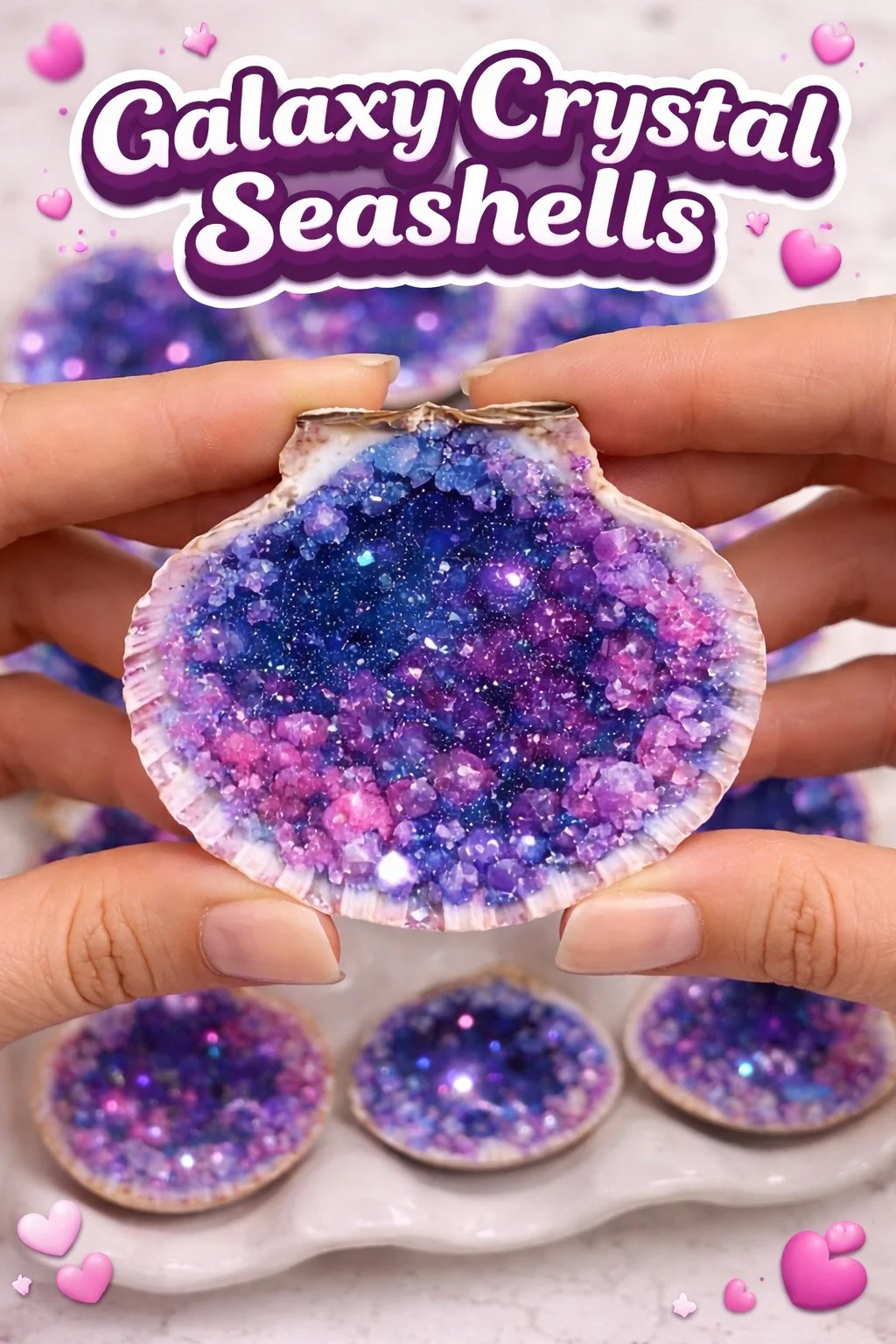
Once the shells dry, you handle them like small keepsakes. Place a single shell in a shallow dish on a bedside table. Group three in a low bowl on a coffee table. Arrange a line of shells on a windowsill where morning sun passes across each surface.
I sometimes set a shell beside a cup of tea and let it watch the steam rise. The shell becomes a small anchor for a few slow breaths. Guests notice the subtle shimmer and often ask about the making. You can use Galaxy Crystal Seashells as little gifts tucked into a handwritten note. They carry a personal calm that feels more like a soft exhale than a showy trinket.
If you enjoy pairing crystals with sculptural forms, you may find inspiration in the single-tree crystal builds we made earlier; the method of patient placement and the satisfaction of building texture has a similar rhythm to that found in our single tree version.
How to Store or Reuse Galaxy Crystal Seashells
Keep your shells out of direct sun if you used heat-sensitive glues or pigments.
Wrap each shell in acid-free tissue for long-term storage to prevent rubbing.
Use a shallow box or drawer lined with soft fabric to keep them from knocking together.
If a crystal loosens over time, reattach it with a small dot of glue and press gently.
You can sand and reseal old work if you want to refresh the shine or change the arrangement.
Repurpose a shell by removing crystals and using the clean shell as a mold for new projects.
When you store them, use gentle separation between pieces. I save mine with cotton pads between layers, and that simple habit prevents micro-scratches and keeps the shimmer clear. Treat the shells like small heirloom objects. With thoughtful storage, most finishes hold for years.
Gentle Tips & Variations
- Play with color blends. Invite deep indigo, soft lavender, and silver into a single shell to mimic distant nebulae. Use small amounts of mica powder mixed with glue to tint the adhesive lightly.
- Try a border approach. Outline the shell rim with fine crystals and leave the center more sparse for a quiet, framed look. This variation highlights shape and keeps the surface calm.
- Use shells as tiny magnets. Glue small but strong magnets to the shell underside and turn them into fridge charms or jewelry. Test magnet placement first so the piece balances.
- Create a set with a theme. Make several shells in a single palette to create a cohesive group for a mantel or shelf. Choose textures that vary so the set reads as deliberate and collected.
- Add small wire loops gently tucked under crystals to make pendants. Use thin, soft wire and tuck ends beneath the glue lines so the shell hangs smoothly.
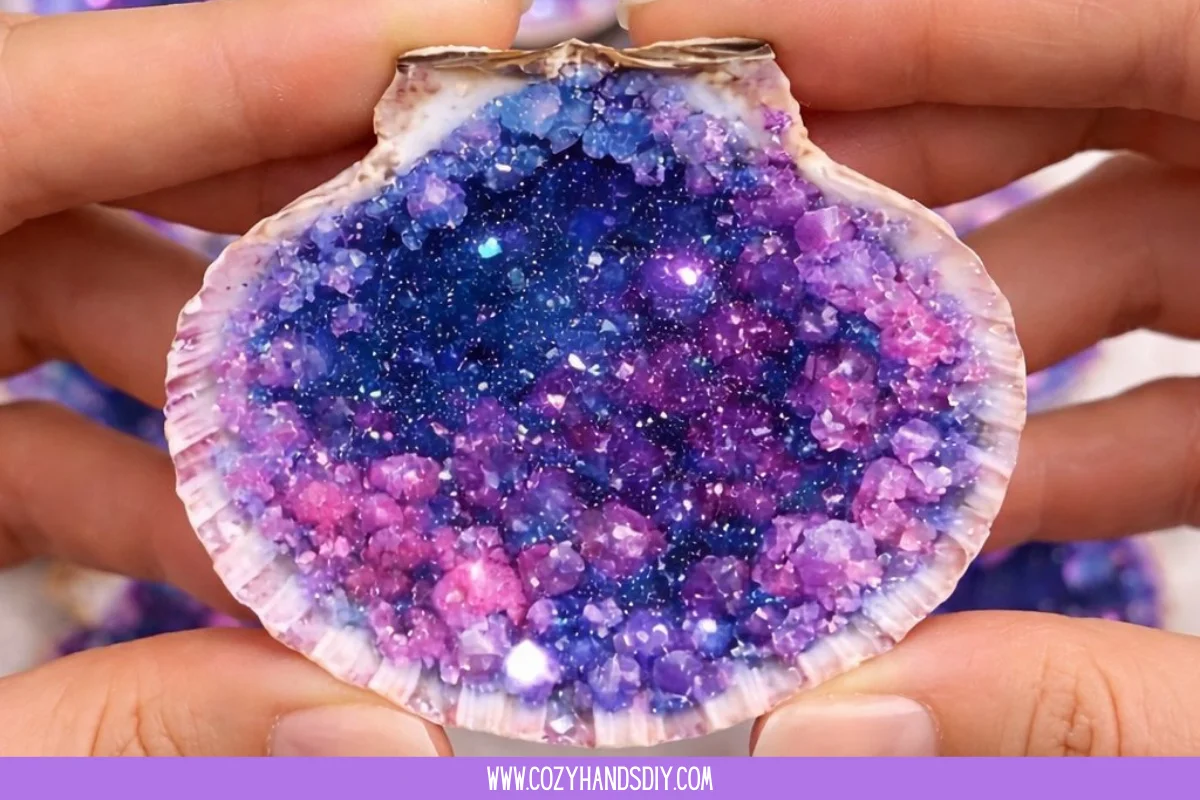
These are invitations, not rules. Each variation asks you to listen to the shell and to the way light moves across it. Let your hands respond to the material’s needs rather than following a strict pattern.
FAQs About Galaxy Crystal Seashells:
Are the crystals safe to handle?
Yes, most craft crystal chips and crushed glass are safe once glued down and sealed. I always recommend working in a ventilated space and keeping small pieces away from young children and pets. Wear finger protection if you prefer to avoid adhesive on skin.
Can I use natural sea glass instead of crystals?
Absolutely. Sea glass adds a softer, weathered look. Choose pieces without sharp edges. If a piece looks rough, you can sand the edge lightly or select a different fragment for safety and comfort.
How long does the glue take to cure?
Cure time depends on the adhesive. Thin craft glues often set within an hour but may require 24 to 48 hours to reach full strength. Read your adhesive instructions and give your shells extra rest time if you are unsure.
Will mica powder fade?
High-quality mica resists fading, but direct, prolonged sun can dull pigments over many years. If you plan to display pieces in strong sunlight, consider a UV-resistant sealer or rotate pieces out of direct light now and then.
Can I wash these shells?
I do not recommend immersing finished shells in water. Light cleaning with a dry, soft brush or a slightly damp cloth is fine once the sealant cures fully. Avoid scrubbing to keep the crystals and finish intact.
A Gentle Note Before You Go
Sit with your finished pieces for a moment after the work ends. Note your hands, the small marks of glue on your fingertips, the quiet satisfaction of a line of placed crystals. Making Galaxy Crystal Seashells is less about perfection and more about attention. Each shell shows evidence of your care. They hold memory in their tiny jewels.
If a piece feels imperfect, consider that imperfection its story. I have kept shells with asymmetry and small gaps because they remind me of a rainy afternoon and a song I liked while working. Allow your making to include those small human traces.
Conclusion
If you ever want to explore ready-made inspiration or gift ideas that echo the shellwork here, you might enjoy browsing a selection of crystal embellished seashells on Etsy for color and texture ideas. For decorative ways to carry coastal motifs into everyday items, you can see how similar elements appear on a product like the coastal seashells Samsung case at Velvet Caviar.
Slow down for a cup of tea, spread a towel, and let your hands learn the language of small, steady touches. Your shells will hold the hush you bring to them.
PrintGalaxy Crystal Seashells

Create sparkling galaxy-inspired seashells with a calming crafting process that invites slow attention and tactile engagement.
- Prep Time: 20 minutes
- Cook Time: 0 minutes
- Total Time: 40 minutes
- Yield: Multiple seashells
- Category: Craft
- Method: Crafting
- Cuisine: N/A
- Diet: N/A
Ingredients
- Clean seashells (any shape)
- Clear craft glue or jewelry adhesive
- Fine and coarse crystal chips or crushed glass
- Iridescent mica powder or fine glitter (optional)
- Small paintbrush
- Tweezers or toothpick
- Shallow tray or scrap paper
- Clear sealer spray or gloss varnish
- Cotton gloves (optional)
Instructions
- Prepare your shells by cleaning and drying them completely.
- Lay out your crystals and tools for easy access.
- Test the placement of crystals on a shell without glue for balance.
- Apply a thin base of adhesive onto the shell.
- Add larger crystals first using tweezers.
- Fill gaps with finer crystals and crushed glass.
- Brush mica powder lightly over the wet glue for shimmer.
- Allow shells to set undisturbed for several hours.
- Add a second adhesive layer if needed to secure crystals.
- Seal the surface with a clear sealer spray.
- Polish the finished shells and place them in a suitable location.
Notes
Use gentle hands when working with the crystals and allow plenty of time for the glue to cure for maximum durability.