

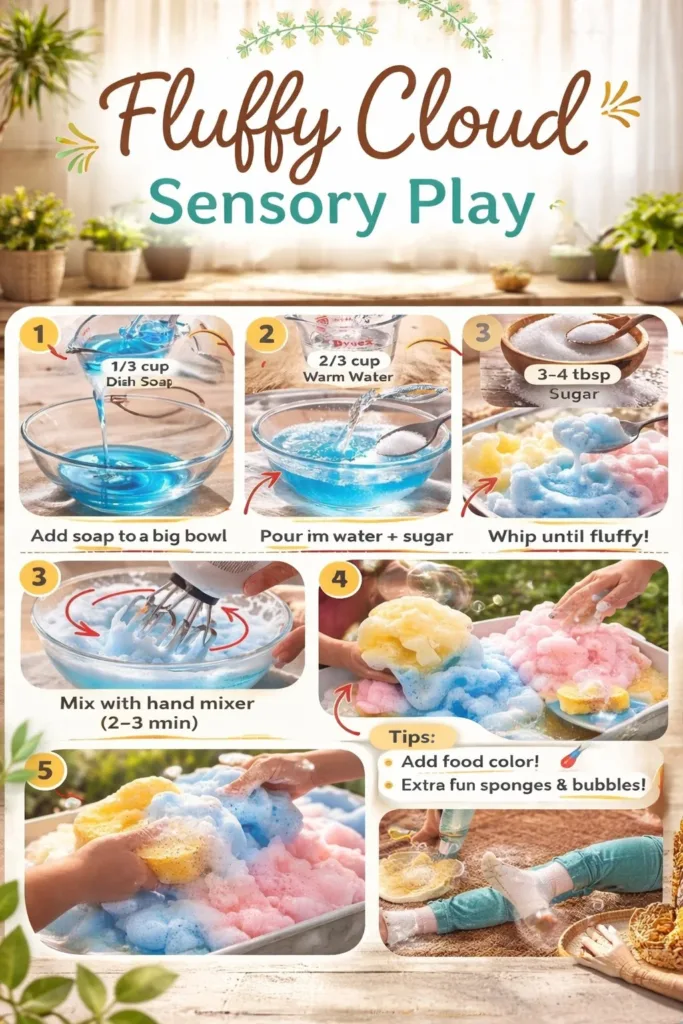
The shaving cream smelled like rain on warm pavement, light and airy as I pressed my palms into the cloud. My fingers left gentle ridges and the mixture sighed back into softness. Fluffy Cloud Sensory Play invited slow, quiet attention hands moving, breath steady, colors folding into one another like soft sunrise. I learned to listen to the tiny sounds it makes when I cup a handful, and I learned how calm it feels to trace a path through a mound of cool, billowy texture. For more playful ideas that fit this mood, I sometimes pair this activity with other gentle sensory projects I keep on hand, like these sensory play ideas for quiet afternoons.
Why Fluffy Cloud Sensory Play Feels Comforting to Create
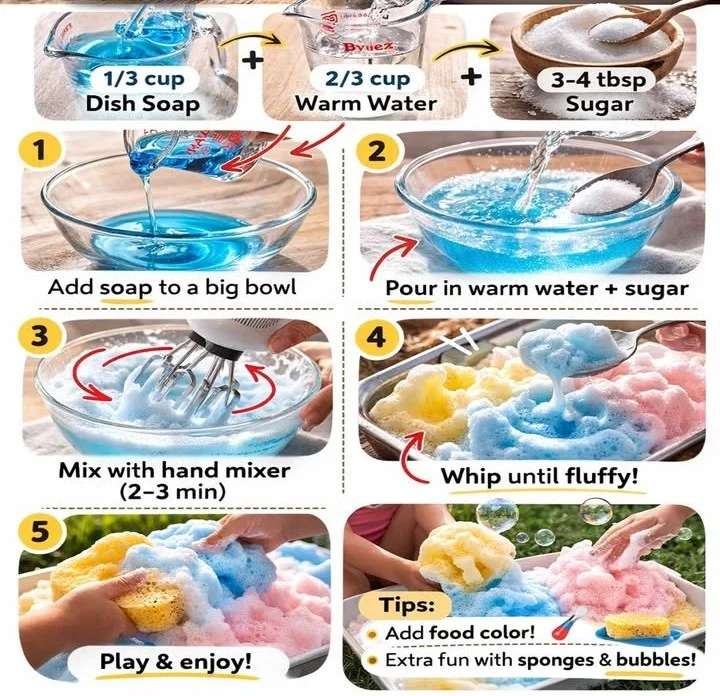
There is an instant hush that comes with light, airy textures. When you scoop fluffy cloud dough, your movements slow without meaning to. Your hands meet resistance that feels soft instead of sharp. That simple change in tactile feedback helps the nervous system shift from doing to noticing.
This activity brings together sight, touch, and a soft sound world. The visual softness of the material comforts the eye. The cool, yielding touch soothes the skin. The slight squeak or sigh as you rub between fingers comforts the ear. You do not need many tools. You do need presence.
I often choose this project on days when I want to steady my breathing and practice calm attention. I also pair it with other small crafts that invite a similar tempo. If you enjoy mixing powdered textures with creams and colors, you might like the playful shapes in the colorful cloud ornaments I made for small gifts. Those sit on my shelf like tiny quiet clouds and remind me that simple materials can hold slow joy.
Why this feels comforting, in simple terms, comes down to predictability and softness. The materials respond in ways your hands expect. You press, it yields. You lift, it billows. That gentle feedback loop anchors attention. You also get to shape something that looks like a cloud, and that visual metaphor itself calms the mind.
How This DIY Comes Together
Before we gather supplies, it helps to imagine three gentle phases. First comes mixing, a quiet whisking that lets air fold into the blend. Second comes play, when hands shape, pat, and press; movements feel rhythmic and slow. Third comes rest, when you tuck the cloud into a container or set small sculptures out to admire.
I like to work on a tray or shallow box so the edges guide my hands and the material stays tidy. I pay attention to the temperature and scent of the room. Cool rooms make the mixture feel firmer; a warm room makes it more yielding. I also keep a small towel and a few jars nearby. Those small, prepared movements make the whole process move gently and calmly.
Moving slowly through the steps helps curiosity remain the center of the experience. I encourage you to notice how the mixture changes as you add each ingredient and to pause between motions. When you lightly press a fingertip into the cloud, see what it tells you. When you pull your hand away, listen to the small sigh of air.
Materials You’ll Need
- Shaving cream, unscented and non-aerosol if possible (easy to find, choose fragrance-free for sensitive noses)
- Cornstarch, a fine white powder (gives structure; substitute-friendly with arrowroot in some cases)
- A large mixing bowl (sturdy and smooth to the touch)
- A wooden spoon or silicone spatula (optional; hands work beautifully)
- Food coloring or liquid watercolors, a few drops (optional; choose gentle pigments)
- A small spray bottle with water for smoothing (optional)
- A few small scoops, cookie cutters, or silicone molds (for quiet sculpting)
- An airtight container for storage (keeps the cloud soft)
- Towels and wipes for easy clean up
- Small tray or baking sheet to contain the play area
I prefer unscented shaving cream to keep the sensory focus on texture and temperature. If you enjoy scent, consider a single drop of diluted essential oil and never use it with very young children. Cornstarch gives the cloud its shape by absorbing moisture and creating a soft, slightly grainy backbone that keeps the shaving cream from collapsing. Together, these two materials create a light, fluffable dough that molds like soft clay and springs back like pillow foam.
Step-by-Step Directions
- Gently spray or pump a generous layer of shaving cream into your bowl. You want a fluffy, cloudlike pile that feels cool and airy when you press it.
- Add cornstarch slowly on top of the shaving cream. Start with small amounts and fold with a spoon or your hands. The mixture will feel powdery at first and then begin to thicken.
- Fold and press the mixture with your fingers. Notice the sound as the air compresses. The texture should become moldable but still soft and billowy.
- If you want color, add a few drops of food coloring or liquid watercolor to a small portion and fold gently. Keep movements soft so the color swirls, creating layered clouds.
- Test the texture by making a small mound. If it holds shape, you are ready to play. If it feels too wet, add a little more cornstarch. If it feels too dry, pulse in a tiny amount of water with the spray bottle.
- Move your hands slowly through the cloud. Pat, press, pinch, or scoop. Use cookie cutters or molds to make quiet shapes that hold for a moment before sighing away.
- Invite others to join in if you like. Use quiet prompts: “Make a path for a tiny bird” or “Trace a soft spiral.” Keep conversation gentle and sensory-focused.
- When you finish a session, gather leftover pieces and press them back into a mound. Smooth the surface with your hands so it closes like a blanket over what remains.
- Transfer the cloud into an airtight container. Press down gently to remove air pockets and seal. Label with the date if you like.
- Wash hands with warm water and a mild soap. Wipe the tray and tools. Pause to notice the softness left on your skin and the calm that lingers.
Each step invites slow noticing. I find that pausing after mixing and before play allows the materials to settle. I often close my eyes for a few breaths and feel where the tension sits in my hands before sculpting. Those small rituals make the process feel more like a practice and less like a task.
Bringing Fluffy Cloud Sensory Play Into Your Space
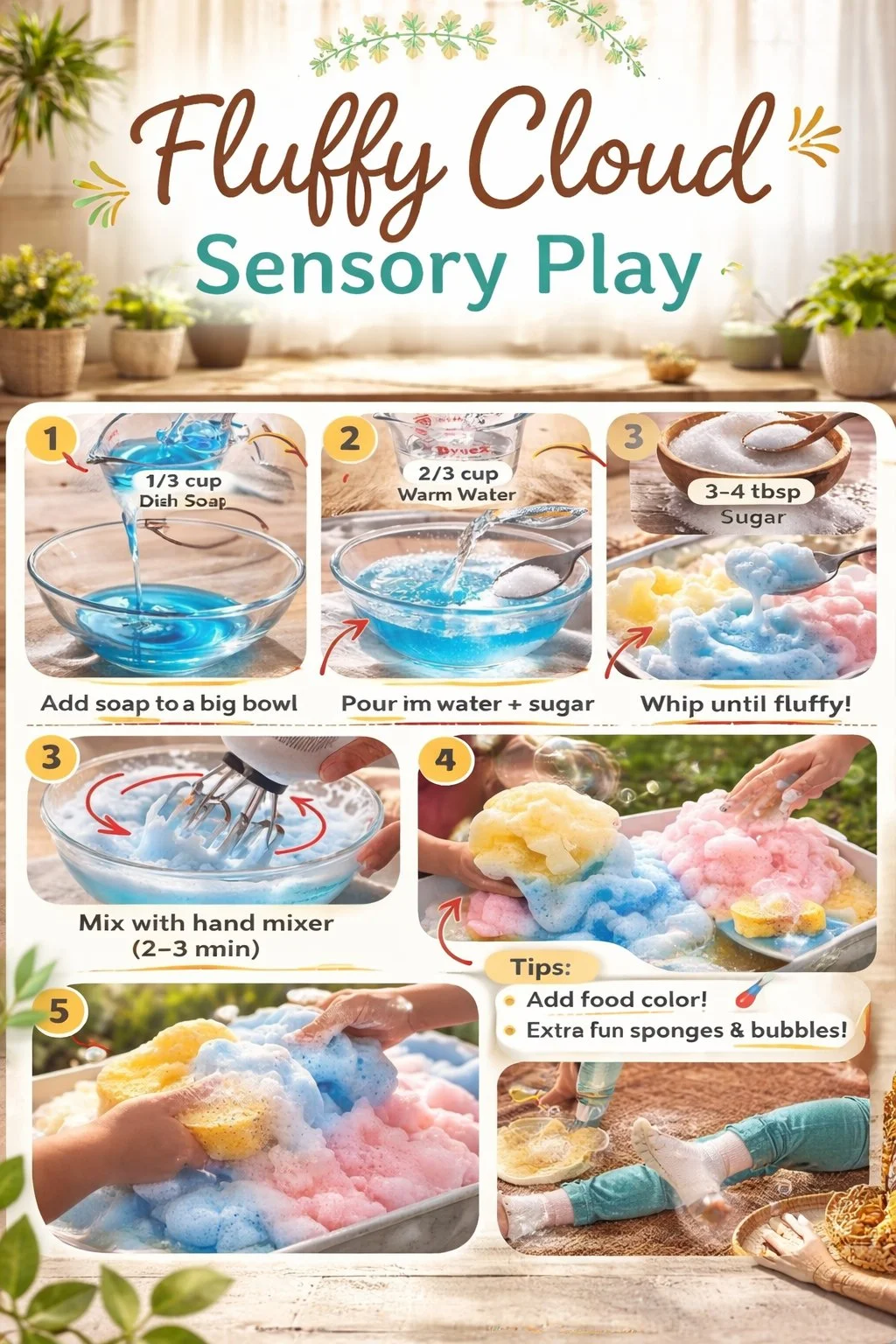
Set this project in a calm corner or at a low table where you can sit comfortably. A shallow tray keeps edges visible and helps you contain the material without fuss. When the light is soft, the colors and textures read as more gentle and inviting.
Use small jars or bowls to separate colored portions if you plan to offer choices. That small act of choosing becomes part of the cozy ritual. For evening play, I like dimmer light and a small lamp that casts warm shadows. For morning practice, natural light brings out the subtle patterns in the cloud as you press and lift.
If you want to extend the sensory exploration, try combining the cloud with other dim, tactile experiences. A nearby bowl of smooth river stones or a little strip of textured fabric invites additional touch sensations. For more projects that explore texture and soft light, consider trying this simple rain cloud in a jar craft, which pairs well with quiet, cloudy play.
Think of the finished cloud not as a single-use item but as a companion for calm moments. Tuck it into a labeled container and set it on a shelf where you can easily reach it. The visual presence of that container can act as a small signal to slow down.
How to Store or Reuse Fluffy Cloud Sensory Play
Store the cloud in an airtight container at room temperature. Press the surface flat to limit air pockets and seal the lid firmly. The cloud will hold its softness for several days to a couple of weeks depending on how moist it is and how warm your space becomes.
If the cloud dries slightly, soften it with a spritz of water and gentle kneading. Add small amounts of fresh shaving cream if you need to revive puffiness. If you see any discoloration, smell changes, or mold, discard the piece. Do not attempt to rehydrate or rescue a piece that shows signs of spoilage.
You can reuse the cloud multiple times by keeping it in its container when not in use and by keeping play sessions short. Small sessions of 10 to 20 minutes maintain the texture longer than long, continuous play. I often split my batch into smaller stored portions; that way I open one container and keep others sealed for later.
For safety and longevity, keep the cloud away from mouths and small children who may ingest it. Use food-safe alternatives if you want an edible sensory material for toddlers, but for this particular fluffy cloud I recommend keeping it non-food and supervised.
Gentle Tips & Variations
- Invite a soft palette. Use pastel food coloring or dilute watercolors for gentle hues that layer without startling. This creates subtle gradients that feel relaxing.
- Add natural scent with care. A single drop of diluted lavender or chamomile oil can deepen the calm for older children and adults. Always test a small skin area and avoid essential oils with babies.
- Try different bases. If you prefer a non-shaving option, mix cornstarch with solid coconut oil and whip until light. The result feels richer and warmer in the hands. Note that coconut oil will feel oily and will have a different shelf life.
- Make small keepsakes. Press a small leaf or a pressed flower into a flattened square and let it dry briefly as a decorative moment. Remove the organic piece after a few hours to avoid mold, and keep the cloud stored separately.
- Use textures for contrast. Introduce a small piece of rough fabric or a cold metal spoon briefly to widen the sensory palette. The contrast of soft and firm can deepen attention without fuss.
These invitations aim to expand rather than complicate. Try one variation at a time and notice how it shifts the mood. Some days you will prefer pure white clouds and silence. Other days a single pale blue swirl will feel right.
What I’ve Learned While Making This
My hands tell me more than my head in this craft. When I rush, the cloud collapses into an uneven paste. When I slow, the mixture breathes. I learned to trust simple feedback: if it feels too wet, add powder. If it puffs apart, fold gently.
I also learned that material choices matter for mood. An unscented base keeps attention on texture. Adding scent changes the center of the experience. For group sessions, unscented and neutral colors create a shared calm. For solo practice, a faint lavender can deepen the ritual.
Safety practices now sit in my routine. I wash hands before and after, keep food far from the workspace, supervise children closely, and discard mixtures that show any sign of spoilage. Sharing these practices with visitors helps the session remain peaceful for everyone.
Making this project repeatedly taught me to notice small cycles: preparing the space, mixing quietly, playing with intent, and cleaning with care. Each cycle feels like a small meditation.
FAQs About Fluffy Cloud Sensory Play
Is shaving cream safe for sensory play with children?
Shaving cream can be safe when you choose unscented, non-aerosol, and non-toxic options and when you supervise closely. Keep it away from mouths and eyes. For very young children who mouth objects, consider food-safe, edible alternatives instead.
How long will the cloud stay soft?
Stored in an airtight container at room temperature, a well-mixed cloud can stay soft for several days up to two weeks. Warm, humid spaces may shorten that time. Refresh by adding a small spritz of water or a touch of fresh shaving cream if needed.
Can I make this without shaving cream?
Yes. You can use solid coconut oil whipped with cornstarch for a richer, warmer texture. You can also mix flour with oil for a denser cloud dough. Each option changes the feel and shelf life, so choose based on the sensory qualities you prefer.
Can I add glitter or sequins?
You can, but consider the clean up and environmental impact. Large, smooth pieces like silicone shapes or natural treasures often feel more peaceful. If you use small sparkles, expect more time for cleanup and watch for pieces being put in mouths.
Is this suitable for calming anxious moments?
Many people find the slow, repetitive motions and soft textures grounding. The activity invites focus on sensation, which can offer a gentle break from anxious thoughts. Keep sessions brief and centered on sensory noticing rather than performance.
A Quiet Closing Thought
I return to this project when I want a small pause that centers hands and breath together. Fluffy Cloud Sensory Play asks for lengthened breaths and gentle fingers. It asks us to treat materials with care and to notice how small, repeated motions can steady the mind.
Leave room for small experiments. Sometimes the cloud will behave exactly as you hope. Other times it will surprise you, drying a little sooner or blooming with unexpected color. Both outcomes teach patience.
May your hands find a slow rhythm, your shoulders loosen, and your attention rest in the soft present of making.
Conclusion
If you would like more ideas for cloudlike textures, this guide on How to Make Cloud Dough shares a simple variation that blends flour and oil for a different sensory feel. For playful color experiments that work well with quiet afternoons, see the tutorial for Toddler Rainbow Sensory Play which offers gentle ways to introduce color in soft materials.
PrintFluffy Cloud Sensory Play

A gentle DIY project for creating a fluffy cloud-like sensory dough using shaving cream and cornstarch, inviting calm and mindful play.
- Prep Time: 10 minutes
- Cook Time: 0 minutes
- Total Time: 10 minutes
- Yield: 1 batch
- Category: Craft
- Method: Mixing and molding
- Cuisine: N/A
- Diet: Non-food sensory play
Ingredients
- 1 cup unscented shaving cream
- 1/2 cup cornstarch
- Food coloring or liquid watercolors (optional)
- Water (for smoothing, optional)
- Airtight container (for storage)
- Towels and wipes (for cleanup)
- Small tray or baking sheet (to contain the play area)
Instructions
- Gently spray a generous layer of shaving cream into a mixing bowl.
- Add cornstarch slowly on top and fold with a spoon or hands.
- Fold and press the mixture with your fingers until it becomes moldable.
- If desired, add a few drops of food coloring and gently swirl.
- Test the texture by shaping a small mound; adjust with cornstarch or water as needed.
- Move your hands slowly through the cloud, using cookie cutters or molds for shapes.
- Invite others to join with gentle prompts for playful engagement.
- When done, gather leftover pieces, smooth into a mound, and transfer to an airtight container.
- Wash hands with soap and water and clean the area.
Notes
For maximum longevity, store in an airtight container at room temperature.