
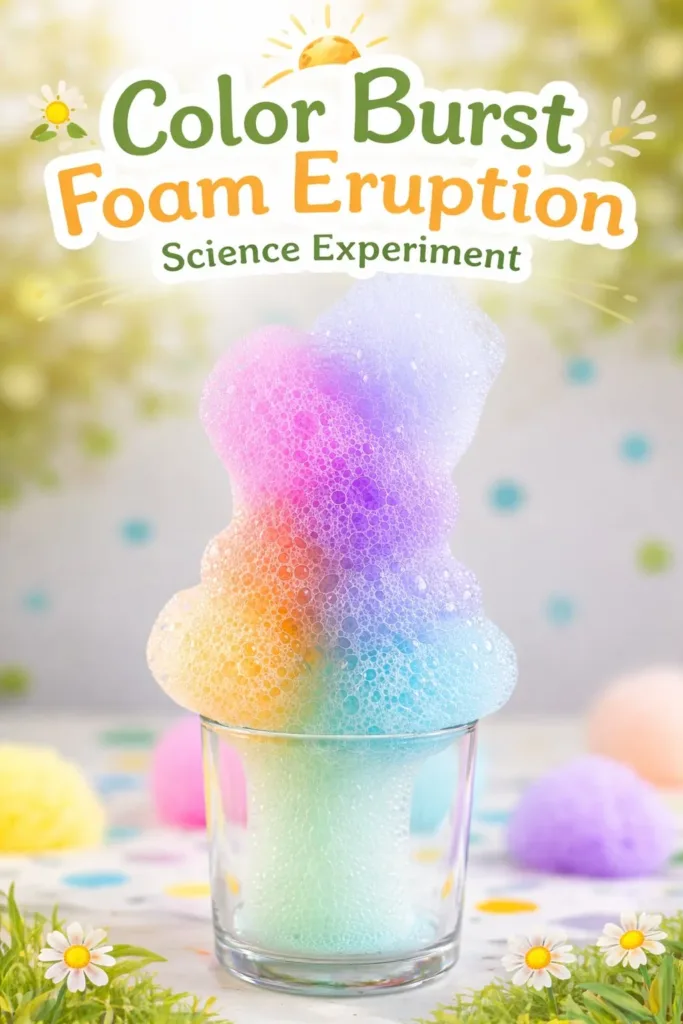
I press my palm gently to the rim of the tray and watch the tiny beads of water gather, each one catching light like a quiet promise. The Color Burst Foam Eruption Science Experiment begins with that hush of anticipation, the soft clink of measuring spoons, and a slow, pleasant mixing of textures that feel warm between my fingers. I move deliberately, noticing the scent of citrus from the food coloring and the faint fizzing that arrives a breath later. This small, bright eruption asks me to slow down and savor the moment of making.
Why Color Burst Foam Eruption Science Experiment Feels Comforting to Create
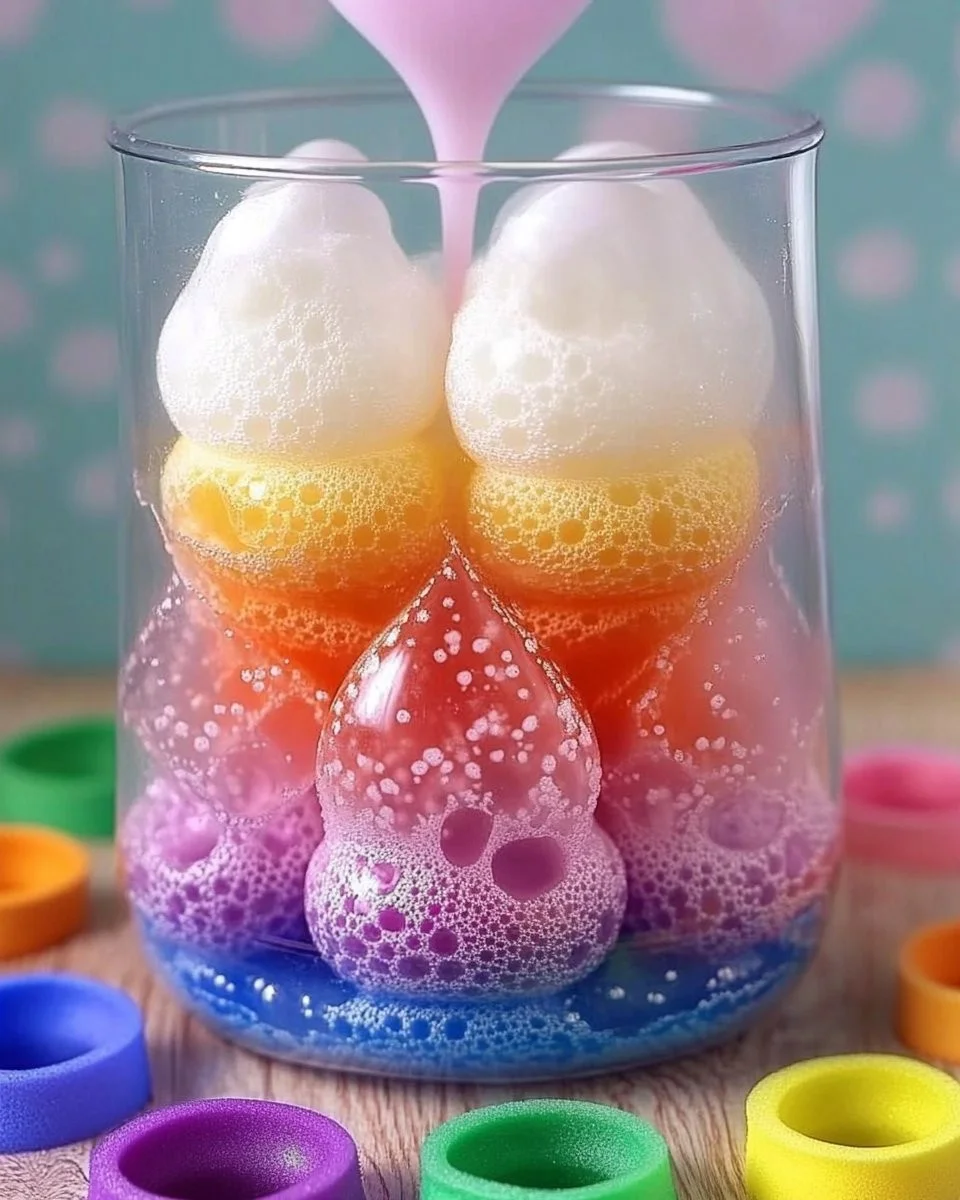
This experiment feels like a gentle ritual. You handle soft powders, smooth liquids, and airy foam. Each element gives a small, satisfying resistance under your fingertips or makes a gentle sound as it shifts. That tactile play brings the mind into the present moment.
I craft this project on quiet afternoons when I want a hands-on pause. The colors bloom slowly and then rush in a fizz, and the slow build followed by lively movement creates a safe, predictable loop of doing and watching. The pattern calms the nervous system and invites curiosity without pressure.
Making this experiment also connects me to childhood memories of simple kitchen science. The chemistry feels accessible, not intimidating. Understanding the why behind the fizz adds a subtle layer of confidence. If you enjoyed exploring texture with our salt volcano science experiment, you will recognize the same tactile meditation here.
How This DIY Comes Together
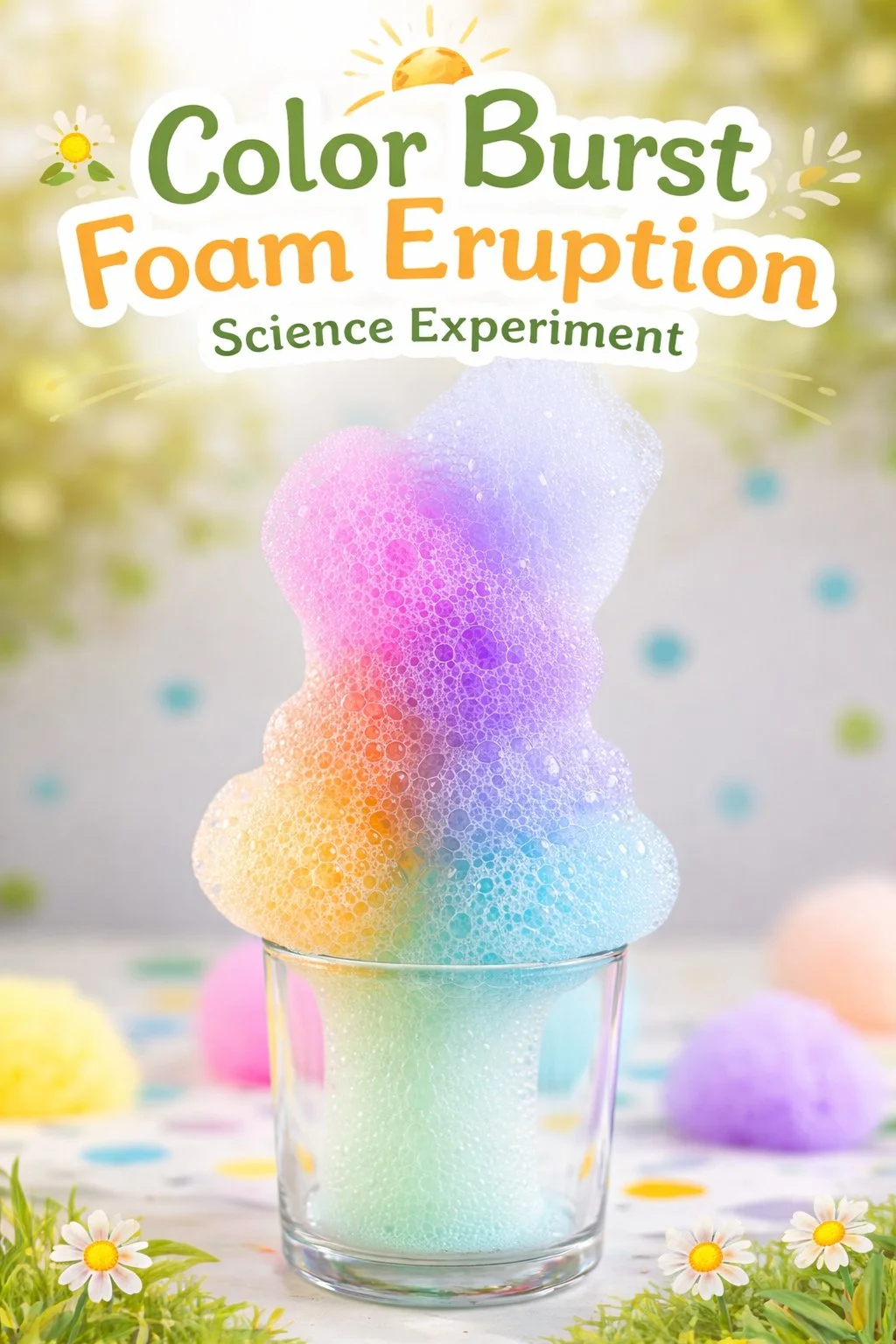
This project moves in three soft rhythms. First, you prepare: measure, mix, and notice the powders as they settle. Second, you arrange: place colors, shape the foam, and set the scene. Third, you reveal: the foam erupts and colors flow outward.
You will notice textures changing as you go. Dry baking soda feels grainy and cool. The vinegar lifts warmth as you pour it, and the foam swells into airy peaks. The experiment rewards small, mindful motions. Pour slowly and listen to the faint pop and hiss as bubbles form.
The visual rhythm keeps things calm. Color drops bloom like tiny suns and travel in slow rivers across the foam. The sound stays soft, like a kettle far away. If you want a different kind of tactile exploration, try our warm, cloud-like ornaments project to compare textures and techniques at a slower pace: baking soda colorful cloud ornaments.
Materials You’ll Need
- Baking soda, about 1 cup (easy to find, forms the base for foam)
- White vinegar, 1 cup (the acid that reacts with baking soda)
- Dawn or another gentle dish soap, 1 tablespoon (helps create stable foam)
- Food coloring in small bottles or liquid watercolors (color burst, optional)
- A shallow tray or baking dish (large enough to catch any overflow)
- Small cups or droppers for color (glass or plastic)
- Measuring spoons and cup (simple and precise)
- Spoon or small whisk for mixing (smooth movements feel calming)
- Towels or paper towels for quick soft clean up (keep on hand)
- Safety: an apron or old shirt and a wipeable surface (recommended)
- Optional: a pipette or eye dropper for delicate color placement
I prefer liquid food coloring because the colors bloom quickly. If you choose powdered pigments, mix them with a little water first so they flow smoothly. For a gentler scent and a softer foam, pick a mild dish soap. If you want to revisit the bubbling reaction more playfully, compare techniques with our colorful vinegar experiments in this write up: colorful baking soda and vinegar reaction.
Step-by-Step Directions
- Arrange your tray and materials on a table with a towel underneath.
Take a breath and let your shoulders relax.
Place cups of color nearby so you reach calmly. - Spoon baking soda into the shallow tray in an even layer.
Press gently to smooth the surface with the back of the spoon.
Notice the cool, grainy texture under your fingers. - Mix dish soap into the vinegar in a small measuring cup.
Stir slowly until the soap blends and the liquid looks slightly opaque.
The soap helps foam form and hold its shape. - Use droppers to place small pools of food coloring on the baking soda.
Space colors a little apart so they can spread without immediate mixing.
Watch the color sit like tiny islands on the white surface. - Pour the soap-vinegar mixture slowly over the colored baking soda.
Aim for a steady stream near one edge to start a gentle flow.
Listen for the soft fizz and feel the tray hum with movement. - Step back and watch the foam rise and carry color outward.
Notice how the foam forms ridges and pockets as it expands.
Let the pattern unfold without trying to control it. - If you want bolder streaks, drip more color into active foam with a pipette.
The foam accepts drops and spreads them in delicate veins.
Work slowly and enjoy each color as it travels. - Use a spoon to nudge foam gently if it piles unevenly.
Small, caring movements reshape texture without breaking the reaction.
Keep your motions slow to maintain the calm mood. - When the fizz quiets, scoop a little foam with a spoon to feel its texture.
It will feel light and slightly bubbly, almost like soft shaving cream.
Take a moment to name the sensations you notice. - Clean up mindfully, pouring leftover liquid down the sink and wiping the tray.
Rinse cups and tools with warm water and a soft cloth.
Notice the small satisfaction of returning your space to stillness.
Enjoying the Finished Piece
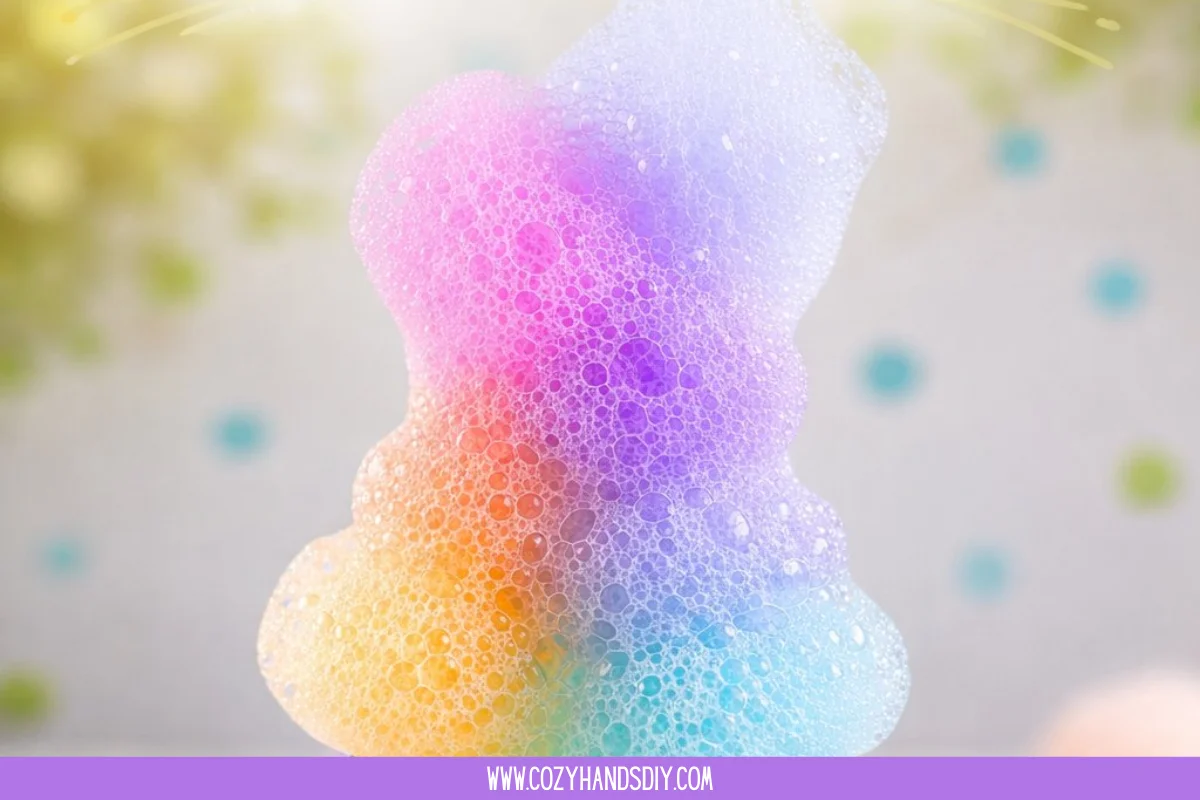
At the end, the tray looks like a small, colorful landscape. Rounded hills of foam hold gentle veins of color. I take a quiet minute to appreciate the temporary beauty and the way the foam catches light, showing tiny rainbows where bubbles thin.
You can turn the experiment into a short contemplative practice. Sit beside the tray with a warm cup and observe color transitions, breathing slowly. If children join you, invite them to describe the textures and sounds. Let curiosity guide questions rather than answers.
If you want to reuse the visual for a longer display, photograph the tray from different angles. Natural light highlights the translucent edges of the foam and the tenderness of bubbles. A photo lets you carry the calm of the moment into your day without needing to keep the foam intact.
How to Store or Reuse Color Burst Foam Eruption Science Experiment
This experiment lives in the moment. The foam will collapse and the colors will dilute into a pale pool within an hour or two.
If you want to save a piece of the experience, take photos as the foam peaks. You can also gently skim a small amount of the foam into a jar for a brief sensory jar to hold in your hand for a few minutes. Keep that jar closed and use it only once or twice, as the mixture will separate over time.
If you plan to repeat the activity, rinse and dry your tray and tools well. Store baking soda and vinegar separately in labeled containers. Keep the food coloring sealed and away from direct light so it retains brightness. Keep safety in mind: store materials out of reach of small children when not in use.
For small leftover mixtures, pour them down the sink with plenty of water. Vinegar and baking soda neutralize quickly, and dish soap dilutes further. If you prefer, mix leftovers with more baking soda before disposal to quiet the fizz and ease cleanup.
Gentle Tips & Variations
- Try different textures: fold a little cornstarch into the baking soda for a denser base.
Cornstarch adds a velvet feel and slows color diffusion.
This small swap changes how the foam rises and how color spreads. - Explore scent: add a drop of essential oil to the vinegar before mixing.
Lavender or orange bring a calming scent to the experience.
Use only a small amount and test first for sensitivity. - Layer colors: place one color, allow a slight reaction, then add another.
The slow layering creates soft gradients instead of immediate mixing.
This method invites patient watching and subtle surprises. - Use warm vinegar for a softer rise.
Warm liquid increases reaction speed slightly and feels comforting to pour.
Warmth enhances sensory comfort but keep it safe to touch. - Make it a mindful ritual: light a candle or play soft instrumental music.
Pair the experiment with a short three-breath grounding exercise before you begin.
These small practices deepen presence without complicating the project.
If you like exploring different baking soda and vinegar textures, you might enjoy experimenting with our other colorful reactions for more ideas: colorful baking soda vinegar reaction.
FAQs About Color Burst Foam Eruption Science Experiment:
Is this safe for young children?
Yes, with supervision. Baking soda and vinegar feel safe to touch, but avoid getting color in the eyes. Keep children at a calm pace and supervise every step. Use child-safe food coloring and gentle dish soap. I sit beside them, model slow motions, and speak softly to keep the space reassuring.
Can I use other colorants like paint or powdered pigments?
You can, but liquid food coloring or watercolors work best for smooth flow. Powdered pigments need pre-mixing in water so they do not clump and scratch surfaces. If you try paints, thin them with water so they move easily through the foam.
How long does the foam last?
The foam peaks within a few minutes and gradually settles over half an hour. The brightest colors often appear in the first ten minutes. I take photos and breathe slowly while the mesh of bubbles shows its most delicate textures.
Can I add glitter or small objects?
You can add a pinch of biodegradable glitter for sparkle, but keep pieces small and rinse thoroughly after. I avoid heavy objects that sink and break bubbles; instead, I let color and foam do the visual work. If you add anything, plan for extra clean up.
Does temperature change the reaction?
Yes. Warm liquids increase the reaction speed and create a livelier foam. Cooler liquids slow things down and make the reaction softer. Choose warmth for a quick show and cool for a long, gentle reveal.
A Quiet Closing Thought
When I tidy the tray, I keep a soft awareness of the entire process. The small order of measuring, the rhythm of pouring, and the bright bloom of color all create a comforting loop of intention and play. This experiment does not ask for perfection. It invites gentle attention, small observations, and a willingness to let the result be fleeting.
I encourage you to approach this project as a short, sensory pause. Make room for curiosity. Let the colors lead you, and let cleanup be a closing breath. You will find that the quiet care you bring to making ripples out into the rest of your day.
Conclusion
If you want more playful supplies for colorful, bath-friendly projects, consider this fun option for kids: kids bath bomb powder with mini unicorn surprises, which pairs well with sensory making sessions.
For more science-based ideas and step-by-step explanations of similar reactions, explore The Ultimate Guide to Volcano Experiments for Kids, a helpful resource that deepens the science while keeping projects accessible and safe.
PrintColor Burst Foam Eruption Science Experiment
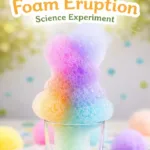
A captivating hands-on science experiment that combines baking soda and vinegar to create colorful foam eruptions, inviting curiosity and sensory exploration.
- Prep Time: 10 minutes
- Cook Time: 10 minutes
- Total Time: 20 minutes
- Yield: 4 servings
- Category: Science Experiment
- Method: Mixing
- Cuisine: N/A
- Diet: N/A
Ingredients
- Baking soda, about 1 cup
- White vinegar, 1 cup
- Dawn or another gentle dish soap, 1 tablespoon
- Food coloring in small bottles or liquid watercolors (color burst, optional)
- A shallow tray or baking dish
- Small cups or droppers for color
- Measuring spoons and cup
- Spoon or small whisk for mixing
- Towels or paper towels for quick clean up
- Safety: an apron or old shirt and a wipeable surface (recommended)
- Optional: a pipette or eye dropper for delicate color placement
Instructions
- Arrange your tray and materials on a table with a towel underneath.
- Take a breath and let your shoulders relax.
- Place cups of color nearby so you reach calmly.
- Spoon baking soda into the shallow tray in an even layer.
- Press gently to smooth the surface with the back of the spoon.
- Mix dish soap into the vinegar in a small measuring cup.
- Stir slowly until the soap blends and the liquid looks slightly opaque.
- Use droppers to place small pools of food coloring on the baking soda.
- Pour the soap-vinegar mixture slowly over the colored baking soda.
- Step back and watch the foam rise and carry color outward.
- If you want bolder streaks, drip more color into active foam with a pipette.
- Use a spoon to nudge foam gently if it piles unevenly.
- When the fizz quiets, scoop a little foam with a spoon to feel its texture.
- Clean up mindfully, pouring leftover liquid down the sink and wiping the tray.
Notes
This experiment is a fun, safe way to explore chemical reactions and sensory experiences. Perfect for children with supervision.