
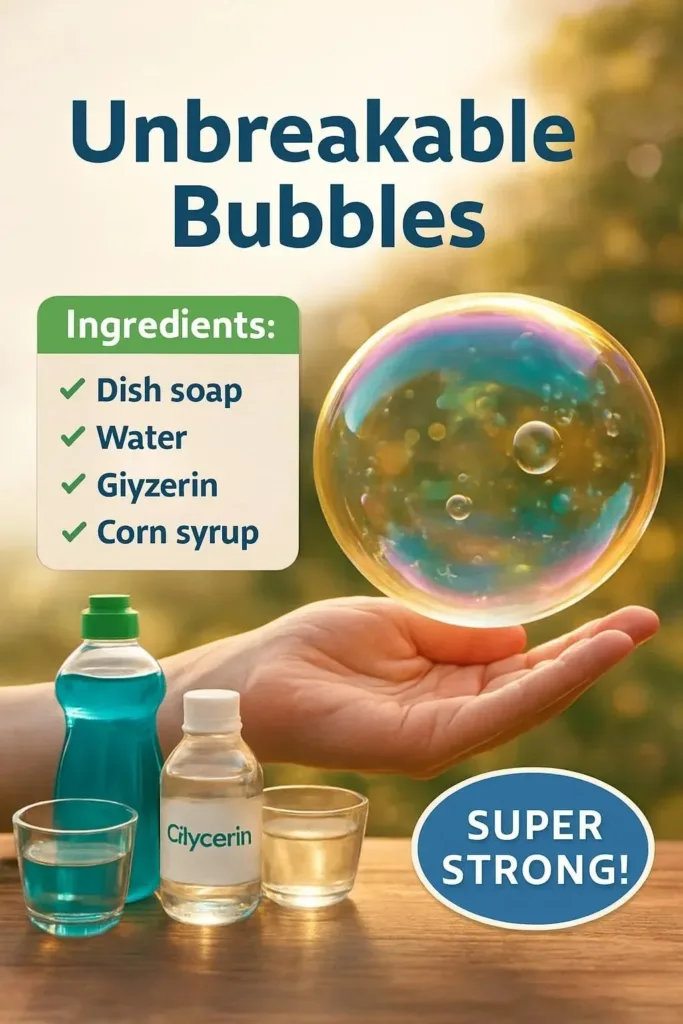
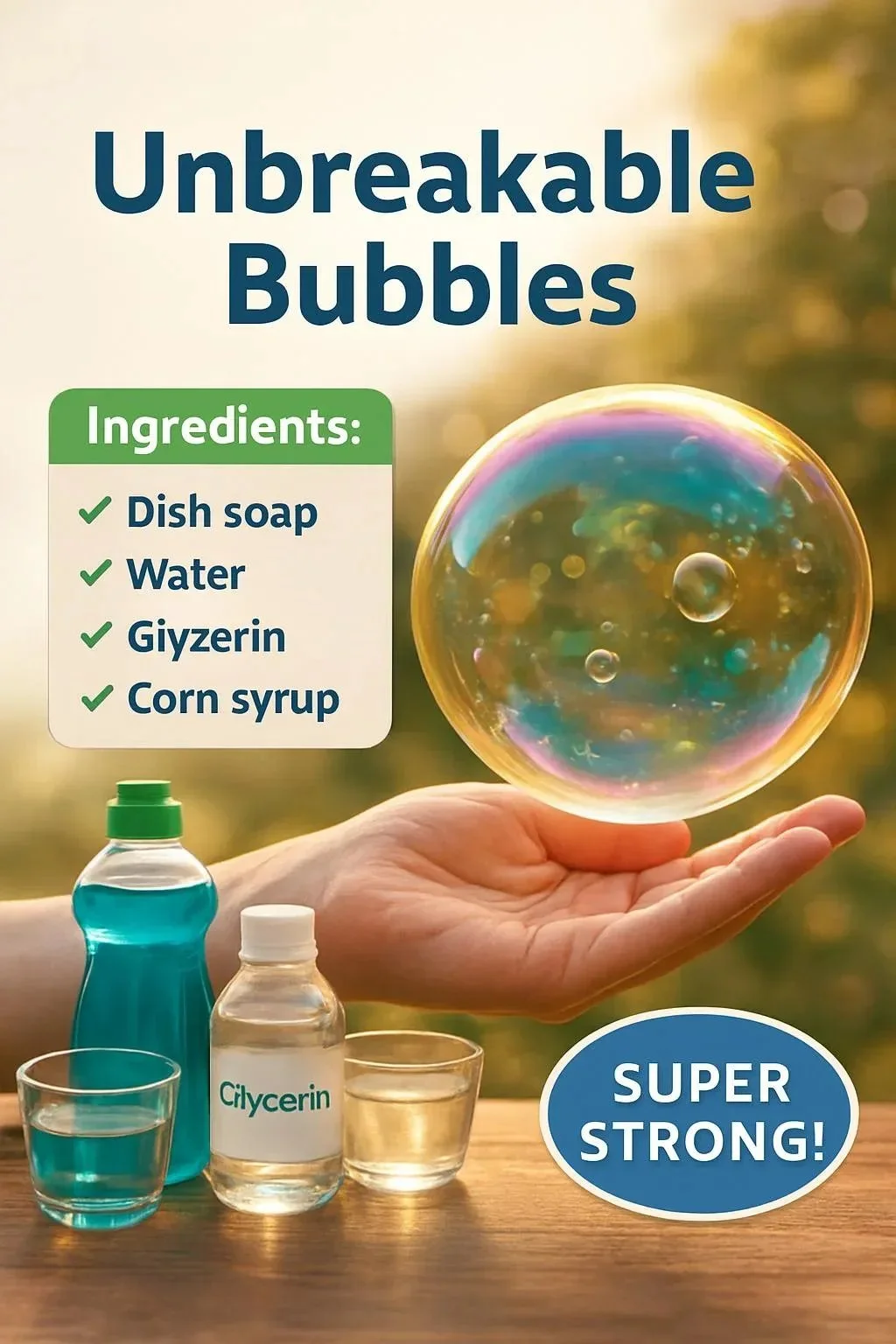
A single light stream of late afternoon makes the bubble glow like a small planet in my palm. It feels cool and slippery, and it holds for a breath longer than I expect. I learned to make Unbreakable Bubbles on slow afternoons when I wanted hands-on calm. The solution smells faintly of lemon dish soap. I stir with a wooden spoon, listening to the soft, slow swish as the mixture smooths into something silky. If you have tried light, playful bubble recipes, this one deepens the experience; it is connected in spirit to our fun bouncing bubbles experiments, but it stretches time a little more and asks you to touch gently.
Why Unbreakable Bubbles Feels Comforting to Create
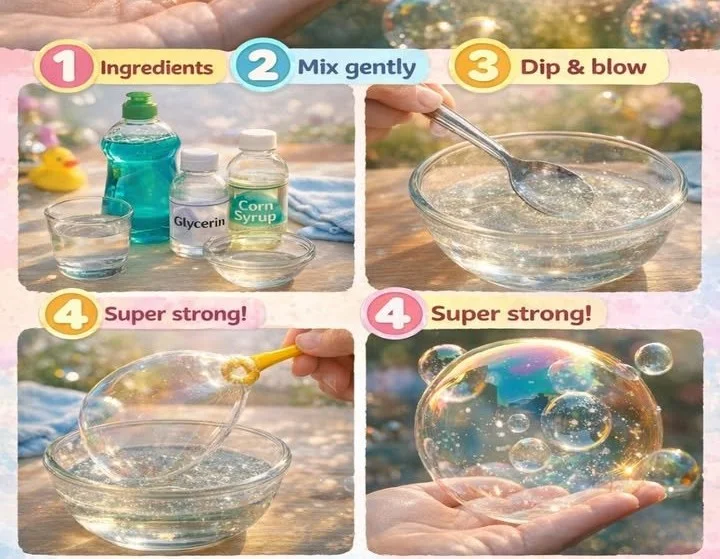
There is a quiet miracle in stretching something fragile into strength. Unbreakable Bubbles slow the pace because they invite careful hands and focused breathing. You move with intention as you mix a glossy solution, and you watch a film form, thin as silk and full of light. The sound is soft: a gentle plop when a bubble lifts off the wand, the faint trickle as a droplet falls back into the bowl. Those little sounds and textures anchor attention.
Creating these bubbles gives you a calm ritual. You measure slowly, warm the water with your hands, and wait while ingredients bind; patience becomes part of the craft. The tactile feedback matters. When a bubble rests on your palm, you sense the cool tension, the tiny give under your fingertips, and the slow roll of liquid strength that keeps it whole. That sensation feels grounding. I return to this recipe when I want to practice gentle presence.
A Gentle Look at the Process
The method reads like a simple kitchen recipe but moves with the pace of a small ceremony. You dissolve a thickener, mix in a good-quality dish soap, and add a humectant like glycerin to slow evaporation. The thickener gives the film a soft body, the soap builds the surface tension necessary for a bubble skin, and the glycerin keeps that skin moist and stretchy. You prepare, you wait, and you play.
Expect patience. The mixture benefits from a rest, so you notice the way the liquid settles and becomes sedate and glossy. The motions feel slow and pleasant: a slow sprinkle of powder, a smooth stir, a pause to clear your mind. If you enjoyed our fun bouncing bubbles tutorials, this process will feel familiar but quieter. Plan to spend a little time watching and adjusting; you learn by feeling how the solution behaves.
Materials You’ll Need
- Distilled or filtered water (helps reduce minerals that affect bubbles)
- Gentle dish soap, unscented or lightly scented (Dawn or similar works well)
- Food-grade glycerin or light corn syrup (glycerin is preferable for stretch)
- Guar gum or gelatin powder (guar gum makes a stretchy film, gelatin can be an alternative)
- A clear mixing bowl or pitcher (easy to watch the texture)
- Measuring spoons and a teaspoon for fine additions
- A whisk or spoon with a smooth edge (avoid vigorous foam)
- Bubble wand, straw, or a simple loop of wire or pipe cleaner
- A small funnel and clean, sealable container for storage (optional, easy to find)
- Towels and a non-slip mat (safety: the floor can get slippery)
I choose guar gum because it hydrates into a soft, slippery gel that strengthens the bubble skin without harsh stiffness. You can substitute gelatin if you prefer a pantry-friendly option; I describe both in the steps. Keep the materials simple and safe for hands. If you plan to work with children, select non-toxic soap and supervise when using glycerin.
Step-by-Step Directions
Warm the water gently in a kettle or microwave until it feels lightly warm to the wrist. Slow water helps the guar or gelatin dissolve more smoothly and avoids clumping.
Sprinkle guar gum slowly into the warm water while whisking in a steady, calm motion. Stir until the liquid feels silky and free of grainy bits. A few minutes of gentle whisking prevents lumps.
Add dish soap to the hydrated gum mixture with a soft fold of the whisk. Fold rather than whip to keep foam low and the liquid glossy. Aim for a quiet, even surface.
Pour in glycerin a little at a time while stirring gently. Glycerin draws moisture and makes the film stretchy. Use teaspoons; small amounts change the texture.
If you choose gelatin, bloom it in cold water first and warm gently to dissolve, then blend into the soap solution. Gelatin gives a slightly different feel tender and springy. It needs careful heating so it does not become rubbery.
Let the mixture rest, covered, for at least two hours or overnight for best results. Resting lets air bubbles escape and the thickener hydrate fully. The solution looks clearer and moves slower when it is ready.
Test with a simple loop wand or a straw. Form a bubble slowly and feel the film stretch. If the film tears too quickly, add a small splash more glycerin and wait; if it feels too thick, thin with a teaspoon of water.
Practice gentle handling: cup the bubble in an open palm, roll it to another surface, or stack bubbles softly. The method rewards slow, steady hands and a mindful breath between movements.
Store the leftover solution in a sealed container in a cool place and label it. Discard if it develops an off odor or shows cloudiness that did not come with the original mix. Clean up any spills promptly to avoid slipping.
Enjoying the Finished Piece
Once a bubble holds on your finger or palm, take a moment to notice how it shifts the light. You can roll a bubble along a sleeve or a gloved hand. You can place it on a glass table and watch it reflect a tiny, upside-down world. In quiet practice, I like to make a single bubble and follow it with my eyes until it returns to the liquid surface. Those small rituals feel like slow breaths.
Use them for relaxation or gentle play. Children learn patience through this process, and adults find it soothing. In a mindful session, make a small set of bubbles and simply watch them gather light. Indoors, keep surfaces soft and clear of sharp edges; outdoors, choose a calm day to avoid sudden gusts. The joy here comes from attentive interacting, not speed or quantity.
How to Store or Reuse Unbreakable Bubbles
Store the solution in a clean, airtight jar or bottle. A dark, cool cupboard helps slow microbial growth and keeps the mix stable.
Keep the lid tight and label the container with the date. Use within two to three weeks for best performance, and discard if it smells sour or looks cloudy in unexpected ways.
Reuse the solution for several sessions. If it thickens slightly over time, gently stir in a teaspoon of warm water to loosen it, then wait before testing.
Avoid contamination. Use clean tools and avoid dipping dirty wands or hands into the storage jar. If you want longer shelf life, small refrigerators keep the mix stable, but bring it to room temperature before use.
Small Ways to Make It Your Own
Try a few gentle variations and see what feels right. These are invitations, not rules.
Add a drop of plant-based food coloring to tint the film subtly. The color helps you see the skin but keep amounts small so it does not weaken the film.
Use different wand shapes. Large loops create wide, glinting bubbles; small loops make denser, more portable bulbs.
Swap glycerin for light corn syrup if you do not have glycerin. Corn syrup works in a pinch but may stick more to hands. Test and adjust.
Infuse calm by scenting a cloth nearby with lavender, not the bubble mix. Essential oils can change bubble strength and may irritate skin, so keep them separate.
Practice outdoors on a still morning for long, floaty bubbles. Sunrise light makes them glow; a soft lawn provides a forgiving surface.
I learned these small tweaks through many relaxed experiments. Some days I wanted wildly elastic bubbles, other days I aimed for tiny, delicate ones. Let curiosity guide you and keep safety simple: no one ingests the mix, and everyone washes hands after play.
FAQs About Unbreakable Bubbles
Will the glycerin or guar gum irritate skin?
Most people handle these ingredients without issue in small amounts, but if you have sensitive skin, wear thin gloves or test a tiny drop on the forearm first. Choose a mild dish soap and avoid scented or antibacterial varieties.
Can I use regular tap water?
Yes, you can, but minerals in hard tap water sometimes reduce bubble life. Distilled or filtered water makes it easier to get consistent results, especially if you want very long-lasting bubbles.
How long does the solution last?
If you store it sealed in a cool place, expect two to three weeks of good performance. If it smells off or shows film that does not clear with stirring, discard and make a fresh batch.
Is it safe for children?
With supervision, yes. Keep the solution out of mouths and eyes, and mop up spills. Use child-friendly dish soap and supervise young children closely.
Why does my mixture foam too much?
Vigorous stirring introduces foam. Fold gently instead of whipping. If foam appears, let the solution sit until the bubbles subside, or skim the foam away with a spoon.
Final Reflections on Making Unbreakable Bubbles
Sit with the process and savor the patience it asks for. The mix asks you to move slowly and to notice textures and sounds. In those small acts of attention, you practice a kind of quiet bravery: staying present with a fragile thing and learning how to support it. Each successful bubble feels like a gentle agreement between your hands and the materials.
When I make these, I take a breath between each trial. I watch light scatter across the film and let my shoulders loosen. The craft gives permission to slow down and to notice the small, luminous things that otherwise slip by. Make one bubble and follow it with your gaze. Let the work fold into a moment of calm.
Conclusion
For a clear explanation of how glycerin and sugar influence bubble longevity, I often return to ThoughtCo’s practical guide on bubbles that do not pop, which helps me understand the science in plain language. If you want a concise activity sheet and a tried-and-true classroom-friendly recipe, the Unbreakable Bubbles PDF from Girlstart offers a solid, tested method that complements this calming approach.
PrintUnbreakable Bubbles
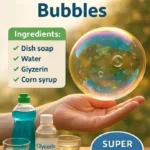
A calming recipe for creating unbreakable bubbles, inviting careful handling and focused breathing.
- Prep Time: 10 minutes
- Cook Time: 0 minutes
- Total Time: 120 minutes
- Yield: Multiple bubbles
- Category: Craft
- Method: Mixing
- Cuisine: N/A
- Diet: N/A
Ingredients
- 1 cup distilled or filtered water
- 1 tablespoon gentle dish soap, unscented or lightly scented
- 1 tablespoon food-grade glycerin or light corn syrup
- 1 teaspoon guar gum or gelatin powder
- 1 clear mixing bowl or pitcher
- Measuring spoons
- A whisk or spoon with a smooth edge
- Bubble wand, straw, or pipe cleaner
- A small funnel (optional)
- Towels and a non-slip mat (for safety)
Instructions
- Warm the water gently in a kettle or microwave until it feels lightly warm to the wrist.
- Sprinkle guar gum slowly into the warm water while whisking steadily.
- Add dish soap to the mixture with a soft fold of the whisk.
- Pour in glycerin a little at a time while stirring gently.
- If using gelatin, bloom it in cold water first, then blend into the soap solution.
- Let the mixture rest, covered, for at least two hours or overnight for best results.
- Test with a bubble wand or straw to form a bubble slowly.
- Practice gentle bubble handling and enjoy the calm ritual.
- Store the leftover solution in a sealed container in a cool place.
Notes
This recipe invites patience and creativity. Adjust ingredients to see what works best for you.