

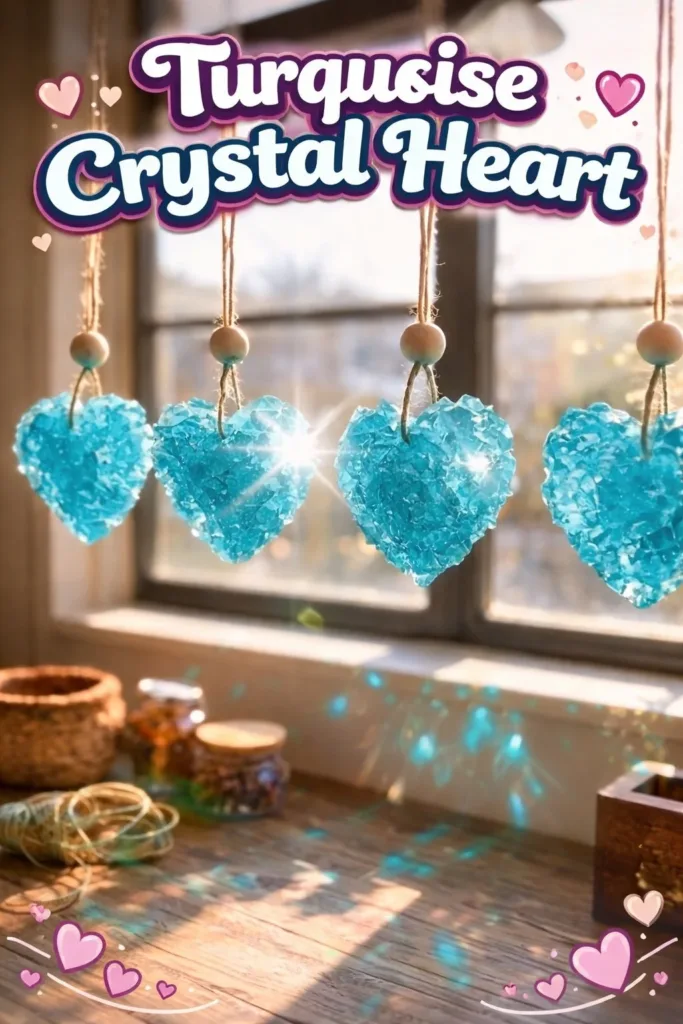
The cool weight of a small turquoise crystal heart rests in my palm. Light pools across its smooth face and the faint ridges catch my breath, like the memory of a wave. I stroke the curve with my thumb and listen to the quiet: the tiny scrape of mineral against skin, the soft warmth of my hand, the way the color slows my thoughts. Making a Turquoise Crystal Heart invites that same slow attention. It asks for gentle hands, simple tools, and the kind of calm that comes from watching something form beneath your care.
If you have ever savored the slow bloom of a crystal, you will find this project grounding and quietly joyful. For a little inspiration about related crystal growth projects, I like to look back at our post on growing crystal heart ornaments, which shares the same patient magic.
The Quiet Joy of Making Turquoise Crystal Heart
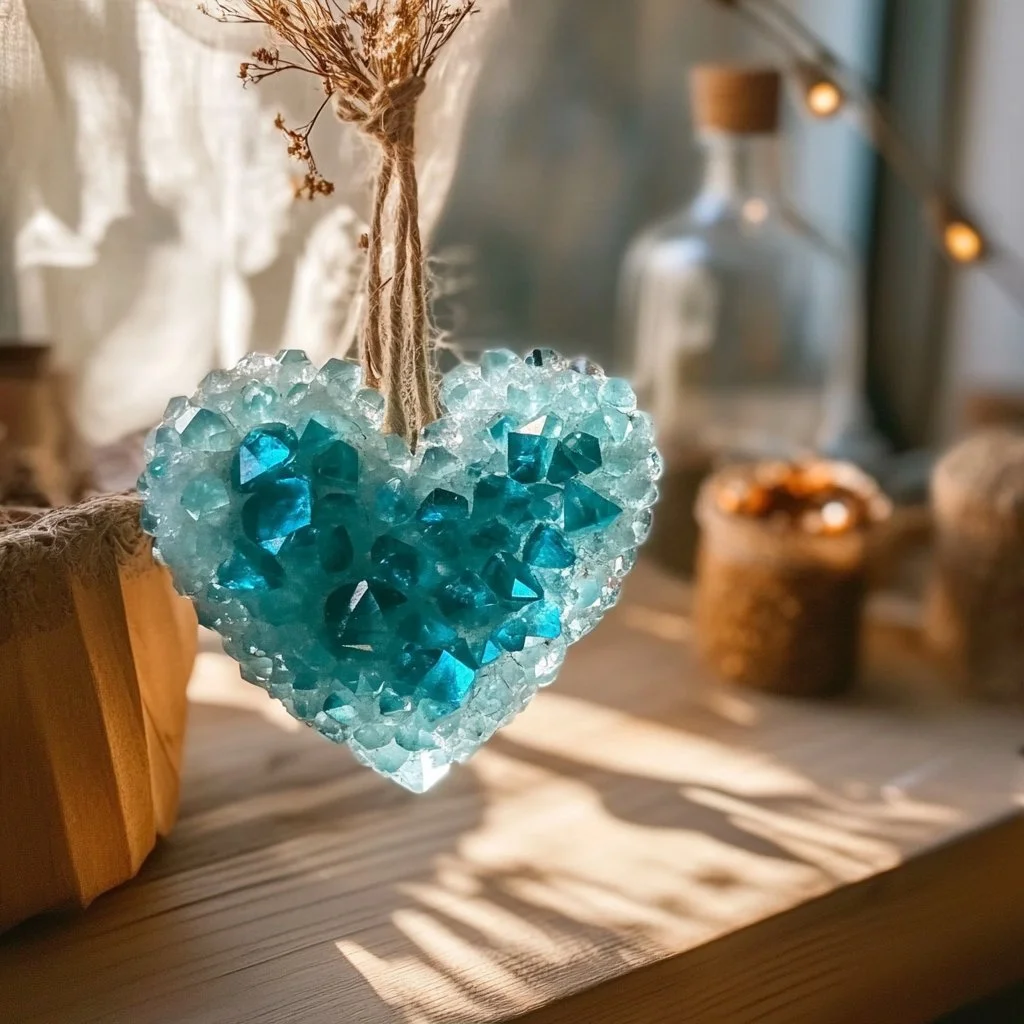
This project gives you a small, tactile anchor. The Turquoise Crystal Heart comforts through color, weight, and texture. Turquoise brings cool blue-green tones that calm the eye. The heart shape asks you to move slowly and with purpose. The making process keeps your hands busy in a soft, steady rhythm.
When you craft this piece, you trade rush for ritual. You measure, stir, and wait. You feel grains slip between your fingers and watch tiny points begin to form. Those moments help anchor you to the present. The sound of a spoon against a bowl, the scent of warm water, and the sight of crystals growing like frost all work together to soothe. This is not fast craft therapy. This is a small, intentional practice that asks you to notice and to be gentle.
I sometimes return to earlier posts as a way to build familiarity with crystal growth. If you want a straightforward, beginner friendly guide to the method we use here, you may find the baking soda crystal heart growth post helpful for extra context.
How This DIY Comes Together
Before you gather tools, imagine the movement. You will dissolve mineral, pour slowly, and then wait. The act of stirring can be meditative. Each circle of the spoon feels the same and different. You mix until liquid looks clear, then add a few drops that tint the solution like late afternoon sky.
Texture matters. The solution starts smooth and glassy. As crystals appear, the surface takes on a fine, fragile grit. Touch that grit with care; it feels like cooled sugar or the crust on a slow bread. Visual rhythm enters as sparkling points push up across the heart. The growth happens quietly and steadily. You check now and then, not to hurry, but to witness.
For practical tips about creating steady, even crystals, there is an easy how-to baking soda crystal heart growth guide on the site that complements these directions and explains some common pacing and timing choices.
Materials You’ll Need
- Turquoise howlite or dyed howlite heart blank, about 40 to 50 mm (easy to find, replaceable)
- Baking soda powder (a small box, common pantry item)
- Warm distilled water (helps crystals form more evenly)
- A small glass or ceramic bowl (nonreactive, smooth)
- A spoon for stirring (metal or heatproof plastic)
- Fine mesh strainer or coffee filter (optional, keeps bits out)
- Tweezers (for gentle handling of the heart)
- Drying rack or shallow tray lined with paper towel
- A thermometer (optional, useful if you like precision)
- Cotton gloves or clean hands (gloves protect the surface and keep oils away)
- A shallow jar or container for storage while crystals grow
- A few drops of turquoise or blue-green dye suitable for nonporous materials (optional)
- A soft cloth for final polish
Notes: The heart blank can be an inexpensive howlite piece dyed turquoise, which gives the look without the cost of natural turquoise. Baking soda crystals grow gently and predictably, making this method friendly for a calm session. Distilled water helps avoid mineral interference. If you prefer to skip dye, the natural tones of the howlite look soft and lovely.
Step-by-Step Directions
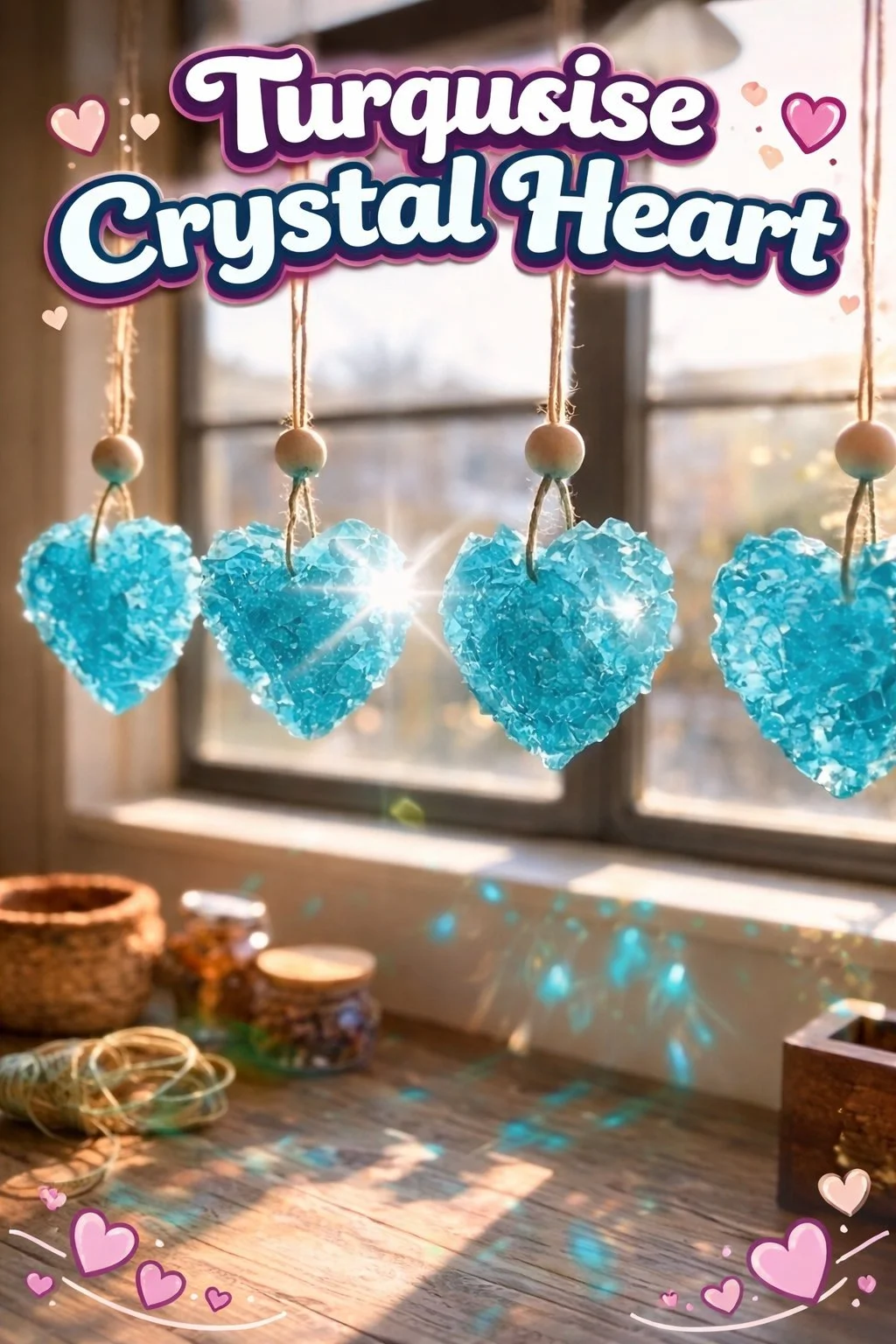
- Prepare your workspace and wash your hands or put on gloves.
Place a soft towel down and set your bowl, spoon, and heart inside reach. Breathe in slowly and let yourself settle. - Heat the distilled water to just warm, about body temperature.
Warm water dissolves baking soda more easily and feels comforting to work with. Avoid very hot water. - Measure two tablespoons of baking soda into the bowl.
Add a small pour of warm water and stir until the mixture smooths into a cloudy liquid. - Continue adding warm water slowly until the baking soda dissolves fully.
Aim for a consistency like thin syrup. Use the thermometer if you want a repeatable temperature flow. - Strain the liquid if needed to remove any undissolved grains.
This keeps the growing surface even and helps the crystal points form cleanly. - Add a drop or two of turquoise dye into the solution, if desired.
Stir gently. The dye can deepen the color of the edges and make the final piece feel more cohesive. - Hold the heart gently with tweezers and lower it into the solution.
Set the heart on a shallow cushion in the container so it sits without wobble. Pause and feel the brief coolness. - Cover the container loosely to keep dust away while allowing moisture to escape.
Place it somewhere quiet and still, away from drafts and direct sun. - Check the heart after six to twelve hours.
Look for tiny sparkles or matte crystals forming. Take a slow breath and notice how they catch the light. - If needed, top up with a bit more solution to keep the heart partially submerged.
Do this gently to avoid knocking crystals off. Move the container with care. - Let the crystals grow for one to three days for fine points, longer for thicker growth.
Each hour you wait deepens the texture. Use this time as a quiet break from tasks. - When you are satisfied, lift the heart out with tweezers and place it on a paper towel to dry.
Blot lightly, then let it rest until fully dry. Handle minimally while it sets. - Once dry, softly polish the surface with a clean, dry cloth.
Remove loose granules by brushing very gently. Enjoy the cool, textured feel. - Sit with the finished heart for a few minutes and notice its weight and color.
Place it where it can be touched or seen often. Let it remind you to slow down.
Bringing Turquoise Crystal Heart Into Your Space
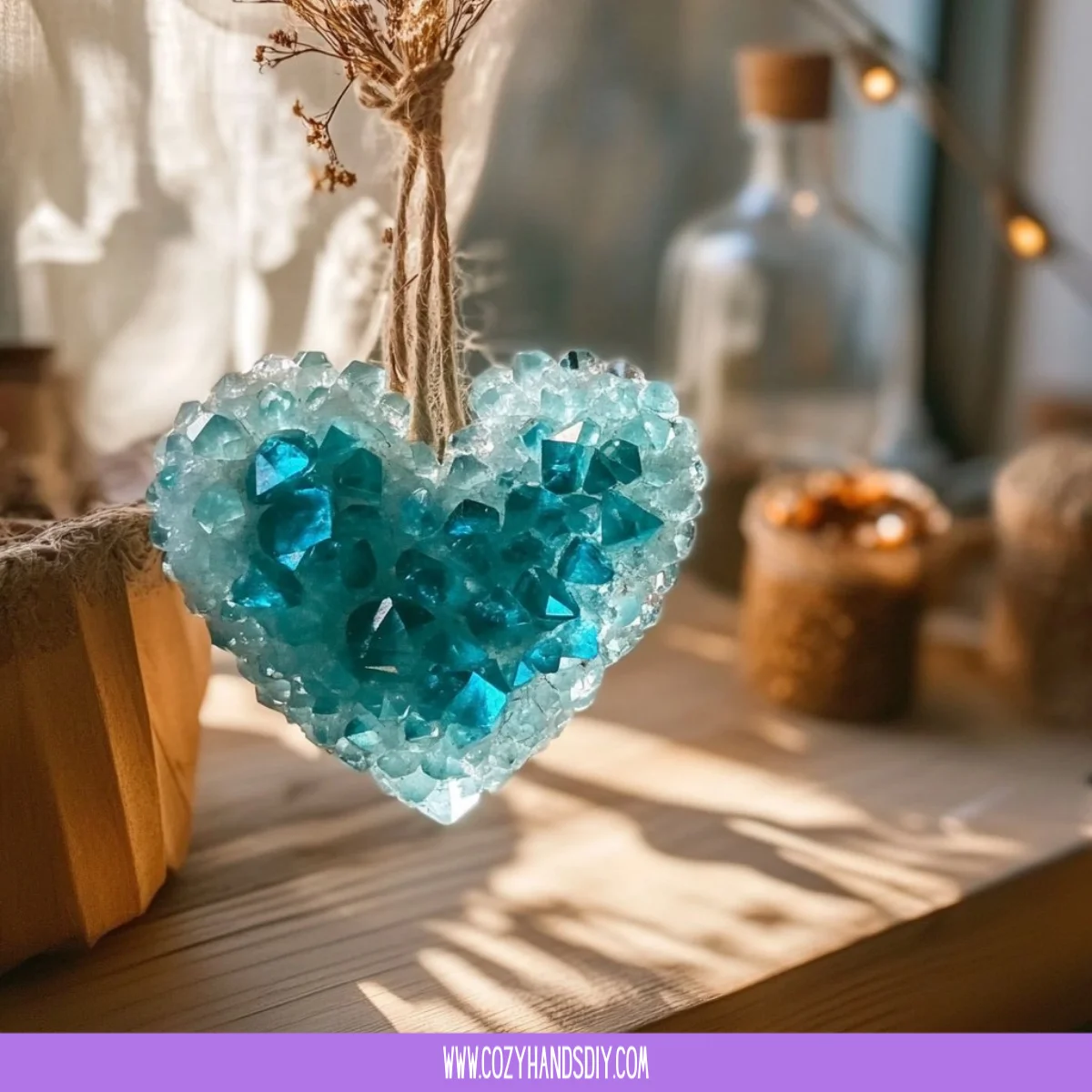
A finished Turquoise Crystal Heart works as a small pocket object, a shelf treasure, or a gentle paperweight. Place it on a bedside table to invite calm before sleep. Set it on a desk as a tactile pause button during work sessions. The cool blue-green speaks quietly to busy eyes and brings a feeling of water and gentle sky.
I like to tuck a heart into a low bowl with dried lavender. The contrast of rough crystal and soft herbs amplifies the sensory story. In a bathroom, the piece catches diffused light and looks like a small sea stone. In a maker space, it keeps me grounded between projects.
If you want to gift one, wrap it simply in linen and tie with twine. Include a small card that explains how it was grown. That little note connects the maker to the receiver in a calm, honest way. For ideas about displaying crystal hearts alongside other handmade ornaments, our post on growing crystal pink hearts offers comforting display ideas and seasonal touches.
How to Store or Reuse Turquoise Crystal Heart
Store your heart in a dry, stable spot. Avoid long exposure to direct sun, which can fade some dyes. Keep it away from high humidity if you want crystals to stay crisp. A small box lined with soft paper works well. If you travel with it, wrap the heart in tissue and place it inside a padded pouch.
If the crystal surface chips or bleeds after time, you can recondition it. Re-dip the heart in a fresh, mild baking soda solution to encourage new growth, following the same gentle routine. This gives the piece a second life and invites another slow session. You can also remove growing crystals and preserve an inner, smoother surface by gently rinsing in warm water and re-polishing.
Keep safety in mind. Do not ingest the baking soda solution. Keep the work area clean and out of reach of small children and pets while the heart grows. A calm, careful approach protects the piece and your space.
Gentle Tips & Variations
- Invite scent in small ways. Add a light sachet of dried lavender near the drying rack for a soft scent memory. This pairs well with the cool color and keeps the atmosphere soothing.
- Try layered color. Mix a faint turquoise wash over a pale blue for depth. Use tiny amounts of dye and build color slowly. This creates subtle veins that look natural and oceanic.
- Use different bases. If you have a small glass or porcelain heart blank, experiment with it. Porous bases encourage more dramatic surface growth. Nonporous ones make finer crystals. Both feel lovely in the hand.
- Make it part of a ritual. Light a candle, play quiet music, and set a timer for mindful checking. Let the process be a short retreat rather than a hurried task.
- Reuse solution mindfully. If the solution clears but you still want to grow, warm it and add a bit more baking soda. Keep notes of amounts and times if you like repeating a method that works for you.
These ideas are gentle invitations. Try one or two and let the process teach you what feels right. I learned to resist overchecking. Early on I rushed to see results and disturbed the crystal surface. Now I wait and let shifts happen slowly. That patience gives the best texture.
FAQs About Turquoise Crystal Heart
Will this method work with natural turquoise?
Natural turquoise is softer and more porous than howlite. It may not take the same finish, and some natural pieces can react with dye. For reliable results, choose howlite blanks dyed turquoise or synthetic heart blanks. Those give consistent, safe outcomes.
How long will the crystals last on the surface?
With careful storage they can last a long time. Crystals can flake if bumped or exposed to moisture. If they dull, you can refresh them by re-growing a light layer in a fresh solution.
Is the dye safe to use?
Use dyes intended for crafts and nonporous surfaces. Small amounts create color without affecting growth. If you prefer no dye, the natural stone looks soft and elegant. Either choice is fine; the process is about calm making rather than perfect color.
Can I make this with children?
Yes, with supervision. Children enjoy the sensory parts, like stirring and checking for sparkles. Keep them from tasting the solution and guide their hands when placing the heart. Use gloves if you want to minimize fingerprints.
What if my crystals grow unevenly?
Uneven growth can come from dust or from the heart resting against the container wall. Use a clean, still environment and let the heart sit centered. If unevenness occurs, embrace it as part of the handmade story or gently top up the solution and let it even out over time.
A Gentle Note Before You Go
When the project ends, take a moment to hold the Turquoise Crystal Heart and notice your breath again. The finished object keeps a little of the time you spent making it. It remembers your rhythm, your pauses, and your careful hands. Let that be enough.
If you want to explore similar crystal growth methods or different shapes, consider these resources for further inspiration. The delicate aesthetic of a ready-made piece can offer a different kind of comfort, and I find it helpful to compare techniques and materials. For a handcrafted pendant option that echoes this shape and color, take a look at Turquoise Stone Heart Necklace – Aurelia Demark for a finely made example of wearable crystal-inspired jewelry. If you prefer to source a ready-made howlite heart for study or gifting, you may appreciate the selection at Turquoise Howlite Crystal Heart ~45mm – CrystalAge.com.
Conclusion
Thank you for taking this slow, sensory moment with me. Whether you keep the heart for daily calm, give it away, or return to the bowl to grow another, the making itself carries its own quiet comfort. Let your hands be steady, your breath be soft, and your curiosity lead the next gentle experiment.
PrintTurquoise Crystal Heart

A calming and tactile project for making a Turquoise Crystal Heart using simple materials and a patient approach to crystal growth.
- Prep Time: 15 minutes
- Cook Time: 0 minutes
- Total Time: 3 days
- Yield: 1 heart
- Category: Craft
- Method: Crafting
- Cuisine: N/A
- Diet: N/A
Ingredients
- Turquoise howlite or dyed howlite heart blank, 40 to 50 mm
- Baking soda powder, 2 tablespoons
- Warm distilled water
- A small glass or ceramic bowl
- A spoon for stirring
- Fine mesh strainer or coffee filter (optional)
- Tweezers
- Drying rack or shallow tray lined with paper towel
- A thermometer (optional)
- Cotton gloves or clean hands
- A shallow jar or container for storage
- A few drops of turquoise or blue-green dye (optional)
- A soft cloth for final polish
Instructions
- Prepare your workspace and wash your hands or put on gloves.
- Heat the distilled water to just warm, about body temperature.
- Measure two tablespoons of baking soda into the bowl.
- Continue adding warm water slowly until the baking soda dissolves fully.
- Strain the liquid if needed to remove any undissolved grains.
- Add a drop or two of turquoise dye into the solution, if desired.
- Hold the heart gently with tweezers and lower it into the solution.
- Cover the container loosely to keep dust away.
- Check the heart after six to twelve hours.
- If needed, top up with a bit more solution to keep the heart partially submerged.
- Let the crystals grow for one to three days for fine points.
- When you are satisfied, lift the heart out with tweezers and place it on a paper towel to dry.
- Once dry, softly polish the surface with a clean, dry cloth.
Notes
This method is friendly for a calm crafting session. Avoid long exposure to direct sun to prevent fading. Use gloves to keep oils away from the heart surface.