

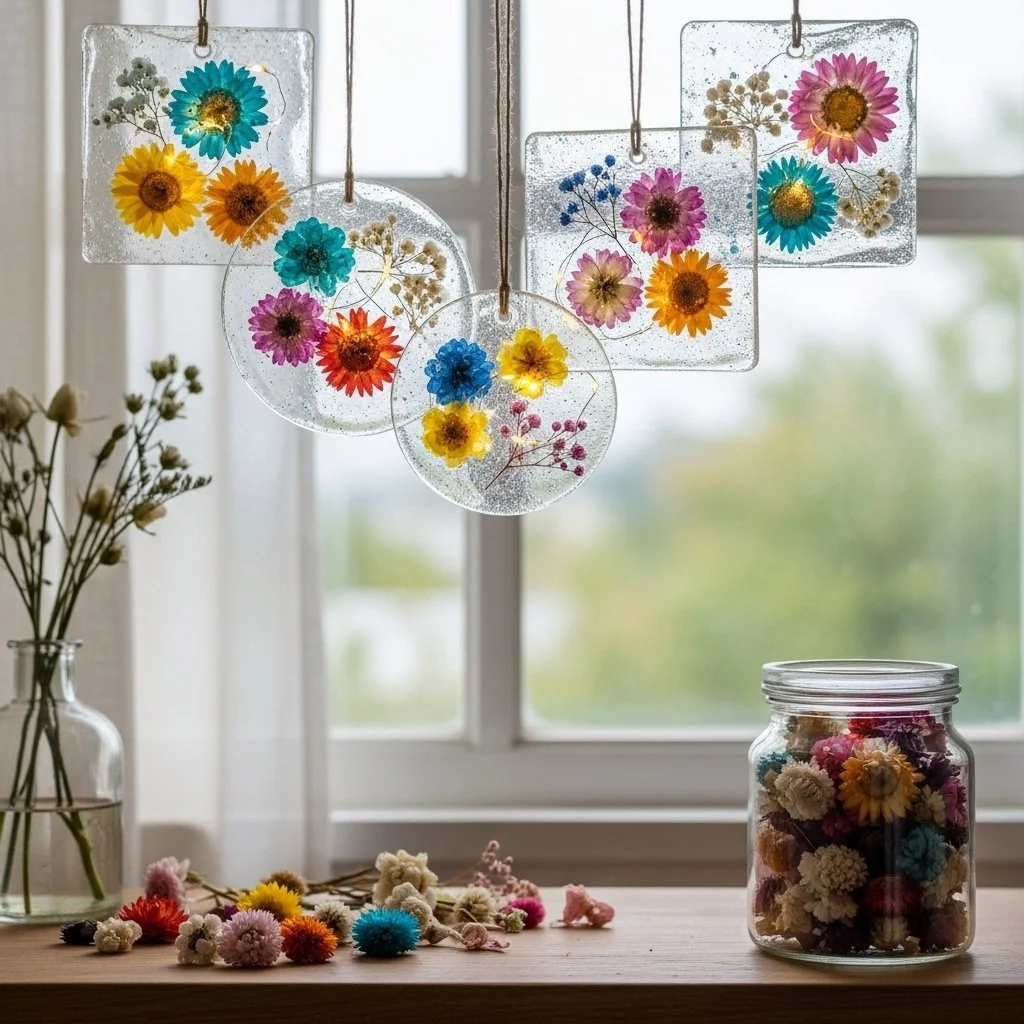
A warm afternoon light pools on the table as you mix a small pot of glossy, translucent liquid. It clings to your spoon in slow, soft ribbons and the scent is faintly sweet. You press colors into the warm surface, watch them move and settle, and feel the calm tug of slow hands and patient focus. This simple, tactile rhythm is at the heart of making DIY Bioplastic Suncatchers.
Why Make This DIY Bioplastic Suncatchers
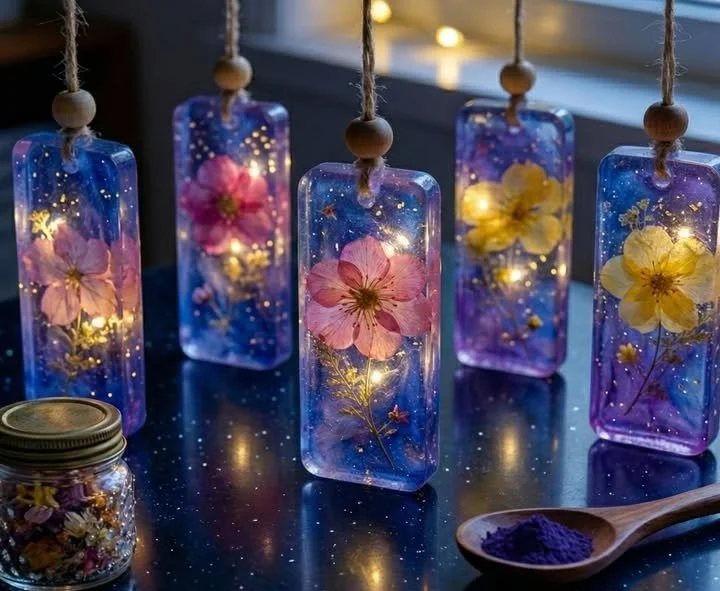
There is a quiet kind of comfort in watching light pass through something you made. These suncatchers offer a gentle reward: a soft glow, a reminder that small, slow actions can change a room. Working with bioplastic invites close attention. You notice the way the mixture thickens, the sound of the spoon against the pot, and the smooth, cooling of the finished piece when you lift it from the mold.
Making these suncatchers helps you slow down because the steps unfold naturally. Heating, stirring, setting, and drying form a steady sequence that encourages mindful presence. The textures are simple and satisfying. Warm liquid becomes gelatinous sheet, then a firm, touchable object. The finished pieces catch light in delicate, shifting ways that feel quietly uplifting.
This project also offers a subtle sense of craft and care. You choose colors, press botanicals, or trace simple shapes. Each decision is small but meaningful. Over time, a few of these suncatchers gathered on a window or near a lamp create a soft, curated light that feels like a collection of gentle memories.
If you want color ideas or a playful approach to patterns, you might enjoy this Colorful DIY Bioplastic Suncatchers recipe that explores layering and tinting techniques.
The Flow of Making DIY Bioplastic Suncatchers
Making these suncatchers moves like a quiet ritual. You start with simple ingredients, warm them together, and watch the mixture change. There is a soft rhythm to measuring, stirring, and pouring.
The kitchen provides calming sounds: a low simmer, a steady spoon, the soft clink of a glass mold. You feel the pot grow warm under your hands and the mixture thicken in a steady, reassuring way. When you pour, the liquid settles slowly and creates a glassy plane that catches and holds additions like dried petals or tiny seed pods.
The drying phase invites patience. You tuck the pieces away in a peaceful corner and return later to find light transformed by your handiwork. The flow is gentle and intuitive; it rewards quiet attention and invites small, deliberate choices.
If you are curious about slightly different methods and outcomes, this short guide offers another perspective on shaping and drying DIY Bioplastic Suncatchers.
Materials You’ll Need
- Gelatin powder or cornstarch (gelatin gives a clearer, slightly more flexible film; cornstarch makes a softer, more matte finish)
- Distilled water (clear results and fewer impurities; easy to find)
- Glycerin or vegetable glycerol (optional; adds flexibility and reduces brittleness)
- Food coloring or natural pigments (optional; gentle, low amounts give soft tints)
- Small glass or silicone molds, or a flat tray lined with parchment (silicone releases easily)
- Wooden skewer or spoon for stirring (smooth, steady motions)
- Measuring spoons and cups (accuracy keeps texture consistent)
- Heatproof bowl and pot for a double boiler, or a small saucepan (use what you have safely)
- Dried flowers, tiny leaves, pressed botanicals, glitter, or translucent papers (optional embellishments)
- Hole punch or metal straw for making a hanging hole when dry (gentle pressure works best)
- Fine sandpaper or emery board for smoothing edges (optional)
- Parchment paper for drying, and a flat surface with good airflow
- Tweezers for placing small decorative bits (optional) Notes: Most supplies are everyday kitchen items. Glycerin is optional but helpful if you want less brittle pieces. Choose non-toxic, child-safe embellishments if children join you.
Step-by-Step Directions
Measure and combine the base ingredients in a small saucepan. Warm two parts distilled water with one part gelatin or a similar proportion for cornstarch mixes. Add a small splash of glycerin if you want more flexibility. Heat gently and stir until the mixture becomes smooth and glossy.
Stir slowly and notice the texture change. The mixture will go from cloudy to clearer as it thickens. Keep the heat low and stir in soft, steady circles. Stop when the liquid coats the spoon in a slow ribbon.
Add color and scent gently. Drop in a tiny amount of food coloring or a natural tint. A drop creates a soft wash of color. If you like, add a few drops of essential oil for scent, but use very little and avoid heavy oils if children will handle the pieces.
Pour into molds with careful hands. Pour slowly so the surface stays calm. If you want to embed dried flowers or leaves, place them carefully with tweezers and press lightly with the back of a spoon. Work in small batches to keep the mixture warm and fluid.
Create a hole for hanging before the pieces set. If you want a hanging loop, poke a hole where you want it with a straw, skewer, or small straw while the plastic still feels soft but is thickening. The hole will firm up as it cools.
Let cool, then dry slowly in a quiet spot. Move trays to a flat area with gentle airflow. Expect a few hours to several days of drying depending on thickness and humidity. The surface will matte slightly and become firm to the touch.
Finish edges and hang. If edges feel rough, lightly sand with fine sandpaper. Thread thin twine or fishing line through the hole for hanging. Place in a window or near a lamp and watch the light change.
A gentle note about heat and safety: the mixture will be warm. Keep children at a safe distance during the heating steps, and use oven mitts if you move hot containers. If you want another step-by-step treatment with slightly different recipes, this version shows more variations in ingredient ratios DIY Bioplastic Suncatchers, take three.
Where This DIY Fits Into a Calm Routine
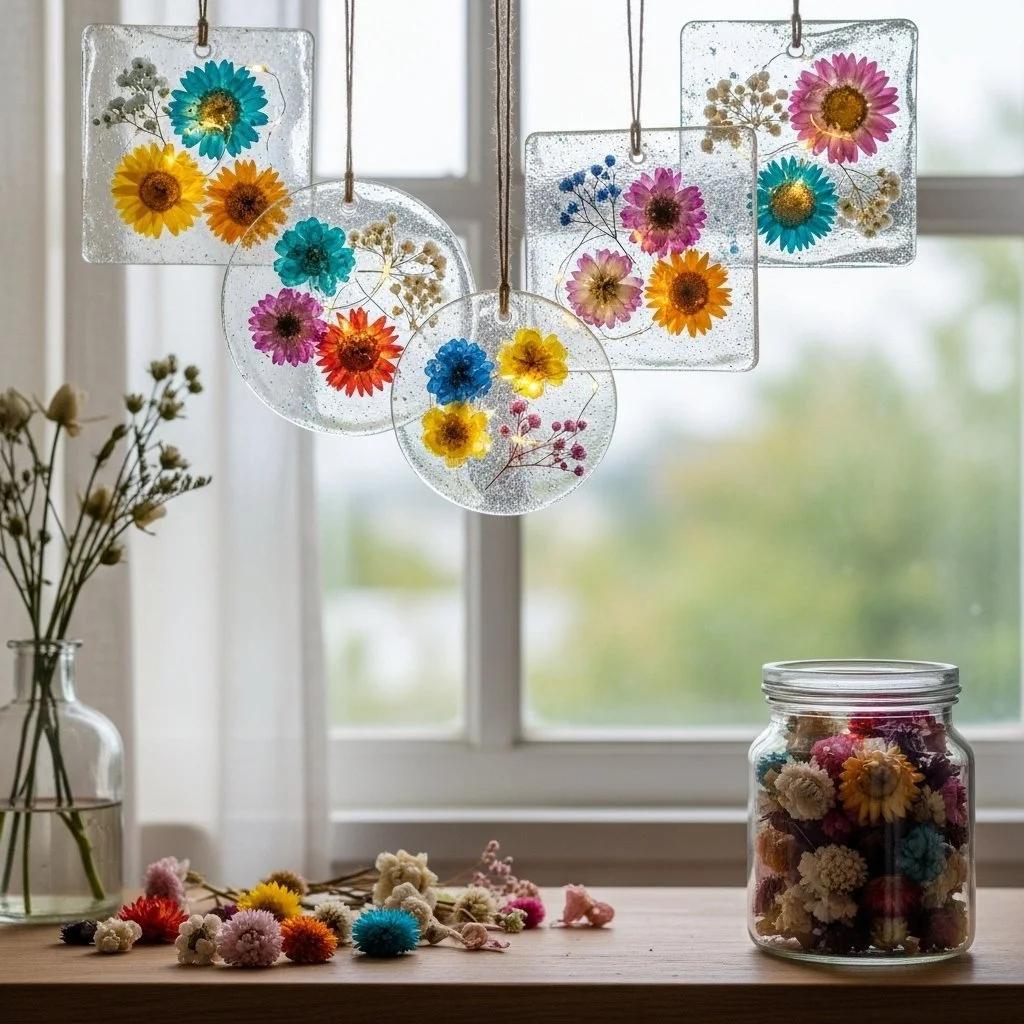
These suncatchers fit naturally into slow afternoons and quiet mornings. Make a small batch while tea steeps, and use the cooling time for stretching, journaling, or setting a few deliberate intentions. The work asks for short, attentive moments rather than long stretches of focus.
You can weave this project into a ritual: choose a few botanicals on a walk, press them gently, and save them for embedding. Or pick a color palette that echoes the room you plan to hang them in. The process encourages a rhythm of doing and waiting that feels balanced and restorative.
Hang one near your favorite chair so the shifting sun touches it as you read. Place a tiny group in a child’s room where they can notice small changes in light. These objects become quiet companions, subtle and steadily soothing.
If you are thinking about the environmental side of this craft and how it might fit into an eco-conscious routine, read more about the materials and their footprint at this thoughtful piece on DIY Bioplastic Suncatchers and eco friendliness.
Caring for Your Finished DIY
Bioplastic suncatchers respond to humidity and heat. Keep them away from direct hot sunlight for long periods, as extreme heat can soften them. In humid climates, they will absorb moisture and may become slightly tacky. A dry room or a gentle dehumidifier setting helps them stay firm.
Clean gently with a soft cloth. If dust collects, brush it off instead of scrubbing. Avoid abrasive cleaners and prolonged contact with water. If a piece deforms slightly, laying it flat on a clean surface in a low-humidity area often helps it relax back into shape.
If you find a piece has rough edges, smooth them with fine sandpaper or an emery board. Store extras flat between sheets of parchment paper in a box with a small packet of silica gel if you have it. This keeps them dry and ready to display again.
Gentle Tips & Variations
- Invite small botanical details. Press tiny flowers or leaves and place them near the center of each piece. These create delicate silhouettes when the light passes through. Use thin, dry botanicals to avoid trapping moisture.
- Try layering washes of color. Pour a thin clear layer, let it set partially, then add a second tinted layer. The layered approach creates depth and soft gradations of hue. Work slowly and give each layer time to firm.
- Make a mobile of different shapes. Cut varying sizes and hang them at different lengths. The movement shifts light across a room and makes a gentle, calming display.
- Use food-safe dyes or natural pigments for subtle tones. Be mindful of staining surfaces and skin. Test on a small piece first to get the shade you want.
- Create tiny windows for memory keeping. Embed small pressed notes, a torn corner of a favorite paper, or a tiny photograph sealed between layers. Keep the items flat and dry before embedding.
These suggestions are invitations. They encourage gentle experimentation rather than strict rules. Trust what feels satisfying and adjust according to what you notice while making.
FAQs About DIY Bioplastic Suncatchers:
Are these suncatchers safe to hang around children?
Yes, when made with non-toxic ingredients and handled carefully. Keep hot steps out of reach. Once the pieces cool and fully dry, they usually feel sturdy, but monitor for small parts if young children play with them. Use sturdy cord or thread and avoid very thin, breakable pieces for high-traffic areas.
How long do they last?
Longevity varies. In dry, temperate conditions, a well-made piece can last many months to years. They age gently, sometimes becoming slightly more matte. Humidity and direct heat shorten their life. Store extras flat and dry for best preservation.
Can I use real leaves and flowers?
Yes. Use thin, completely dried botanicals. Fresh materials contain moisture that can cause cloudiness or mold. Press and dry flowers for several days before embedding. Small, flat petals and leaves work best.
Will sunlight fade the colors?
Strong, prolonged sunlight can fade some dyes. Using soft natural pigments or placing suncatchers where they get indirect light will reduce fading. Consider rotating their position occasionally to balance exposure.
Can I wash them if they get dusty?
Light dusting with a soft, dry cloth is best. If you must wipe them, use a barely damp cloth and dry immediately. Avoid soaking and abrasive cleaners.
A Gentle Note Before You Go
You have given yourself a small, attentive act of making. The suncatcher will change with the hours, catching light and gentle memories. Making one is a practice in noticing: the way a color blooms in the warm mix, the sound of a spoon against glass, the quiet satisfaction of a finished edge.
If one piece helps you slow, make a few. Arrange them in the soft arcs of a window. Let them keep a small, steady glow and remind you of slow afternoons and calm hands. Keep experimenting gently, and let each piece teach you a little about texture, light, and what brings you quiet joy.
Conclusion
If you would like a straightforward step-by-step chemistry-style approach to the classic recipe, this clear guide shows how the ingredients interact and offers a simple experimental format: How To Make A Bioplastic Suncatcher – Chemistry for Kids.
For inspiration that focuses on botanical embeds and artistic arrangement, this exploration provides beautiful examples and thoughtful tips for pressing and arranging plant materials: Botanical Bioplastic Sun Catchers – Wineberry Woods.
DIY Bioplastic Suncatchers
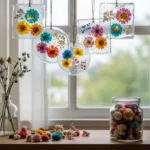
Create beautiful bioplastic suncatchers that catch light and add a gentle ambiance to your space. This DIY project encourages mindfulness and creativity.
- Prep Time: 15 minutes
- Cook Time: 30 minutes
- Total Time: 45 minutes
- Yield: 5 suncatchers
- Category: Crafts
- Method: Crafting
- Cuisine: N/A
- Diet: N/A
Ingredients
- 2 parts distilled water
- 1 part gelatin powder or cornstarch
- Small splash of glycerin (optional)
- Food coloring or natural pigments (optional)
- Small glass or silicone molds
- Wooden skewer or spoon for stirring
- Measuring spoons and cups
- Heatproof bowl and pot for double boiler
- Dried flowers, pressed botanicals (optional)
- Hole punch or metal straw for hanging loop
- Fine sandpaper for smoothing edges (optional)
- Parchment paper for drying
- Tweezers for placing small decorative bits (optional)
Instructions
- Measure and combine the base ingredients in a small saucepan.
- Warm two parts distilled water with one part gelatin or a similar proportion for cornstarch mixes.
- Add a small splash of glycerin if you want more flexibility. Heat gently and stir until smooth.
- Stir slowly and notice the texture change as it thickens.
- Add food coloring or natural tints gently.
- Pour into molds with careful hands.
- Create a hole for hanging before the pieces set.
- Let cool, then dry slowly in a quiet spot.
- Finish edges and hang once dry.
Notes
Keep children at a safe distance during the heating steps. Ensure to use non-toxic, child-safe embellishments if they join you.