


A cool drop of light rests in my palm, a small, glassy orb that feels smooth and impossibly quiet. The surface catches the window light and scatters a pale circle on the table. I breathe in, feeling the subtle weight and the faint sound of skin against resin, and let the slow, steady rhythm of making settle around me. This is the gentle work of a Crystal-Clear Bubble Ball, a tiny object that asks only patience and the soft attention of your hands and eyes. If you enjoy slow, playful projects that center on texture and calm, you might like the quiet fizz of our Bubble Wand Fireworks project as a companion in your making rhythm.
The Quiet Joy of Making Crystal-Clear Bubble Ball

The reason this little project feels so comforting comes from its tenderness. You move slowly, watching translucence form. You listen for the micro sounds of mixing and the faint whisper of a heat gun as it smooths the surface. The materials give tactile feedback. Clear resin begins as viscous syrup and transforms into glassy calm. In that window of change you find a kind of meditation.
A Crystal-Clear Bubble Ball offers a gentle focal point. It refracts light in soft, ever-shifting ways. It invites touch and quiet inspection. Making one asks you to slow your hands, to breathe between pours, to notice the small bubbles that rise and the way a single breath of heat can vanish them. These subtle moments help the mind to return to the present with warmth and ease.
This project also fits into a calm lifestyle. It makes a small object that can rest on a shelf, sit by a bedside lamp, or hang where morning sun can stroke it. The ball’s clarity and the suggestion of a captured bubble bring a tiny ritual of wonder into ordinary rooms. That sense of wonder is simple and steady. It keeps you company long after the making finishes.
A Gentle Look at the Process
Before you begin, imagine the movements and rhythms you will use. You will mix slowly, pour with care, and wait as each layer settles. You will move a toothpick or a soft tool through the surface to coax a tiny bubble into place, or you will gently heat the top to coax away small imperfections. Each action asks for a calm, deliberate touch.
The process has a quiet visual rhythm. Clear resin moves like liquid glass. When you pour, it flows in slow ribbons and pools softly. When you sweep a flame across the surface, micro-bubbles pop and the surface smooths into a glossy face. If you like other playful, soft-textured projects, take a look at our calm bouncy balls for a different but related tactile pleasure.
I find that working in a small, uncluttered space helps. A damp cloth, a bowl of warm water for wiping tools, a soft light, and a timer keep the making unhurried. I set a cup of tea nearby and give myself permission to sit with the process. The gentle, attentive pace matters more than perfection.
Materials You’ll Need
- Clear epoxy resin and slow hardener, 1-part or 2-part depending on the product (choose a resin labeled for deep pours or casting; clarity matters).
- Silicone sphere mold, smooth interior, appropriate size for your ball (easy to find online or at craft stores).
- Mixing cups and sticks, disposable and sturdy.
- Nitrile gloves and a well-fitting respirator rated for organic vapors if your resin demands it.
- Thermometer or infrared thermometer (optional; helps manage pour temperature).
- Isopropyl alcohol, 91 percent or higher, for degassing small surface bubbles.
- Mini torch or heat gun, low heat setting for bubble removal.
- Toothpicks and silicone-tipped tools to guide bubbles gently.
- Clear polish compound or fine sandpaper grits (600 to 2000) and polishing paste for final shine.
- Small drill with diamond bit or eyelet hardware if you plan to hang the ball.
- Soft cloths and cotton swabs for finishing.
- Clean, dust-free workspace and a protective cover for your work surface.
Note: Some items are optional. For a very small ball you can skip the drill and simply display it on a stand. If you prefer simpler materials, you can explore alternatives later in the tips section.
Step-by-Step Directions
-
Prepare your space and tools.
Put on gloves and respirator.
Cover your surface and arrange everything within reach. -
Measure and mix the resin slowly.
Follow the resin maker’s ratio exactly.
Stir gently for the full time to avoid introducing bubbles. -
Warm the mixed resin a little if allowed.
A slightly warm resin flows more smoothly.
Use a warm water bath for the cup, not direct heat. -
Pour a thin base layer into the sphere mold.
Let it settle for a few minutes to level quietly.
Use a small torch sweep to pop surface bubbles. -
Add a controlled inner inclusion or let a single bubble form.
If you want a captured bubble, use a droplet of resin on a toothpick and position it.
If you prefer the bubble to be a natural result, pour slowly and watch where air naturally gathers. -
Allow the first layer to reach a tacky stage.
This helps subsequent pours bond without creating seams.
Be patient and check the resin’s recommended cure windows. -
Pour the remaining resin in gentle layers.
Pace your pours to avoid trapping new air.
Pause between layers to let bubbles rise and pop. -
Use isopropyl alcohol to clear small surface bubbles.
Spritz lightly and watch the surface calm.
Move slowly and in small circles if you use a tool to nudge bubbles. -
Let the piece fully cure in a dust-free spot.
Follow the resin’s cure time for full hardness.
Avoid moving the mold during this time. -
Demold gently once cured.
Press the silicone mold outward to release the ball.
If needed, trim any flash with a sharp blade. -
Sand and polish for crystal clarity.
Start with 600 grit if needed and progress to 2000.
Finish with a polishing paste and a soft cloth for a glassy look. -
Add a hanging eye or mount if desired.
Drill a small hole with a diamond bit slowly and with cooling.
Insert an eyelet or use a clear stand to display your ball.
Each numbered step is an invitation to slow movement. When mixing, listen to the tone of the stirring. When polishing, feel the resistance of the cloth. Those sensory details are part of the calm.
Bringing Crystal-Clear Bubble Ball Into Your Space
{image_template}
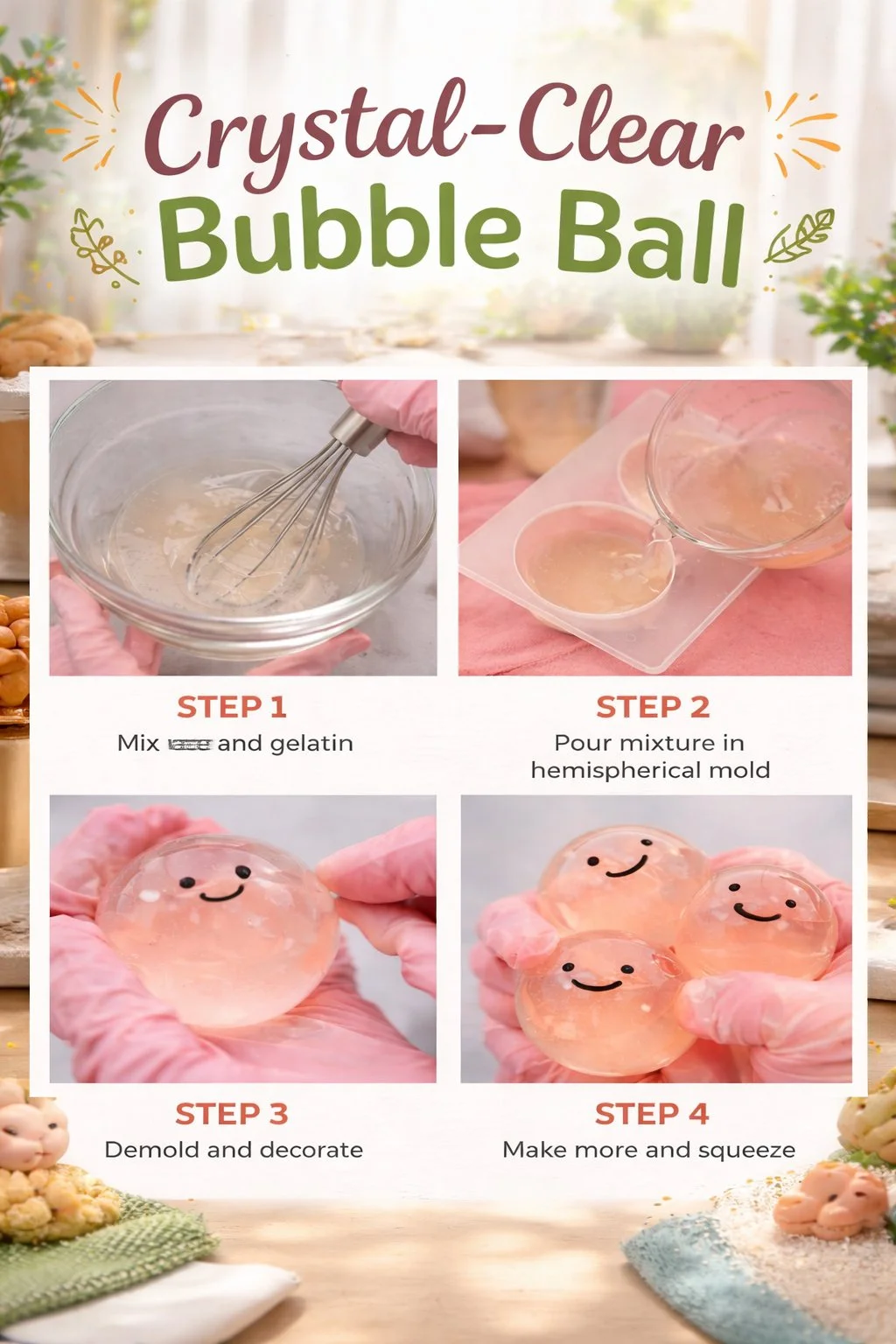
A finished Crystal-Clear Bubble Ball sits like a quiet jewel. It looks beautiful on a wooden tray, catching a slant of sunlight and scattering small, gentle reflections. Place it near a window or on a bedside shelf where it can offer a soft, contemplative glow in morning light.
If you made several, group them in a shallow bowl. Let them roll softly when you touch them, and notice the calming rhythm of motion. An occasional turn under lamplight brings out rainbow edges and a sense of small, private delight.
Hang a ball as a pendant in a simple cord or eyelet above a desk. Let it move with the draft and watch the slow path of light it produces. This movement can help ground your attention during short moments of distraction. It becomes a physical breath.
For a practice of mindful making, keep a single ball in a special place that you touch when you need a pause. Hold it and pay attention to the cool smoothness against your fingertips. Let the object be a quiet cue to slow down.
Making This DIY Last
Crystal-clear resin reacts to light and heat over time. To preserve clarity, keep your ball away from direct, prolonged sunlight. UV exposure can yellow some resins slowly, so a shaded shelf or a north-facing window works well.
Avoid placing the ball near radiators or stoves. High heat can cause internal stress in the resin. If you use hanging hardware, choose corrosion-resistant eyelets to avoid staining.
If dust accumulates, clean gently with a soft microfiber cloth and a drop of mild dish soap diluted in water. Rinse and dry carefully. For small scuffs, a light polishing will restore the glass-like shine. Keep polishing compounds out of reach of children and store them in a dry place.
When transporting the ball, nest it in soft tissue or bubble wrap within a box. The silicone mold can serve as a temporary cradle if you kept it. With quiet care, a well-made Crystal-Clear Bubble Ball will keep giving you those small moments of calm for years.
Gentle Tips & Variations
- Invite color softly: Add a whisper of dye to a single layer to make a delicate internal halo. Keep pigments minimal for clarity.
- Create a suspended element: Float a tiny dried flower or a single bead inside the ball by placing it on a toothpick and embedding it during a semi-cure stage.
- Try different sizes: Make a set of varied balls and arrange them like stepping stones of light. Small sizes require less resin and cure faster.
- Use a slower cure resin for the clearest results: Slow cure formulas reduce trapped bubbles and give you more working time.
- Experiment with texture on the base: If you want the ball to sit without rolling, add a small flat base during the final pour.
Think of these as invitations. Each change nudges the making into a slightly different sensory world. Choose one and let it teach you something about pace and material.
FAQs About Crystal-Clear Bubble Ball
Q: How clear will my ball be?
A: Clarity depends on materials and technique. Using a high-quality clear resin, mixing slowly, and working in layers will create the most transparent results. The polish at the end matters as much as the pour.
Q: I see little white haze inside. Can I fix it?
A: Light haze often comes from trapped micro-bubbles or dust. If the haze sits on the surface, gentle sanding and polishing usually help. If it lies deeply within, try making a new piece and adjust your mixing and degassing steps.
Q: Is resin safe to work with at home?
A: Resin can be safe when handled mindfully. Work in a ventilated area, wear gloves and a respirator when recommended, and follow the manufacturer’s safety guidance. Keep materials away from pets and children while curing.
Q: Can I make a bubble deliberately inside the ball?
A: Yes. You can trap a small air pocket by placing a droplet of cured resin on a toothpick and embedding it during a pour. Another gentle way is to place a tiny dry object that displaces resin just enough to create a pocket. Move slowly and test on small pieces first.
Q: What if my ball gets scratched?
A: Minor scratches respond well to fine sandpaper and polishing paste. Work slowly through grits and finish with a soft cloth. Deep gouges may need professional buffing or to be accepted as a unique mark.
A Quiet Closing Thought
This project holds a slow kind of joy. It rewards patience and soft attention. Each small choice you make while mixing, pouring, and polishing becomes part of the object’s story. The Crystal-Clear Bubble Ball is a companion that reflects light back to you in quiet ways. Give yourself permission to go slowly, to savor the tactile changes, and to let imperfections be part of the charm. When you place the finished piece in your space, notice how it asks you to pause, to breathe, and to watch the small mysteries of light.
Conclusion
If you are looking for ideas about small glassy objects that catch light in interesting ways, consider exploring glass knobs for refraction and sparkle as inspiration with this glass crystal knobs for light play. For techniques about making perfectly clear spheres and controlling internal clarity, the guidance on clarity and freezing methods is helpful in understanding how clarity is achieved in other materials such as ice, for example this article on techniques for making crystal clear ice spheres which offers useful parallels to working slowly and managing bubbles.
PrintCrystal-Clear Bubble Ball
A calming DIY project to create a beautiful crystal-clear bubble ball using epoxy resin.
- Prep Time: 10 minutes
- Cook Time: 120 minutes
- Total Time: 130 minutes
- Yield: 1 bubble ball
- Category: Craft
- Method: Crafting
- Cuisine: N/A
- Diet: N/A
Ingredients
- Clear epoxy resin and slow hardener
- Silicone sphere mold
- Mixing cups and sticks
- Nitrile gloves and respirator
- Thermometer (optional)
- Isopropyl alcohol, 91% or higher
- Mini torch or heat gun
- Toothpicks and silicone-tipped tools
- Clear polish compound or fine sandpaper (600 to 2000)
- Small drill with diamond bit (optional)
- Soft cloths and cotton swabs
- Clean, dust-free workspace
Instructions
- Prepare your space and tools.
- Put on gloves and respirator.
- Cover your surface and arrange everything within reach.
- Measure and mix the resin slowly.
- Warm the mixed resin a little if allowed.
- Pour a thin base layer into the sphere mold.
- Add a controlled inner inclusion or let a single bubble form.
- Allow the first layer to reach a tacky stage.
- Pour the remaining resin in gentle layers.
- Use isopropyl alcohol to clear small surface bubbles.
- Let the piece fully cure in a dust-free spot.
- Demold gently once cured.
- Sand and polish for crystal clarity.
- Add a hanging eye or mount if desired.
Notes
Use slow cure resin for the clearest results and work in a well-ventilated area.