
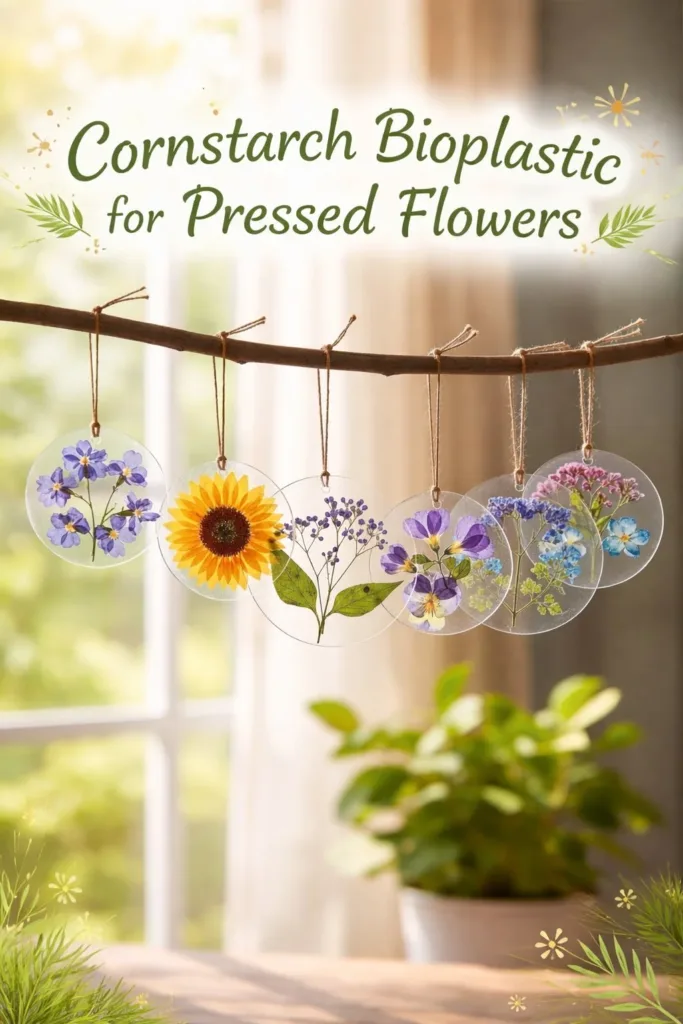
A single sunbeam warms the work table. I cup a little bowl of warm, soft Cornstarch Bioplastic for Pressed Flowers in my hands and feel a gentle comfort in the heat and weight. The film glows translucent under my palms, like a quiet field of paper caught between the skin and light. Pressed petals settle into that smooth surface and the whole room hushes around the small, simple act of making.
I first learned this recipe while teaching a slow craft class. The students kept talking about texture and memory. One person said the bioplastic felt like holding a memory. I remember the sound of dry petals brushing together, the warm steam that rose from the pot, and the soft resistance as the dough stretched. If you enjoyed the suncatcher idea in my bioplastic suncatchers with flowers recipe, you will find this method equally gentle and grounding.
Why Cornstarch Bioplastic for Pressed Flowers Feels Comforting to Create
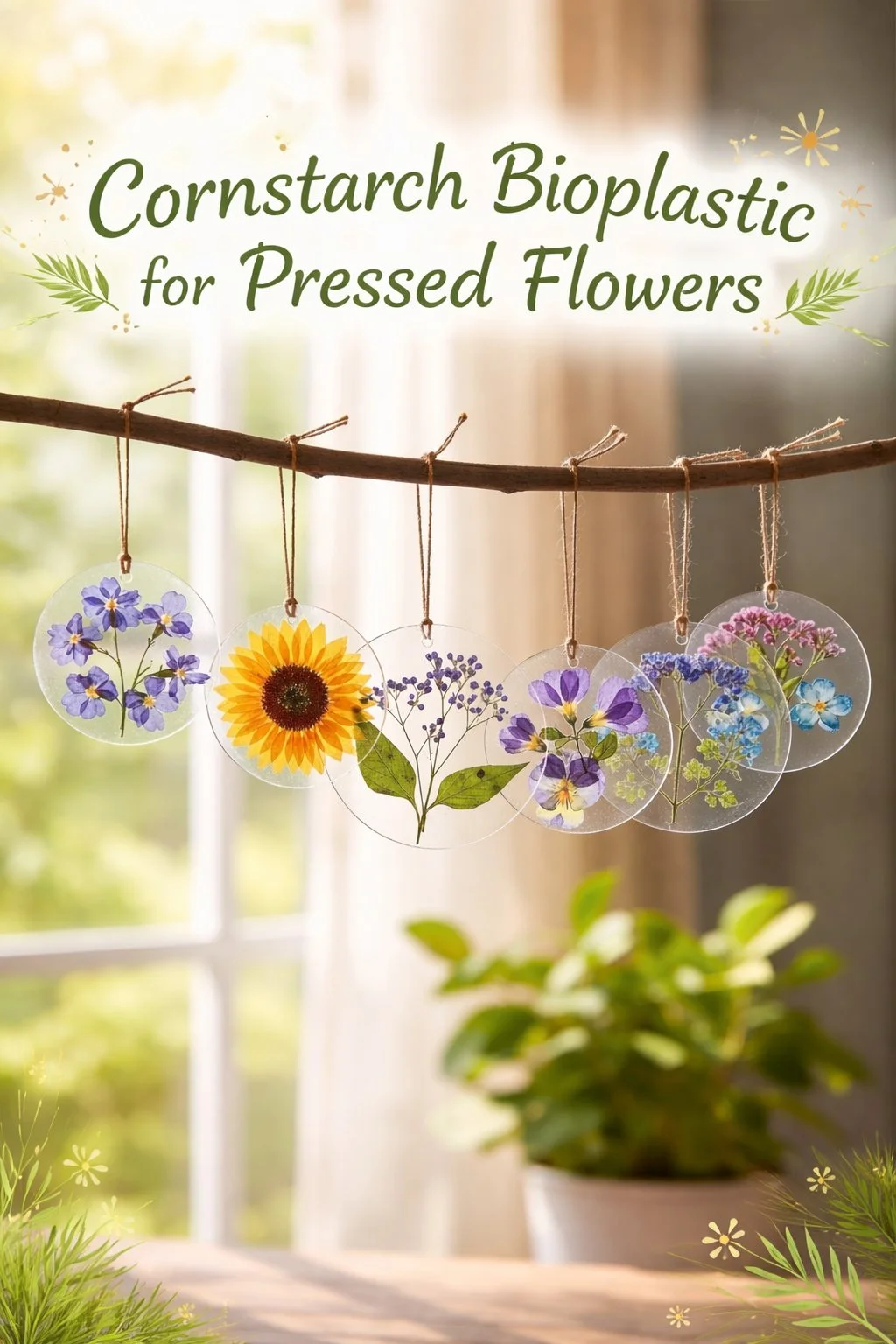
This project slows you down. Mixing cornstarch, water, and a touch of oil asks for quiet attention. Every stir becomes a small ritual. You watch a cloudy mix turn clearer and thicker. That change rewards calm watching.
The texture sits between dough and jelly. It yields under pressure and holds a soft edge. When you press a dried leaf or a tiny bloom into the surface, the plant nests into the material. The result looks both fragile and strong. That contrast helps you feel present.
Making this piece also reconnects you to simple materials. Cornstarch is familiar from kitchens. It smells neutral and mild as it warms. The warmth itself comforts. The act of pressing flowers brings in the quiet of nature. You breathe slow and notice color, line, and tiny veins in leaves. This slow noticing quiets the mind and anchors the body.
I often pair this task with soft music or a window open to a garden. Those small choices make the practice feel like a pause. If you want another slow experiment that blends texture and time, try the baking soda crystal projects for a different kind of gentle making later on. For a different approach to embedding flowers in translucent surfaces, see my other bioplastic suncatchers with flowers post.
A Gentle Look at the Process
The method moves in clear, calm steps. You heat a small pot, whisk simple ingredients, thicken to a smooth paste, then knead while warm. The sound of the whisk is soft. The steam lifts like a small breath.
You press flowers into thin sheets, smooth edges with gentle fingers, and let the pieces rest to cool and firm. The process sits between cooking and making. It feels domestic and tactile.
The rhythm repeats gently. Heat, stir, shape, rest. Each repetition teaches a small skill: knowing when the mix clears, feeling the right warmth to knead, and learning how much pressure to use when pressing a petal. If you enjoy hands-on chemistry with calm results, this approach shares its quiet logic with my baking soda crystal forest recipes and experiments for sensory play. For another recipe that explores slow transformation, you might like the baking soda rainbow crystal forest collection in these pages at the rainbow crystals recipe.
Materials You’ll Need
- Cornstarch, plain and easy to find.
- Water, room temperature plus a splash more for mixing.
- Vegetable oil, a small amount for pliability.
- Vinegar or lemon juice, a few drops for slight stability (optional).
- Dried flowers or pressed petals, fully dry and flat.
- Nonstick baking paper or silicone mat, for pressing and drying.
- Small saucepan, for gentle heating.
- Wooden spoon or silicone spatula, for stirring.
- Bowl for cooling and kneading.
- Rolling pin or small jar for flattening (optional).
- Cookie cutters or a sharp craft blade, if you want shaped pieces.
- Fine-tipped scissors, for trimming petals or edges.
- A soft cloth or sponge for smoothing edges.
- Airtight container or parchment for storage.
Notes: Cornstarch gives firmness and clarity. Vegetable oil keeps the bioplastic soft and workable. Vinegar helps mild cross-linking, but it is optional. Choose petals that have been fully dried to avoid trapped moisture. If you like, you can prepare pressed flowers ahead using heavy books or a flower press for several days.
Step-by-Step Directions
- Measure and combine.
Mix one part cornstarch with two parts water in a small saucepan.
Add one teaspoon of vegetable oil per cup of cornstarch and a few drops of vinegar if using.
Stir gently until the mix looks smooth and slightly cloudy. - Warm slowly and whisk.
Place the pan over low heat and stir with a wooden spoon.
Watch the color turn clearer and the mixture begin to thicken.
Keep the movement slow and steady to avoid lumps. - Reach a thick, pudding-like stage.
When the mix pulls away from the pan and forms a soft mass, remove from heat.
The surface should look glossy and the texture should feel warm and slightly elastic.
Let it rest for a minute to cool just enough to handle. - Knead the warm dough.
Turn the warm mass into a bowl lined with baking paper.
Use the palms to knead gently until smooth and elastic.
If it feels too sticky, add a light dusting of cornstarch. - Flatten and shape.
Place the dough between two sheets of baking paper and roll to an even thinness.
Aim for a thickness that lets light through but still holds petals, about 1 to 2 millimeters.
The rolling action feels calm and repetitive, like smoothing a sheet. - Arrange your pressed flowers.
Lay dried petals and leaves flat on one sheet of the bioplastic.
Use light, steady pressure to press each piece into the surface.
Avoid moving the petals after contact to prevent smudging. - Seal and trim.
Cover with the top sheet and press gently across the surface with your palms.
Use a cookie cutter or a sharp blade to cut shapes while the material remains warm and pliable.
The edges will hold shape as the piece cools. - Dry and cure.
Leave the finished pieces at room temperature on the paper to firm.
Depending on thickness, they may need several hours to a day to fully set.
Flip occasionally for even drying if the pieces feel cooler on one side. - Finish with a soft polish.
When fully cool, smooth edges with a damp sponge or soft cloth.
If you want a glossier look, you can buff the surface with a soft cloth once dry.
Store flat between paper sheets to keep them from sticking. - Practice and adjust.
If the material feels brittle, add a drop more oil next time.
If it stays sticky, try a touch more cornstarch in the knead.
Each batch will teach you a little about warmth, humidity, and pressure.
Enjoying the Finished Piece
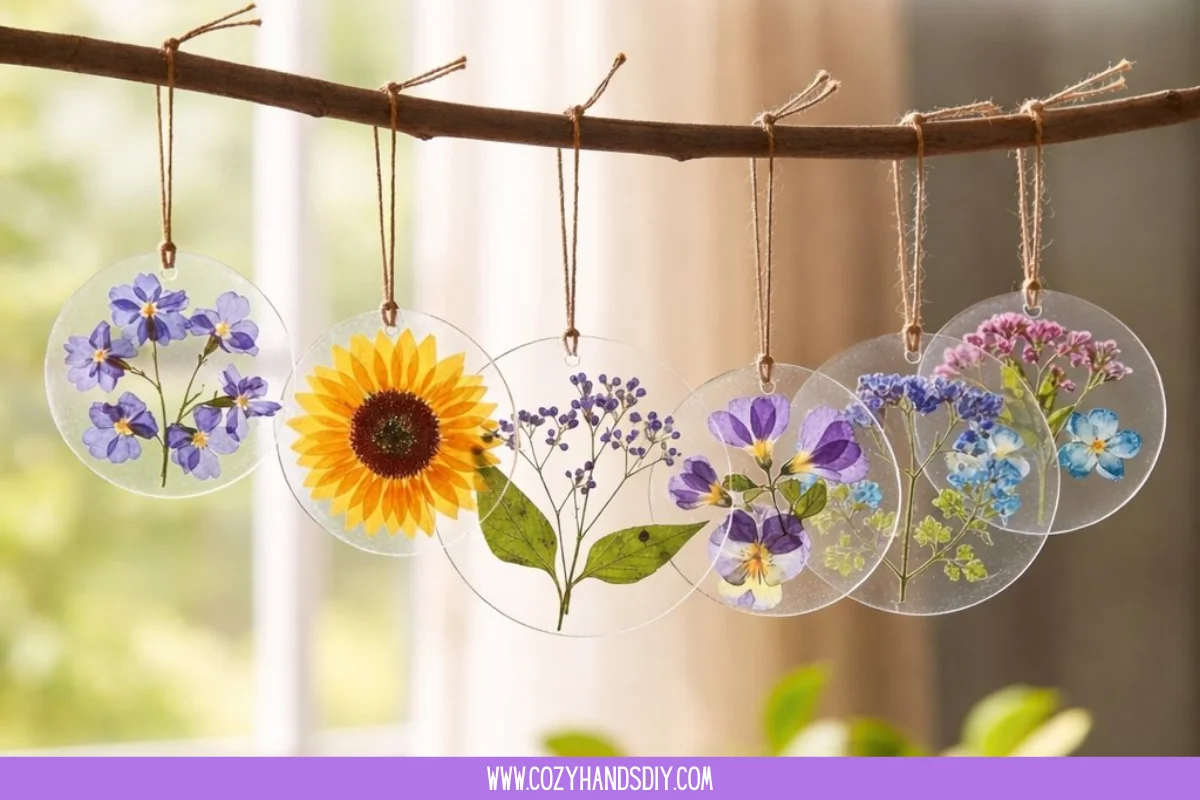
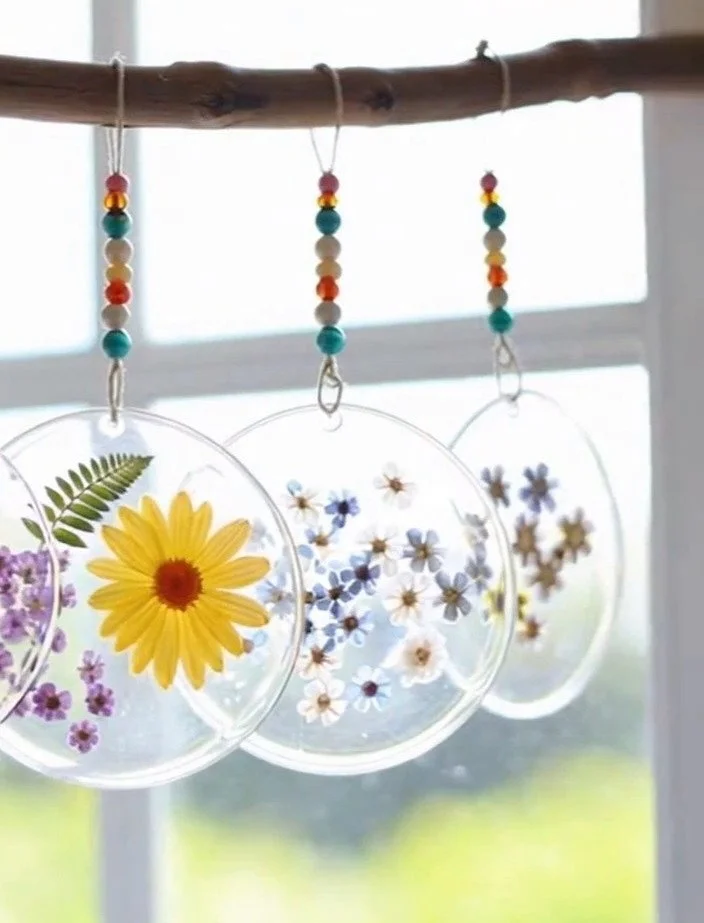
These pieces sit quietly in the home. Hang a small circle in a sunny window and watch light filter through veins and color. The translucence softens the sun and draws attention to tiny natural patterns.
Place a flat oval on a bedside table as a small keepsake. Run a finger along the edge and feel the gentle give and coolness. The tactile memory of pressing the flower stays with you when you touch the piece.
Use them as gift tags or tuck them into a journal. The pieces become small, private places for memory. I often include a pressed leaf from a walk or a bloom from a gift bouquet. That small act of saving a flower feels like keeping part of a day safe.
In a calm craft session, arrange several shapes on a tray and bring them to the table. The colors and shapes form a soft still life. The work itself becomes a way to slow an afternoon and savor presence.
How to Store or Reuse Cornstarch Bioplastic for Pressed Flowers
Store flat and cool. Place each piece between sheets of baking paper in an airtight container. A drawer or cupboard works well. Avoid prolonged heat and direct sunlight when not on display.
If pieces warp slightly, lay them flat under a light weight for a day. Humidity can change shape, so keep them in a dry place. If a piece picks up a small mark, a gentle dab with a damp cloth will often lift the blemish. Do not use harsh cleaners.
You can reuse leftover bits. If you collect small scraps, warm them gently and knead them together to form new sheets. This reuse keeps waste low and lets you experiment with layered textures. I like to save tiny scraps in a labeled jar and turn them into tiny tags later.
These bioplastic items will soften if exposed to water for extended periods. They are not ideal for heavy outdoor use. Treat them as paper-like keepsakes that appreciate shelter and gentle handling.
Gentle Tips & Variations
- Try different oils.
A touch of coconut oil yields a slightly firmer piece and a faint, soft scent.
Olive oil keeps the mix supple but may darken slightly over time. - Layer petals for depth.
Build small collages with very thin flowers and small leaves.
Press the first layer, then add another thin sheet and press again for a layered, almost three-dimensional look. - Add natural pigments.
A tiny amount of beet juice or turmeric can tint the bioplastic softly.
Use only drops and test on a scrap so colors remain subtle and natural. - Play with texture.
Press a piece of lace or a leaf with strong veins for pattern transfer.
The texture will imprint into the surface and catch light differently. - Recycle and combine.
Save small scraps and knead them into new sheets.
If you enjoy multiple slow crafts, combine this project with drying flowers and with other gentle experiments found in my baking soda crystal forest articles to build a collection of sensory projects. For a companion project that explores different textures and slow crystal growth, see my baking soda rainbow crystal forest page.
These ideas are small invitations. Try one and sit with the results before changing directions. Gentle making rewards a slow, curious approach.
What I’ve Learned While Making This
I learned that the right moment to stop kneading is more felt than seen. Your hands tell you when the dough has the right spring. I learned that the best petals come from small flowers and thin leaves. Large, plump petals can trap moisture and cause bubbles.
A slow, steady hand pays off. Rushing the pressing step creates fingerprints or smudges. A patient touch creates clarity and a quiet finish. I also discovered that each home has its own humidity and heat. Some batches like a little extra oil. Some need a dusting of cornstarch.
I keep a small notebook beside the work table to jot small adjustments. That notebook helps me repeat good batches and tweak next attempts. Treat the process like a conversation with the material. Ask it what it needs and listen through touch.
Making with trusted tools helps. A silicone mat and a wooden spoon keep the rhythm calm. Clean your tools with warm water and let them dry naturally. The materials themselves remain simple and safe. Cornstarch is food-grade and familiar, but remember these pieces are not food and should be kept away from small children who may put them in mouths.
FAQs About Cornstarch Bioplastic for Pressed Flowers:
Will the bioplastic smell of cornstarch?
No, the finished pieces carry little to no scent after drying. While you work, the warm mix smells mild and neutral. If you add essential oil for scent, use very small amounts and test for stability first.
Can I use fresh flowers?
Fresh flowers contain moisture and can cause trapped steam and decay. Use fully dried, pressed flowers for best results. If you only have fresh flowers, press and dry them first between paper for several days.
Is this bioplastic safe and non-toxic?
The materials are simple kitchen items and generally safe to handle. The finished pieces are not food. Handle with common sense: keep away from small children who might try to eat them, and wash hands after working. This bioplastic is compostable in many home composts but treat any added pigments or oils accordingly.
How long will these pieces last?
With gentle care, they can last for several months to a few years indoors. Keep them out of high heat and moisture. Over time, colors may fade with prolonged sun exposure. Store them flat when not displayed.
Can I sew these pieces into fabric?
They can be sewn carefully with a fine needle and gentle stitches. The material bends but can tear if pulled sharply. Reinforce holes with small patches of extra material or use small eyelets for more durable attachment.
A Gentle Note Before You Go
Making Cornstarch Bioplastic for Pressed Flowers can become a small ritual of care. The act of gathering petals, feeling the dough warm in your hands, and placing a tiny bloom into a soft surface brings a kind of quiet that lasts beyond the work table. Let the pace be slow. Let curiosity guide the adjustments. Each piece will carry the calm of the making.
If you keep a small stack of these pieces, you create a quiet archive of seasons. Each bit of pressed color holds a day you noticed light, weather, or a single walk. The real project is not only the object but the time you gift to presence and gentle intention.
Conclusion
For a deeper look at the science behind starch based bioplastics, you can read a useful study in this detailed study on starch based bioplastics which explores formulation and properties.
If you want to explore more materials and community-tested recipes, the Materials collection at Materiom offers a broad set of examples and resources to inspire careful, calm experiments.
PrintCornstarch Bioplastic for Pressed Flowers
Create beautiful pressed flower art using a simple cornstarch bioplastic. This project encourages mindfulness and gentle crafting.
- Prep Time: 15 minutes
- Cook Time: 30 minutes
- Total Time: 45 minutes
- Yield: Multiple pieces of bioplastic
- Category: Craft
- Method: No-Bake
- Cuisine: American
- Diet: Vegan
Ingredients
- Cornstarch, plain
- Water, room temperature
- Vegetable oil (1 tsp per cup of cornstarch)
- Vinegar or lemon juice (optional)
- Dried flowers or pressed petals
- Nonstick baking paper or silicone mat
- Small saucepan
- Wooden spoon or silicone spatula
- Bowl for cooling and kneading
- Rolling pin or small jar (optional)
- Cookie cutters or sharp craft blade
- Fine-tipped scissors
- Soft cloth or sponge
- Airtight container for storage
Instructions
- Measure and combine cornstarch with water in a saucepan, adding oil and vinegar if using.
- Warm the mixture slowly over low heat, stirring with a wooden spoon until thick.
- Reach a thick, pudding-like consistency, then remove from heat.
- Knead the warm dough in a bowl lined with baking paper until smooth.
- Flatten the dough between sheets of baking paper to an even thickness.
- Arrange dried flowers on the bioplastic and gently press them into the surface.
- Seal the flowers with a top sheet and cut shapes while the material is warm.
- Dry the pieces at room temperature until firm, flipping occasionally.
- Finish by smoothing edges with a damp sponge once dry.
Notes
Cornstarch adds firmness; oil keeps the mixture soft. Use fully dried petals to avoid moisture. Store pieces flat to preserve form.