

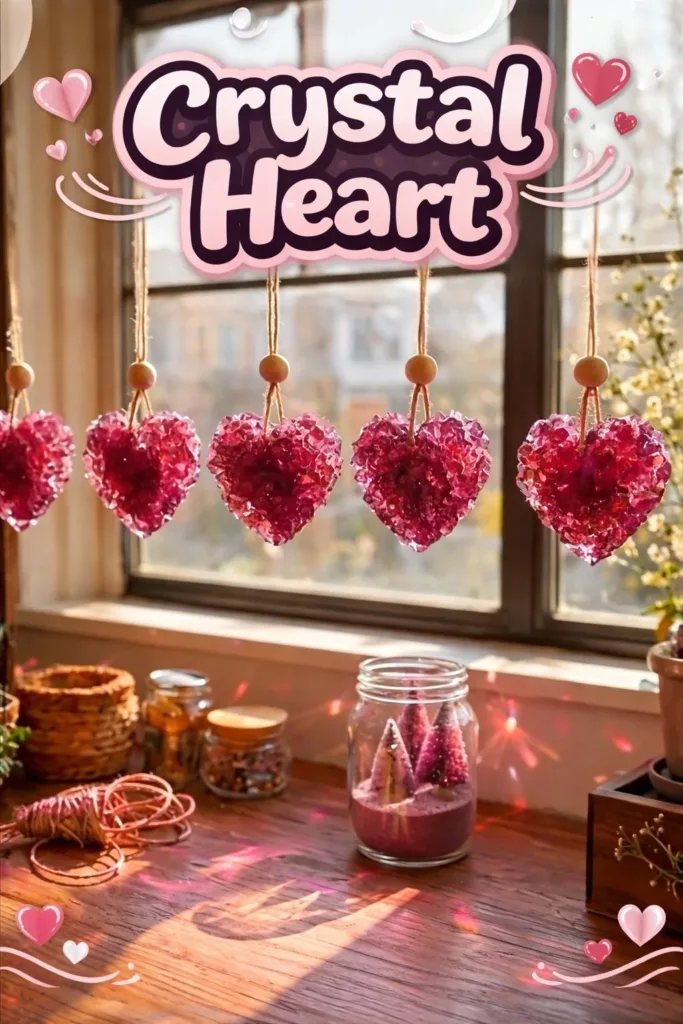
The glass catches the light and turns it into a small, steady warmth between my palms. The Crystal Heart feels cool and slightly rough at first, then smooths with a trace of warmth from my skin. Making this little heart invites a slow breathing pattern and a quiet focus on texture, temperature, and the small sounds of stirring. I return to it when I want to remember how gentle hands and quiet mixing make simple moments feel held. I also like to look back at a cozy guide I wrote on baking soda crystal heart growth when I first explored this kind of crystal-making, and it helps me stay calm and curious about each new batch.
Why Crystal Heart Feels Comforting to Create
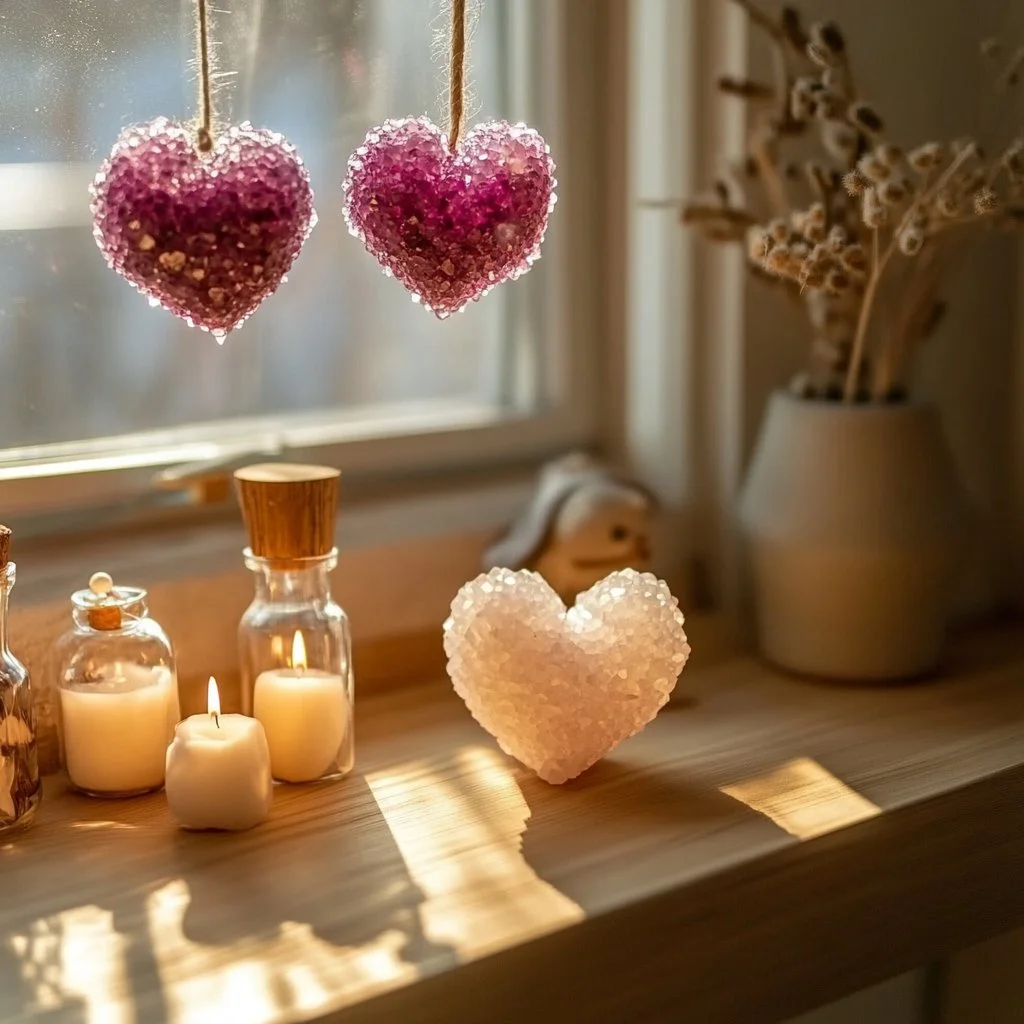
There is a soft comfort in repetition and in watching a form take shape. When you make a Crystal Heart you mix, pour, and wait. Each step asks for a kind pace and gentle attention. The slow forming of crystals looks like a tiny weather forming in your bowl. It asks you to pause and notice small changes: a dusting of powder that catches the light, a faint click as sugar or salt settles, the first sparkle that hints at what will become a heart.
This process helps you slow down because it rewards stillness. You do not rush crystals. You offer them quiet warmth and a stable place to grow. The result sits in your home like a quiet relic. It holds light, and it holds the memory of the few calm hours you spent making it. For sensory comfort, the Crystal Heart gives a pleasing mix of textures: grainy, glassy, and sometimes glossy. For emotional comfort, the making itself acts like a gentle ritual that anchors your day.
The Flow of Making Crystal Heart
Before you touch materials, imagine the rhythm. You will measure, stir, and wait. At times you will move quickly to combine ingredients. At other times you will step back and breathe while crystals form.
This project moves between hands-on moments and patient pauses. You will hear the soft clink of a spoon in a jar. You will see steam or gleam as solutions cool or sit. You will feel the weight of glass or the lightness of a ribbon when you tie your finished heart. The flow asks you to pay attention to small details. I find it helps to tuck my phone away and let the table be the only surface with objects to hold my full attention.
A Gentle Look at the Process
I like to think of this as three gentle acts: preparing a clear, mineral-rich solution; shaping and supporting the crystal as it grows; and tending the piece as it matures. Each act leans on simple chemistry that feels almost like baking. When a saturated solution cools, the dissolved minerals want to come back together. They form tiny, organized structures that we call crystals. The heart shape guides where those structures take hold.
I bring practical experience into this step. The first time I made a Crystal Heart, I waited impatiently and disturbed the jar too soon. The crystals grew fine elsewhere, but the heart lost its neat face. Since then I learned to set alarms, soothe tactile nerves with a warm cup of tea, and keep my hands steady. I learned small tricks, like using a little paper template to encourage shape or placing the jar somewhere free of drafts. These small choices make the process kinder to both the crystals and your nerves.
Materials You’ll Need
- Clear glass mold or shallow jar (easy to find; use a heart-shaped tin or small glass bowl)
- Water (plain and at room temperature)
- Crystal-forming ingredient such as table salt, sugar, or borax (substitute-friendly; borax gives larger, clearer crystals)
- Measuring spoon and clear measuring cup (simple and accurate)
- Stirring spoon (metal or wooden)
- Thin string or fine wire to suspend a seed crystal or shape support (optional; useful when shaping)
- Paper heart template cut to the size you want (optional; helps guide the growth)
- Small tray or plate to rest the mold on while it sits (keeps your workspace tidy)
- Tweezers or a straw for gentle adjustments (small tools that help with delicate moves)
- Soft cloth and tweezers for drying and final touches (keeps fingerprints minimal)
I often include a little note about substitutions. If you prefer a food-safe route, sugar works well and smells familiar. If you want clearer, glass-like crystals, borax usually gives a brighter result. Salt crystals can make lovely crystalline textures too. Choose what feels safe and soothing to you, and keep borax out of reach of pets and small children.
Step-by-Step Directions
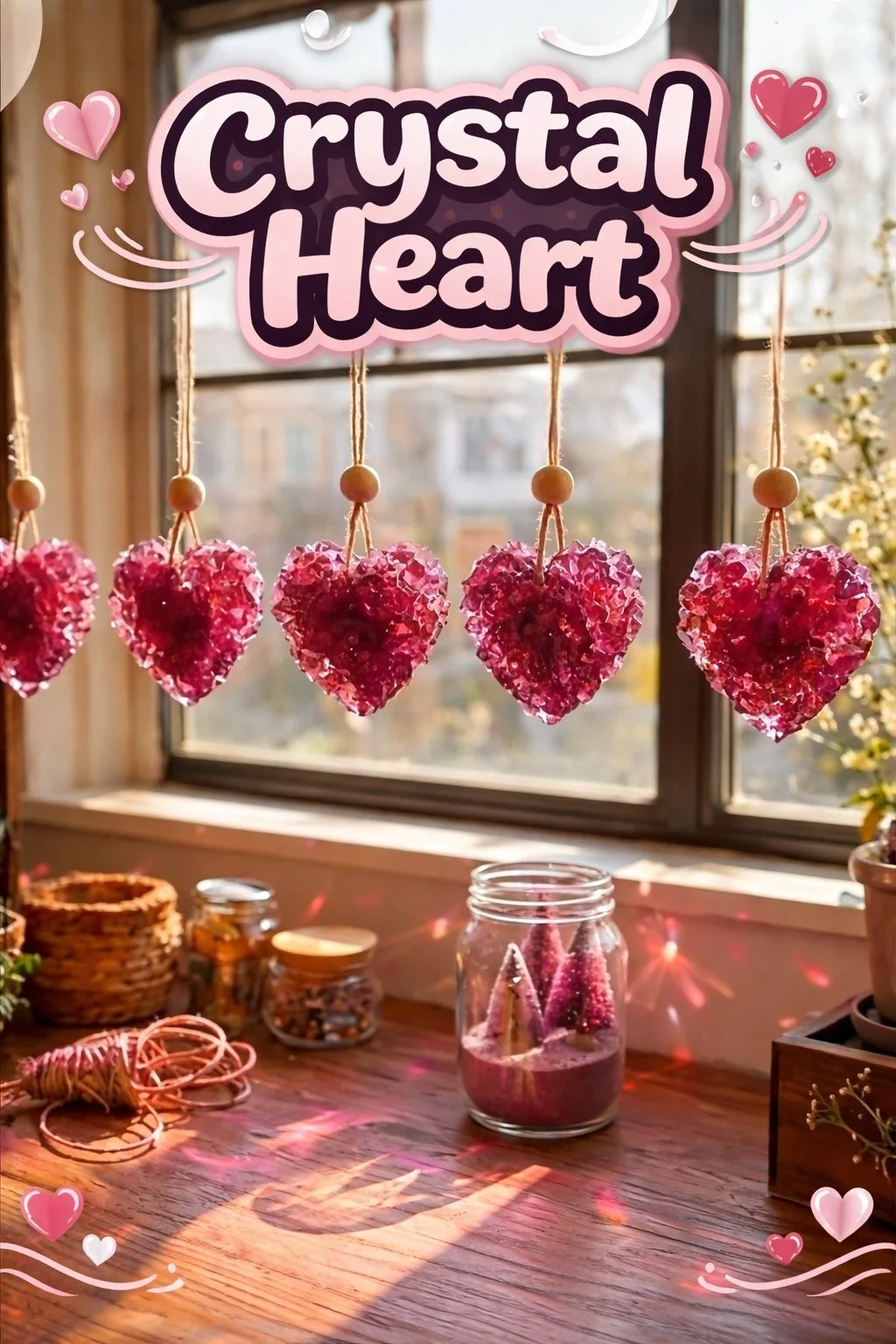
- Warm the water gently and measure the amount you need.
Use warm water to help dissolve your chosen ingredient. The warmth feels soft on your skin and speeds the mixing. - Add the crystal-forming ingredient slowly while stirring.
Stir in small scoops until the liquid looks just a bit cloudy and some grains sit undissolved at the bottom. - Prepare your mold or jar and set the paper heart if you use one.
Place the paper heart flat against the inside of your container or tape it to the outside so you can see the shape. - Pour the solution into the mold with calm, steady hands.
Pour low to avoid bubbles. The liquid will settle quietly and reflect light as it calms. - Suspend a small seed crystal or leave the surface undisturbed for growth.
If you use a seed, tie it with string and hang it so it touches the paper heart gently but does not press hard. - Find a still, slightly warm spot and cover it lightly.
Cover with a paper towel or loose lid to keep dust away while letting moisture escape slowly. - Check without touching after 12 to 24 hours, then again every 24 hours.
Look for tiny sparkles forming along lines and edges. Breathe slowly and resist the urge to poke. - When crystals reach the size you like, lift them carefully.
Use tweezers or a straw to loosen edges. Lift the heart onto a soft cloth and let it dry slowly. - Clean edges and add final touches like ribbon or a soft backing.
If needed, trim the paper template away and tie a ribbon at the top so you can hang or gift the piece. - Sit with your finished Crystal Heart for a few minutes.
Notice its weight, its sound when you tilt it, and the way it catches light in the late afternoon. Let that be enough.
Where This DIY Fits Into a Calm Routine
This project sits well alongside a quiet morning or an early evening ritual. I like to start a Crystal Heart late in the morning and let it mature while I do small tasks. The waiting period gives structure to a slow day. You can pair it with a cup of tea, soft music, or a brief walk and return to check the subtle changes.
Place your heart where light finds it. I set mine near a north-facing window where light is soft and steady. It trades sunlight for shadow in a gentle rhythm that feels like breathing. Use the finished piece as a mindful trigger. When you see it, take three calm breaths. Let it remind you of the gentle time you offered to make something by hand.
Caring for Your Finished DIY
Once your Crystal Heart dries, treat it like a small fragile treasure. It can break if you drop it, and moisture can soften certain crystals. Handle it with clean hands and avoid damp rooms or direct heat. If the heart has a paper backing or ribbon, keep those materials away from water.
If dust collects, use a soft brush or a gentle puff of air. Avoid rubbing hard. If you must move the heart, carry it on a padded tray or a soft cloth. I store an extra finished heart in a small box layered with tissue paper when I travel. It keeps the surface bright and the finer points safe.
Small Ways to Make It Your Own
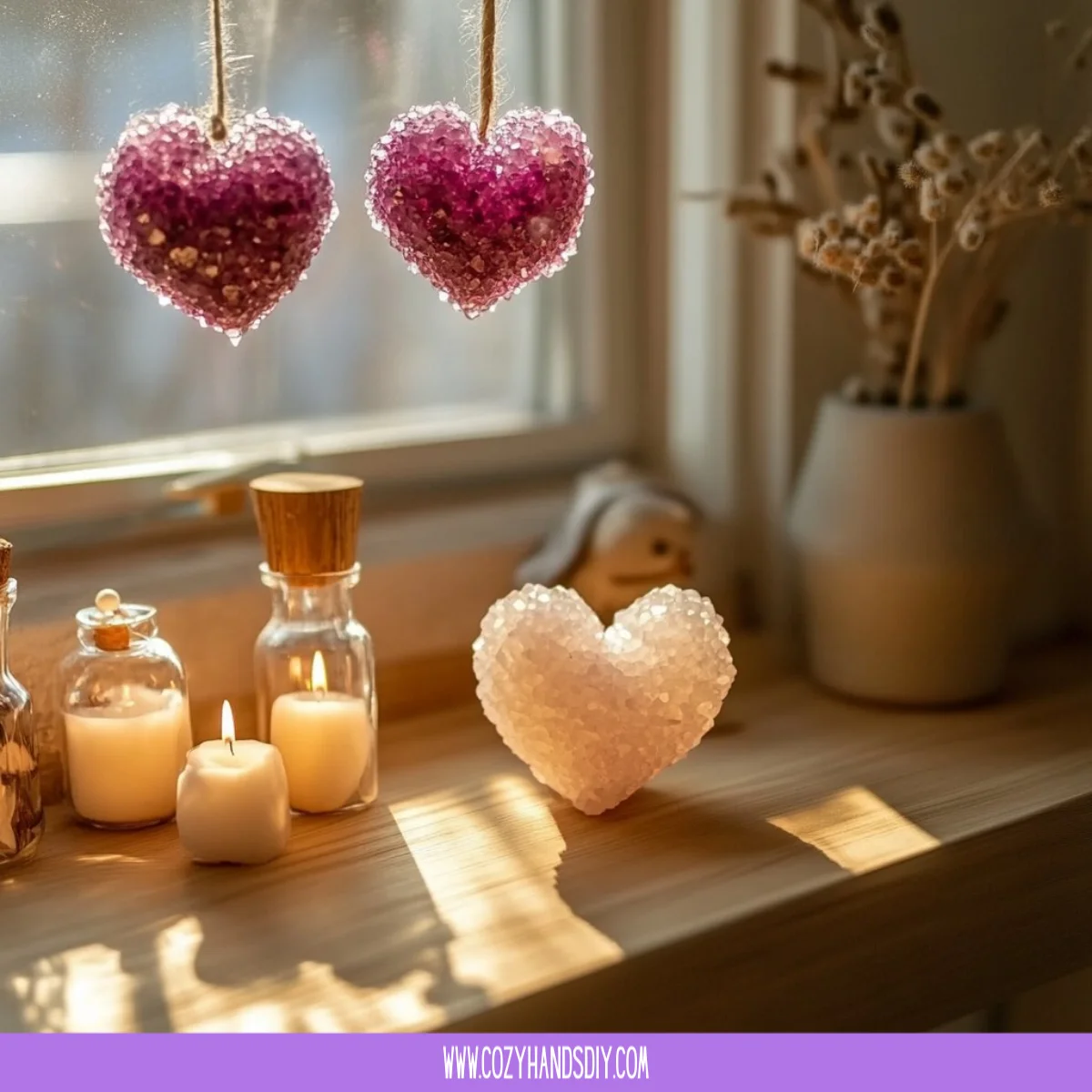
- Try natural colorants like a small pinch of powdered spice or a drop of food-safe dye to suggest a soft tint. Explore gently and test on a tiny sample first. I sometimes add a whisper of color with beet powder for soft pinks.
- Use a textured mold or add tiny beads to the base to encourage varied crystal shapes. I like the slight surprise of a bead peeking through a crystal cluster.
- Tie a hand-dyed ribbon or a woven cuff to the top for a personal finish. The texture of the ribbon adds a warm contrast to the glassy crystal.
You can also look to other project versions for inspiration and subtle changes, such as the simple steps I shared on growing crystal pink hearts. Try one idea at a time and see how it changes the overall feeling of your piece.
What I’ve Learned While Making This
I learned that patience often matters more than precision. A small shift in temperature or a tiny draft can change the way crystals form. I also learned to trust my hands. When I let the process be imperfect, I found unexpected beauty in uneven edges and delicate clusters.
I learned safety with materials too. Borax gives lovely clarity, but it deserves respect. I keep it labeled and away from little hands. When I use sugar, the scent reminds me of kitchen comfort. Each material brings a different sensory story, and that story shapes how the finished heart lives in my space.
FAQs About Crystal Heart
u003cstrongu003eHow long does it take for crystals to form?u003c/strongu003e
u003cpu003eExpect to wait at least 12 to 48 hours for visible growth. Full maturation takes several days. The pace depends on temperature and saturation. Warmer, stable air often helps gentle, even growth.u003c/pu003e
u003cstrongu003eCan I make a Crystal Heart with only sugar or salt?u003c/strongu003e
u003cpu003eYes. Sugar makes smaller, more sparkling crystals and adds a familiar scent. Salt and borax yield larger, often clearer crystals. Each material changes texture and look, so choose based on the feeling you want.u003c/pu003e
u003cstrongu003eIs the Crystal Heart fragile?u003c/strongu003e
u003cpu003eYes. The finished heart can chip or break if dropped. Handle it with care, and store it on a soft surface if you move it. Keep it away from high humidity if you use water-soluble ingredients.u003c/pu003e
u003cstrongu003eHow do I prevent dust or little bugs during the growth period?u003c/strongu003e
u003cpu003eCover the container with a loose lid or paper towel that allows slow evaporation while keeping out large debris. Place the jar in a clean area away from food and open windows.u003c/pu003e
u003cstrongu003eCan kids help with this craft?u003c/strongu003e
u003cpu003eThey can participate in safe ways, such as stirring cooled solutions or making paper templates. Keep them away from heated liquids and borax. Use sugar as a child-friendly alternative and supervise closely.u003c/pu003e
A Gentle Note Before You Go
Making a Crystal Heart invites a small pause in your day. It asks you to work with quiet materials and to wait for a natural rhythm. You will learn to witness small changes and to trust a slow craft. Each heart keeps a memory of the hands that made it and the calm hours you carved out.
Take your time with the first one. Let the process teach you how your home and your touch shape the outcome. When the piece leaves your hands, place it where its light will meet your eye at least once a day. Let that meeting be a gentle reminder that calm making can take up very little time and give back a steady sense of ease.
Conclusion
If you want to learn more about the name or cultural references behind Crystal Heart, you might enjoy the detailed fan entry on the topic at the Crystal Heart entry on the Hollow Knight Wiki, which offers a different kind of context and curiosity. For those who like to explore themed games and resources, the Crystal Heart page on DriveThruRPG provides another angle that can spark imaginative ways to celebrate your finished piece.
Thank you for making gently and staying present with simple tools and steady touch. I hope this project gives you a few quiet moments and a little reflective light to keep.
PrintCrystal Heart

Create a beautiful Crystal Heart using simple materials in a calming process that rewards patience and stillness.
- Prep Time: 15 minutes
- Cook Time: 1440 minutes
- Total Time: 1455 minutes
- Yield: 1 Crystal Heart
- Category: Craft
- Method: DIY Crafting
- Cuisine: N/A
- Diet: N/A
Ingredients
- Clear glass mold or shallow jar
- Water (plain and at room temperature)
- Crystal-forming ingredient (table salt, sugar, or borax)
- Measuring spoon and clear measuring cup
- Stirring spoon (metal or wooden)
- Thin string or fine wire (optional)
- Paper heart template (optional)
- Small tray or plate (for rest)
- Tweezers or a straw (for adjustments)
- Soft cloth (for drying)
Instructions
- Warm the water gently and measure the amount you need.
- Add the crystal-forming ingredient slowly while stirring.
- Prepare your mold or jar and set the paper heart if you use one.
- Pour the solution into the mold with calm, steady hands.
- Suspend a small seed crystal or leave the surface undisturbed for growth.
- Find a still, slightly warm spot and cover it lightly.
- Check without touching after 12 to 24 hours, then again every 24 hours.
- When crystals reach the size you like, lift them carefully.
- Clean edges and add final touches like ribbon.
- Sit with your finished Crystal Heart for a few minutes.
Notes
Choose safe ingredients; sugar works well for a food-safe option while borax provides clarity. Handle with care post-creation.