

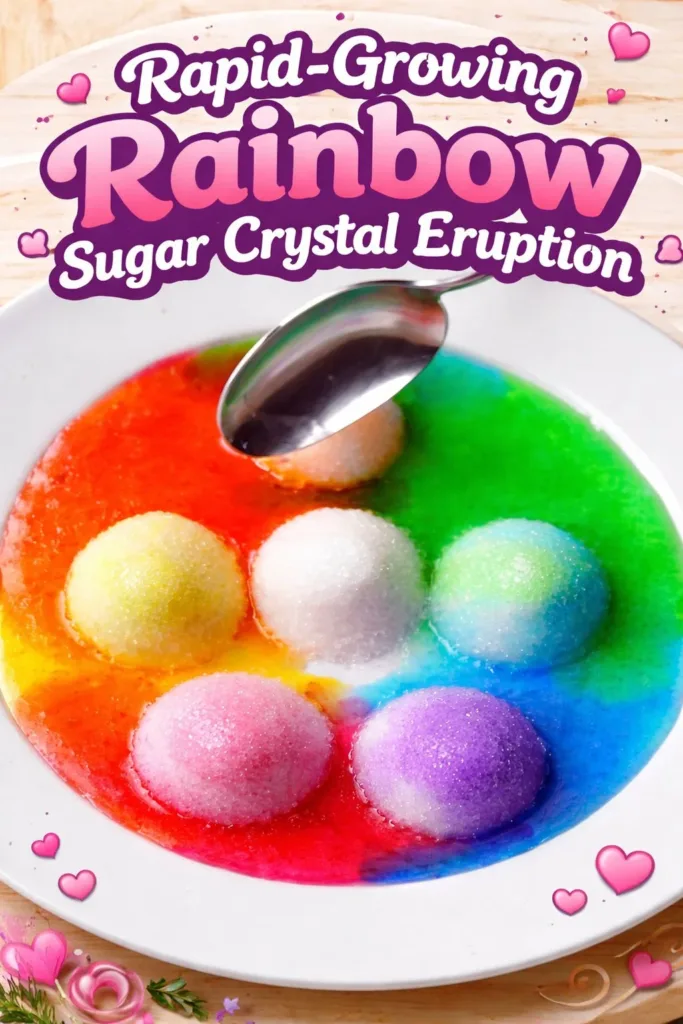
The kettle breathes a soft hiss as the sugar melts into water, and light catches the forming crystals like tiny lanterns. I press my fingers lightly to the cool jar and watch subtle color edges bloom along string fibers. This gentle scene is the heart of the Rapid-Growing Rainbow Sugar Crystal Eruption, a small, bright experiment you can hold in your hands and let calm curiosity guide you. If you want more projects that turn simple ingredients into cozy textures, my guide to rapid growing sugar crystals shares companion ideas and warm detail.
Why Rapid-Growing Rainbow Sugar Crystal Eruption Feels Comforting to Create
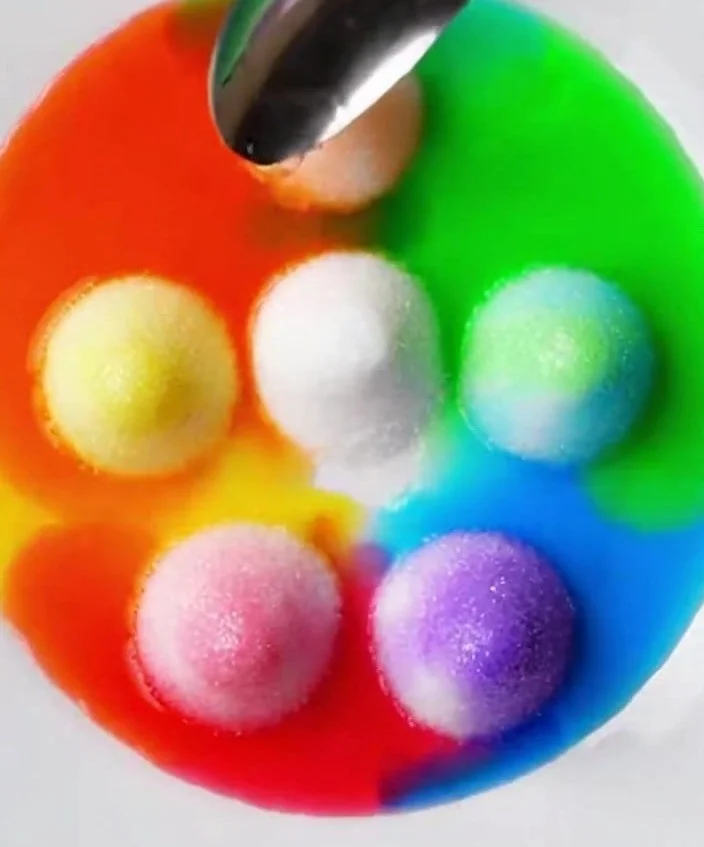
This activity slows you down with quiet, tactile moments. You watch syrup thicken, smell warm sugar, and listen to tiny pop sounds as bubbles escape. Those small, repeated observations invite gentle attention and create a rhythm that feels like knitting with light and sweetness.
Making crystals feels comforting because it asks for patience and small gestures. You stir steadily, tilt a jar and notice gloss and texture. You can adjust temperature with a hand on the pot, and you learn to read visual cues when the solution turns clear, when a thread of syrup drops cleanly from a spoon, when the first tiny crystals cling to a seed. That subtle reading of materials trains your attention without pressure.
The rainbow colors add a soft pleasure. They do not shout for attention. They unfurl in layers as the crystals grow, and you can tune into their slow transformation. For people who like sensory calm, this project gives steady detail: cool glass, warm syrup, the slight crunch of a crystal against a spoon. It makes time feel fuller and more present.
You will benefit emotionally and practically. The work connects small, repeatable actions with visible progress. That ease of progress helps when your mind wants a gentle accomplishment, not a frantic checklist. The project also fits easily into a quiet afternoon or a rainy morning. When I make this at home, I set a kettle on low, put soft music or no sound, and let the process mark the day.
The Flow of Making Rapid-Growing Rainbow Sugar Crystal Eruption
The process moves in a few simple phases: dissolve, color, seed, and watch. Each phase offers a sensory focus that keeps you grounded and present. You will feel warm steam on your face while stirring, smooth syrup sliding from a spoon, and cool beads forming on a string or skewer.
Begin with a mindful setup. Clear a small table, gather jars, spoons, and cloths, and let the kitchen feel spacious. You will move slowly between boiling and cooling stages. The rhythm feels like a slow breath: heat, stir, cool, and rest.
If you enjoy related crystal experiments, you might explore other textures and methods for delicate displays. A project like the baking soda rainbow crystal forest offers a different tactile palette and uses similar attention practices while changing the chemistry and feel. Both teach tuning into subtle changes and let you practice calm focus.
Materials You’ll Need
- Granulated sugar (white, easy to find)
- Water (filtered or tap, at room temperature)
- Clear glass jars or heatproof containers (one per color)
- Wooden skewers or cotton strings (for crystal growth)
- Clothespins or clips to suspend strings inside jars
- Food coloring (liquid or gel, mild tones work best)
- A medium saucepan
- A long-handled spoon or wooden stirrer
- A small funnel (optional, helps pour slowly)
- Measuring cup and spoon
- Pliers or scissors for cutting and adjusting skewers/strings
- A small notebook and pen for gentle observations (optional)
You can adapt materials to what you have. If you like heart-shaped displays, look at projects like the rainbow crystal heart for ideas on skewers and forms. I often use mismatched jars and soft-toned food coloring to keep the palette soothing.
STEP-BY-STEP DIRECTIONS
- Measure and warm.
Stir one cup of water into a small saucepan and bring to a gentle simmer. Add three cups of sugar slowly, stirring constantly so the granules dissolve and the liquid turns glossy. - Watch the syrup.
Keep the heat low and steady. You will see the syrup deepen and thicken. When it leaves a clear trail on the spoon, remove it from heat and let it cool a little until it is warm, not hot. - Pour into jars.
Use a funnel or pour carefully to split the syrup into jars. Fill each jar to three-quarters full so crystals have room to grow on the suspended string. - Add color gently.
Drop a small amount of food coloring into each jar. Stir slowly with a long-handled spoon until the color spreads. Choose muted shades for softer visuals or brighter ones if you like lively bursts. - Prepare the seed.
Tie a small piece of clean cotton string to a wooden skewer or clip. If you want larger crystals, tie sugar crystals or a coarse grain bead of sugar to the string as a seed. For delicate growth, leave the string plain and roughen it slightly so crystals can cling. - Suspend the string.
Clip the skewer across the jar mouth so the string hangs without touching the sides or bottom. Adjust its length so it sits in the syrup but stays free in the center. - Cover and rest.
Cover each jar loosely with a paper towel or a breathable lid. Place jars in a quiet, vibration-free spot at room temperature. Avoid opening them often; gentle waiting helps crystal structure form cleanly. - Check progress with calm.
Look once or twice a day. Note the way small crystals begin to cluster along the string and jar walls. If you see tiny eruptions of color or sharp points, breathe and observe the transformation. - Support growth.
If crystals grow unevenly, tilt the jar a few degrees to encourage symmetrical formation. Use a spoon to remove floating bits that might disrupt the growth surface. - Finish with care.
After three to seven days, you will see substantial crystal growth. Remove the string slowly and let excess syrup drip back into the jar. Place the string on wax paper to dry if you plan to display it. - Create a mini eruption.
To make a gentle eruption effect, warm a small spoonful of syrup and drop it onto the base of the crystal cluster. The warm sugar will melt nearby crystals slightly and then recrystallize, releasing a small bloom of new points. - Clean and reflect.
Wash jars gently and write a short note about what you observed. Record time to first crystal, color bloom, and any textures you loved. Those notes help refine future attempts.
Where This DIY Fits Into a Calm Routine
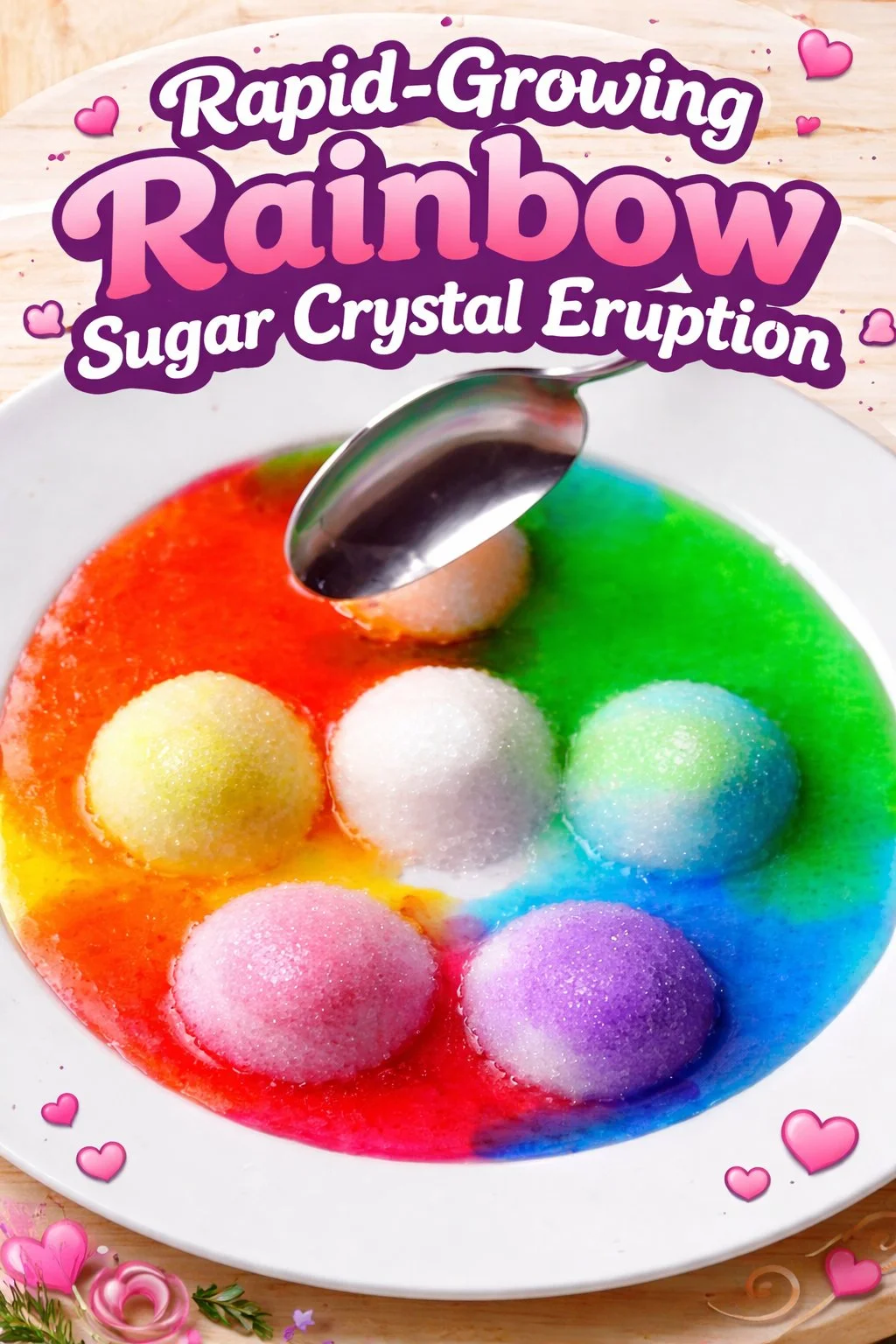
This project pairs well with a slow hour: a cup of tea, quiet music, or a family story time. You will find it supports a rhythm where creation and caretaking alternate. You seed the jars and then return to them as part of a mindful check-in.
Place the jars on a shelf where they catch soft daylight but avoid direct, hot sun. The light will make crystals sparkle without stressing them with heat. I like to arrange them near a window that faces east so morning light offers a gentle reveal of color and texture.
This craft also suits a short ritual. Each morning, take a minute to breathe while you check the jars. Each evening, dim the lights and let the crystals rest in a calm corner. The project becomes a living marker of time and attention, a quiet companion that changes slowly and rewards care.
How to Store or Reuse Rapid-Growing Rainbow Sugar Crystal Eruption
Store finished crystals in a dry, airtight container to keep them crisp and prevent humidity from softening their edges. Wrap fragile pieces gently in tissue or place them in shallow boxes with separators. Avoid refrigeration; cold can introduce condensation when you remove pieces.
If crystals pick up dust, brush them lightly with a dry, soft paintbrush. Do not wash finished clusters under running water; water dissolves sugar and changes their shape.
You can reuse partially grown strings. Gently scrape off old crystals with a spoon and re-seed the string into a fresh sugar solution. That gentle recycling saves materials and extends the sense of making without waste.
If you want to repurpose syrup left in jars, simmer it briefly with a splash of lemon for a simple glaze or use it to flavor warm drinks. The syrup stores well in a sealed jar at room temperature for a few days. Label jars with dates and colors so you can keep track.
Gentle Tips & Variations
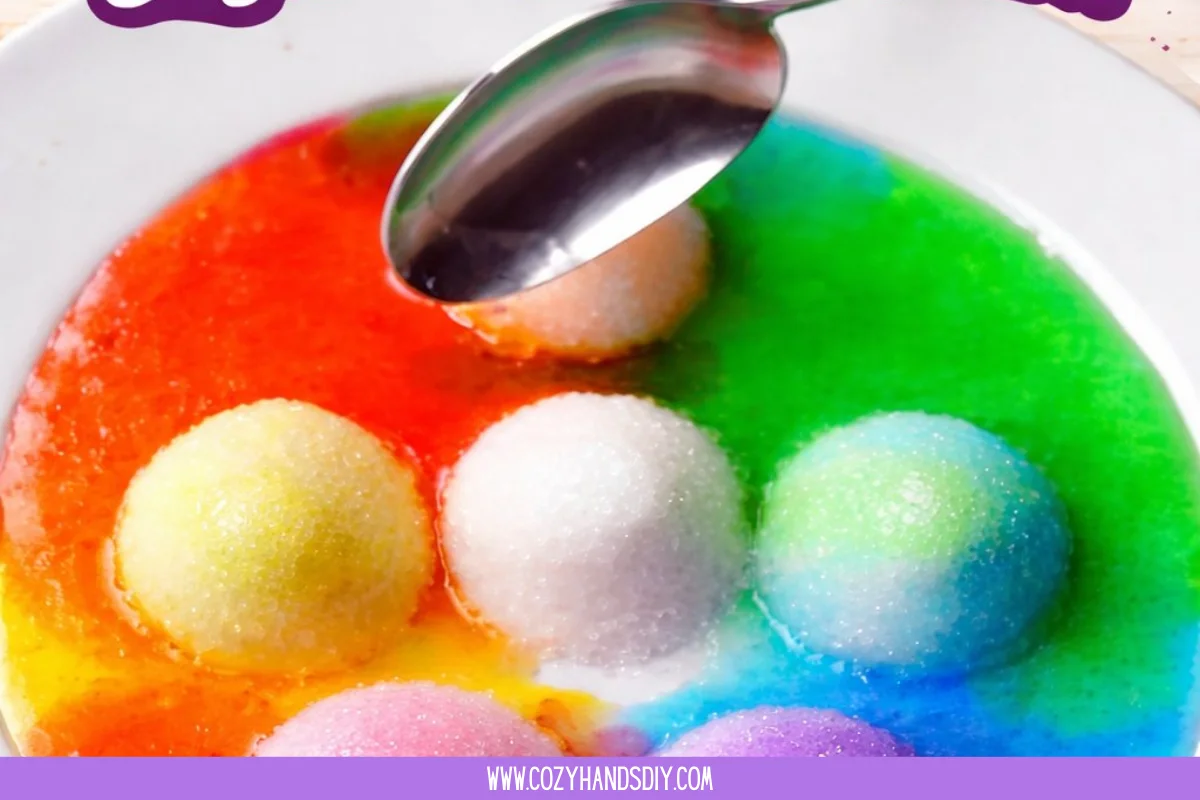
- Invite texture play.
Try different string types: cotton gives fine, even crystals while thin twine makes chunkier growth. Treat this as an exploration and let each material teach you a new texture. - Soften your palette.
Use pastel food colors or dilute dye more than usual for a gentle, watercolor effect. You will enjoy watching soft layers form rather than sharp blocks of color. - Try shaped forms.
Suspend a string inside a small mold or a shallow bowl for crystals that grow into different silhouettes. If you want help with forms and safety, this idea pairs well with projects that avoid borax and use alternative methods like those found in the rainbow crystal rocks no borax write-up. - Let sound guide you.
Keep a small timer with a soft chime and check jars at the same marked moments each day. That gentle repetition anchors attention without pressure. - Make it social.
Invite a friend or child to prepare colors and note observations together. Share a small checklist of sensory cues warm smell, glossy syrup, tiny crystals and enjoy the quiet exchange. Frame each suggestion as an invitation rather than a rule.
FAQs About Rapid-Growing Rainbow Sugar Crystal Eruption
Will the crystals grow faster if I heat the jars?
No. Heating jars after seeding disrupts crystal structure and creates uneven growth. Keep the jars at room temperature and let crystals form slowly. You will see more symmetrical growth when you avoid temperature shifts.
Can I use brown sugar or honey instead of white sugar?
Brown sugar and honey introduce oils and impurities that change how crystals form. You can experiment, but expect softer, less-defined crystals. For classic, sharp crystals, use white granulated sugar.
Are these crystals safe to handle or taste?
The crystals contain food-safe ingredients but often pick up dust or may have been touched. If you plan to taste them, make them in a clean area and store them in airtight containers. For display, treat them as decorative objects.
How long do crystals keep their shape?
In dry conditions, crystals stay crisp for weeks. High humidity softens them within days. Store them in airtight containers with a small desiccant packet if you want them to last longer.
What causes the eruption effect?
The small bloom or eruption happens when you briefly melt nearby crystal surfaces with warmth. The melted sugar recrystallizes quickly and can form new growth points. You will see that the effect looks like a small flurry of spikes when done gently.
A Quiet Closing Thought
Sit with one translucent cluster in your hand and notice how light travels through it. Notice how your breath slows and how small acts of care produced something delicate and bright. Making this Rapid-Growing Rainbow Sugar Crystal Eruption grows patience as much as it grows sugar. Each tiny point of crystal reflects a decision to slow down and observe.
Keep your notes. Return to these jars in future seasons and let the memory of their rhythms guide you. You will deepen both skill and stillness the more you practice. Let each experiment be a gentle reminder that slow attention makes ordinary materials into small wonders.
Conclusion
For a clear, practical guide on how sugar crystal growth works and to learn more about techniques for rock candy, see this detailed resource: Make Your Own Sugar Crystals for Rock Candy – ThoughtCo. If you want a deeper dive into methods for creating large, transparent sugar crystals at home, this tutorial offers thoughtful steps and photos: How to Make Giant Transparent Sugar Crystals at Home – Crystalverse.
Thank you for making with care. I hope these instructions help you find softness in slow moments, and that your kitchen fills with quiet light and tiny, luminous growths.
PrintRapid-Growing Rainbow Sugar Crystal Eruption
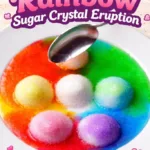
A comforting and creative project that transforms sugar and water into beautiful rainbow sugar crystals, encouraging mindfulness and patience.
- Prep Time: 15 minutes
- Cook Time: 10 minutes
- Total Time: 3-7 days (for crystal growth)
- Yield: About 4 jars of crystals
- Category: Dessert
- Method: DIY
- Cuisine: American
- Diet: Vegetarian
Ingredients
- 3 cups granulated sugar
- 1 cup water
- Food coloring (liquid or gel)
- Wooden skewers or cotton strings
- Clothespins or clips
- Clear glass jars or heatproof containers
- Medium saucepan
- Long-handled spoon or wooden stirrer
- Small funnel (optional)
- Measuring cup and spoon
- Pliers or scissors
- Small notebook and pen (optional)
Instructions
- Measure and warm: Stir one cup of water into a saucepan and bring to a gentle simmer. Add three cups of sugar slowly, stirring constantly until dissolved.
- Watch the syrup: Keep the heat low until the syrup thickens and leaves a clear trail on the spoon, then remove from heat.
- Pour into jars: Carefully divide the syrup into jars, filling them to three-quarters full.
- Add color gently: Drop food coloring into each jar and stir slowly until the color spreads.
- Prepare the seed: Tie a piece of cotton string to a skewer or clip, optionally attaching sugar crystals for larger growth.
- Suspend the string: Clip the skewer across the jar so the string hangs freely in the syrup.
- Cover and rest: Loosely cover each jar and place in a quiet spot at room temperature.
- Check progress: Observe the crystals forming once or twice a day.
- Support growth: Tilt jars slightly to encourage even crystal formation and remove any floating bits.
- Finish with care: After three to seven days, gently remove the strings and let the crystals dry.
- Create a mini eruption (optional): Drop warm syrup on the base of crystal clusters for a melting effect.
- Clean and reflect: Wash jars and note your observations for future attempts.
Notes
Keep finished crystals in an airtight container, avoid refrigeration, and brush gently to remove dust.