

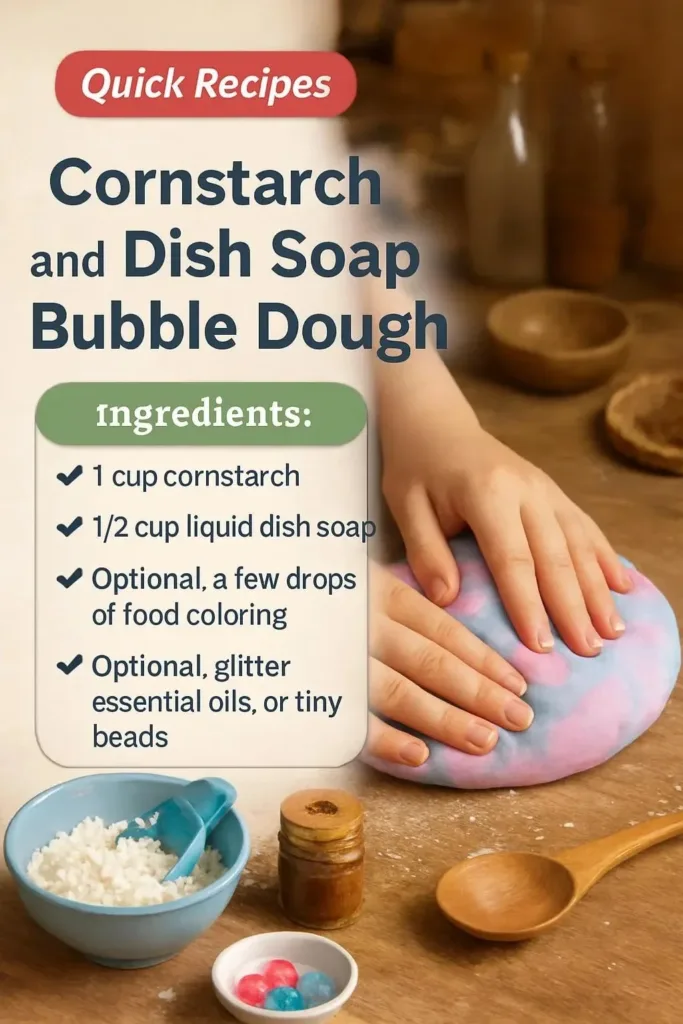
A warm, quiet afternoon, light pooling on the table, and the soft sigh of hands pressing into a gentle, pillowy dough. The Cornstarch and Dish Soap Bubble Dough feels like a small, cozy ritual. It holds a cool, silky texture under your fingers and a faint soapy scent that fades into focus with each slow breath. I often make a batch when I need to slow down and notice the moment, and I return to it when I want a simple, sensory anchor.
Why Cornstarch and Dish Soap Bubble Dough Feels Comforting to Create
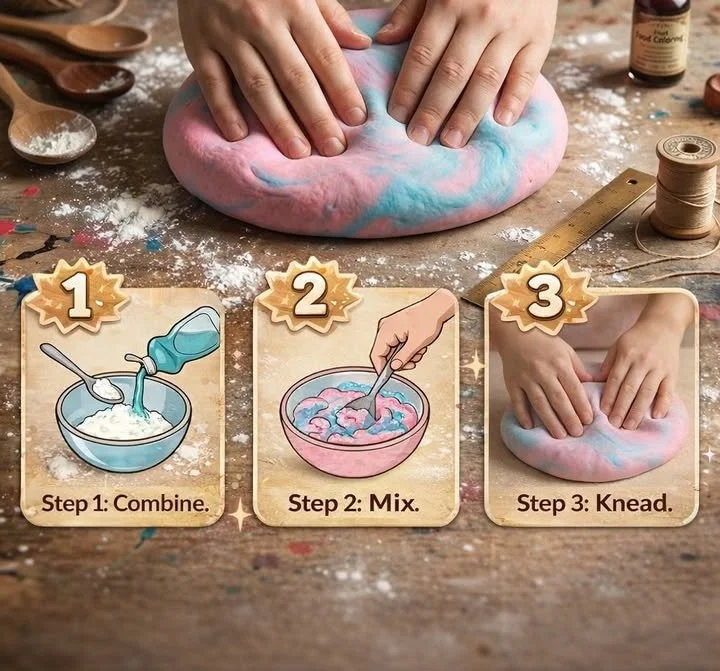
This dough invites a slow, intentional tempo. The textures change as you mix and knead: a powdery flouriness that becomes smooth, then faintly stretchy, and finally soft and slightly bouncy. Those shifts give the hands something calm to follow.
Making this dough asks you to focus on touch and rhythm rather than speed. Pressing, folding, and patting let your breathing settle. If you like, you can sit by a window and let the light make the dough glow slightly translucent when you pull it apart. I link these moments often with other gentle crafts, and I return to my own notes on cornstarch and dish soap bubble dough when I want the exact feel again.
The recipe uses everyday materials so you can begin without fuss. That familiarity feels reassuring. You do not need perfect technique or special tools. The dough responds to small adjustments, making the process forgiving and calm. Knowing you can adapt a little or a lot helps you relax into the making.
A Gentle Look at the Process
Before you gather materials, imagine the process as a slow series of small, sensory actions. You will measure, mix, and slowly bring the ingredients together. The first sound is a soft sift or rustle. Then you will feel a dry, chalky texture turn into a denser, cream-like mass.
You will notice visual cues too. The cornstarch starts matte and pale. As you add dish soap and water it brightens and takes on a sheen. If you add a small touch of oil, the surface turns satiny. These cues tell you when to pause or add a drop of liquid.
I sometimes compare this to other simple sensory recipes I use. If you enjoy a slightly different approach, you might explore my gentle notes on making diy bubble dough. That piece shows another route to a playful, tactile mixture and helps you feel confident about small swaps.
Materials You’ll Need
- Cornstarch, about 1 cup (easy to find)
- Dish soap, mild and clear, 2 to 3 tablespoons (gentle on skin)
- Warm water, a few teaspoons to start (adds pliability)
- A small mixing bowl (glass or ceramic feels nice)
- A spoon or spatula for stirring (silicone is soft and quiet)
- A dropper or teaspoon for precise water additions (optional)
- Food coloring or natural dyes, if you want color (optional)
- A small container with a lid for storage (optional, reuse-friendly)
- A wipe or damp cloth nearby for quick cleanup (safety and ease)
I choose a mild dish soap because it keeps the scent soft and will not irritate hands when used briefly. Cornstarch gives the dough its dry-to-soft transition. If you want to adjust density, you can add tiny amounts of water or soap in response to how the mixture feels.
STEP-BY-STEP DIRECTIONS
- Measure the cornstarch into your bowl and feel its cool, powdery texture between your fingers. Settle into a steady breath before you begin.
- Add two tablespoons of dish soap. Stir slowly with the spoon and watch the cornstarch take on a creamy sheen. The sound will be quiet and smooth.
- Test the mixture’s texture by pressing a small amount between thumb and forefinger. If it feels crumbly, add a half teaspoon of warm water and stir again.
- Continue adding water, a few drops at a time, until the dough becomes slightly sticky but not wet. Pause between drops and notice the change in consistency.
- Scoop the mixture onto a clean surface and knead gently. Use slow, deliberate motions, folding the dough toward you and pressing lightly. Feel its coolness and the way it yields then springs back.
- If you want color, add a single drop of food coloring to the center of the dough and fold until evenly tinted. A little goes a long way; you can always add more.
- If the dough feels too sticky, sprinkle a pinch of cornstarch and knead it in. If it feels too dry, dampen your hands and continue kneading to add small amounts of moisture.
- When the dough forms a cohesive, slightly bouncy ball, allow it to rest for five minutes. This pause lets textures settle and gives you space to notice the scent, weight, and temperature.
- Use the dough in calm play or sensory exploration. Press, roll, pat, and pull slowly. If you make bubbles by pressing the dough into a shallow well and blowing softly, you will find delicate, momentary spheres.
- After play, shape the dough into a neat ball and store it in a sealed container at room temperature. Wipe your surface and hands with a damp cloth.
These steps favor presence over speed. I often work with children and with adults who want a gentle break. We make the dough together, and I watch for small cues: a child slowing their breath, or someone pausing to notice a texture.
When you knead, you may notice the faint, smooth resistance under your palms. That resistance is part of the calm. It draws attention to the hands and away from thoughts that rush. This sensory focus offers a simple, reliable way to settle.
Using Cornstarch and Dish Soap Bubble Dough in Everyday Life
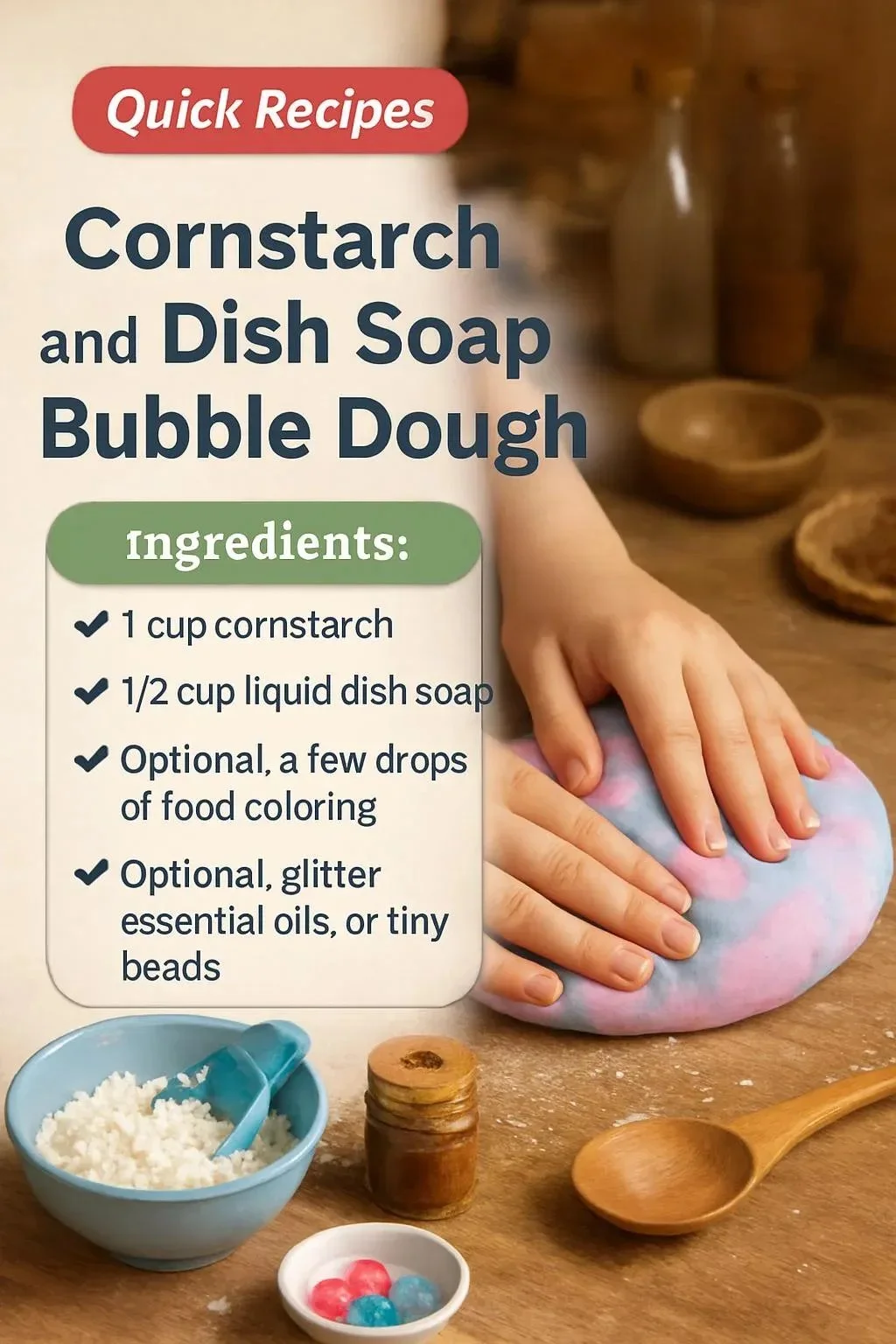
This dough fits easily into a calm routine. Keep a small jar in a craft area for a five-minute hand reset, or bring it out during story time to give little hands a focused task. Its tactile qualities make it a good companion for quiet mornings and slow afternoons.
At home, I place a shallow tray on the table and tuck a few tools nearby: a smooth rolling pin, a soft brush, and a few simple cookie cutters. These extras add gentle variety while keeping the experience low-friction.
You can also pair the dough with other simple sensory ideas. For example, combine a session with a short outdoor walk, then spend ten minutes with the dough to re-center. If you like to move into more playful experiments, I wrote a small piece that pairs well with delicate tools like a bubble wand fireworks activity and simple bubble-making techniques.
Place a small tin beside bath time as a simple wind-down tool. Hands that have touched warm water often find the dough especially satisfying: it feels cooler, and the textures shift in a pleasant way. The dough is not meant to replace quiet reading or conversation but to gently accompany them.
How to Store or Reuse Cornstarch and Dish Soap Bubble Dough
Store the dough in an airtight container at room temperature. A shallow jar or a small plastic container works well because it prevents flattening and keeps the dough easy to retrieve.
If the dough dries out a bit, add a few drops of warm water and knead until it softens. Add water slowly; too much will make it sticky. If it becomes too sticky, dust with cornstarch and knead until balanced.
Use the dough within a week for the best texture. If you notice a strange smell or discoloration, discard it and make a fresh batch. Safety matters, so always supervise little ones, and encourage handwashing before and after play.
I keep a small notebook where I jot changes that worked: one extra drop of dish soap made it stretchier, a pinch more cornstarch made it firmer. These small notes help me repeat successful batches and feel confident when I share the process with friends.
Gentle Tips & Variations
- Invite scent softly: Add one drop of vanilla extract or a tiny bit of essential oil to scent the dough. Use very little and skip oils for young children. Let the scent be a whisper, not a flood.
- Try texture play: Mix in a small spoonful of dry rice or fine sand for closed-palmed exploration. These additives change the mouthfeel for a short session and make each squeeze different.
- Color mindfully: Use natural turmeric or beet powder to tint the dough if you prefer plant-based dyes. They provide gentle color and a calm, earthy scent.
- Turn it into miniature scenes: Press the dough into shallow trays and arrange pebbles, leaves, or a single feather for a short, mindful tableau. This invites focus without demanding perfection.
- If you like a more traditional bubble play, try this dough alongside other gentle experiments like baking soda and vinegar fireworks fun to widen the sensory palette. These pairings help you notice different reactions and textures.
Each tip remains an invitation. The point is not to get it right, but to notice the small differences. Swap, pause, and trust your senses as you go.
FAQs About Cornstarch and Dish Soap Bubble Dough
Q: Is this dough safe for kids to touch?
A: Yes, with supervision and a mild dish soap. Keep sessions short and watch for mouthing behavior. If a child tends to put things in their mouth, use a smaller amount and choose non-toxic materials.
Q: What if the dough feels crumbly or falls apart?
A: Add a few drops of warm water and knead slowly until it comes together. You will feel the texture change from dry to pliable. Add liquid slowly; small adjustments make a big difference.
Q: Can I freeze the dough to store longer?
A: I do not recommend freezing. Freezing changes the texture and does not preserve the gentle feel. Instead, store it in an airtight container and revive with a few drops of water when needed.
Q: Will the dye stain hands or surfaces?
A: Some dyes or natural colorants can leave faint stains. Use a small amount of dye and work on a washable mat or surface. Wash hands promptly after play to minimize staining.
Q: How long does the scent last?
A: A gentle scent fades within a day as the dough rests. If you add extract or essential oil, use it sparingly. Strong scents can become overpowering during extended play.
A Quiet Closing Thought
Sitting with a bowl and simple ingredients, you practice a quiet kind of care. Cornstarch and Dish Soap Bubble Dough offers soft resistance and tactile change that guide attention back to the present. Each fold and press becomes a small, mindful action.
When you make this dough, move slowly and listen to the small cues of texture and scent. Let the process be a soft ritual rather than a task. Keep your space gentle and your expectations flexible. The comfort you find in these small moments matters more than anything shaped from the dough.
Conclusion
If you would like more background ideas and another take on bubble dough recipes, this thoughtful tutorial offers a clear step-by-step approach to bubble dough and its uses: Bubble Dough – Shannon’s Tot School.
For additional inspiration on gentle bubble activities and variations to explore alongside this dough, see this practical guide that pairs well with calm sensory play: Bubble dough – Gift of Curiosity.
PrintCornstarch and Dish Soap Bubble Dough
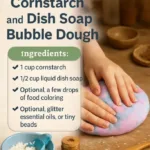
A simple and soothing recipe for creating comforting bubble dough using cornstarch and dish soap, perfect for sensory play.
- Prep Time: 15 minutes
- Cook Time: 0 minutes
- Total Time: 15 minutes
- Yield: 1 batch
- Category: Sensory Play
- Method: Mixing
- Cuisine: N/A
- Diet: N/A
Ingredients
- 1 cup cornstarch
- 2 to 3 tablespoons mild and clear dish soap
- A few teaspoons warm water
- Optional: Food coloring or natural dyes
- Optional: A small mixing bowl
- Optional: A spoon or spatula for stirring
- Optional: A dropper or teaspoon for precise water additions
- Optional: A small container with a lid for storage
- Optional: A wipe or damp cloth for cleanup
Instructions
- Measure the cornstarch into your bowl and feel its cool, powdery texture between your fingers.
- Add two tablespoons of dish soap. Stir slowly with the spoon and watch the cornstarch take on a creamy sheen.
- Test the mixture’s texture by pressing a small amount between thumb and forefinger. If it feels crumbly, add a half teaspoon of warm water and stir again.
- Continue adding water, a few drops at a time, until the dough becomes slightly sticky but not wet.
- Scoop the mixture onto a clean surface and knead gently.
- If you want color, add a single drop of food coloring to the center of the dough and fold until evenly tinted.
- If the dough feels too sticky, sprinkle a pinch of cornstarch and knead it in.
- When the dough forms a cohesive, slightly bouncy ball, allow it to rest for five minutes.
- Use the dough in calm play or sensory exploration.
- Store the dough in a sealed container at room temperature.
Notes
This dough is safe for kids to touch under supervision. Adjust the dough’s texture by adding water or cornstarch as needed.