

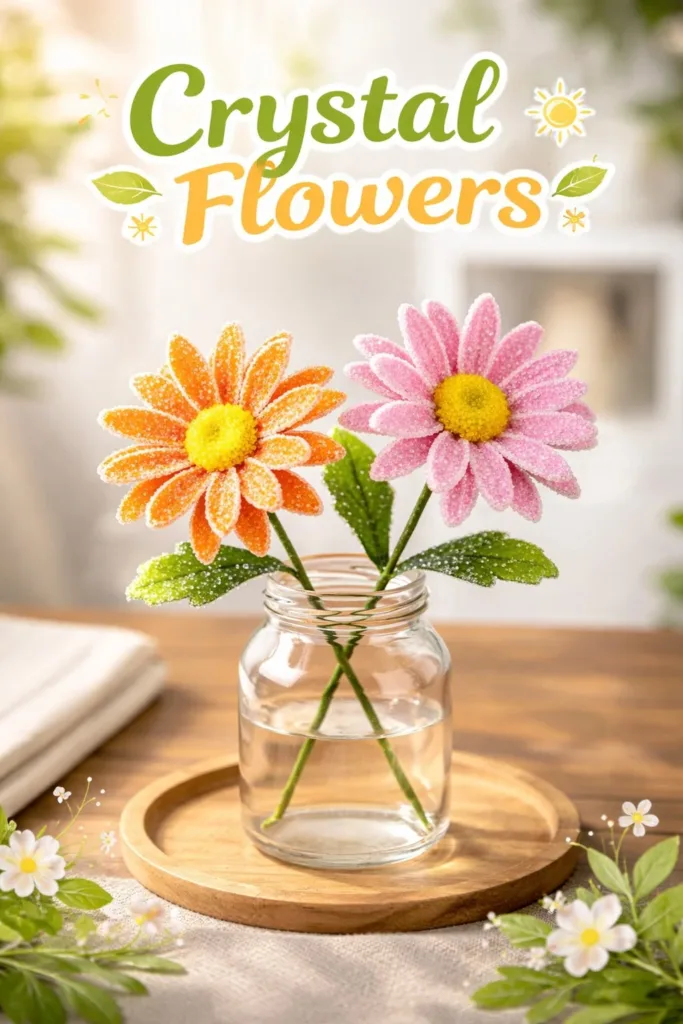
A soft light pools on the table as steam lifts from a small kettle. I cup the warm jar in my hands and watch tiny clear crystals form like sudden frost along the edges of a paper petal. Crystal Flowers sit between something grown and something made, and that pause while crystals take shape feels like listening to the room breathe. This gentle project helps me slow down and notice small changes: the cool roughness of a dried petal, the quiet clink of glass, the way light catches a crystal like a held memory. For a full project outline and images, see the cozy guide on Crystal Flowers project page.
Why Crystal Flowers Feels Comforting to Create
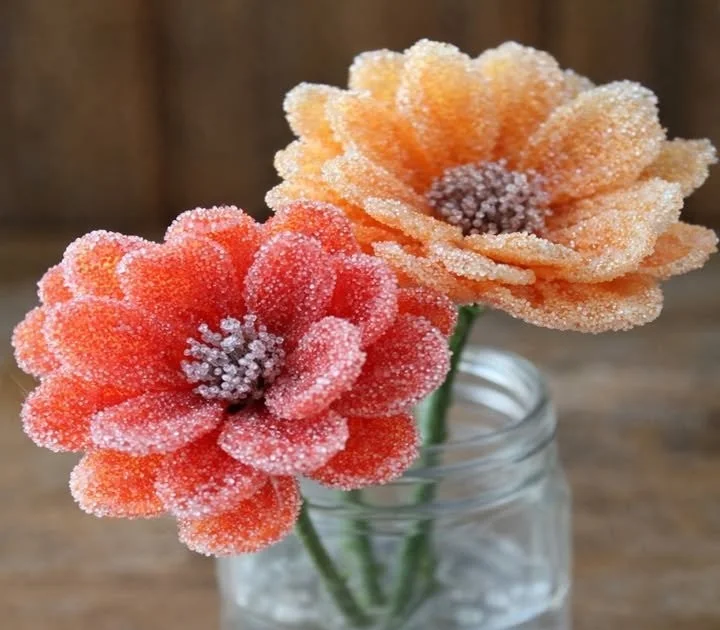
Making Crystal Flowers invites quiet attention. The materials feel safe and familiar. You move slowly, measure gently, and then wait with kind curiosity. The process becomes a ritual of small acts: folding a petal, stirring until the solution glitters, draping a shape into a jar. Each action has a soft texture and an honest purpose.
I find the act calming because it pairs touch with time. You hold a petal and then watch crystals grow over hours. That slow change reduces the rush in the mind. The subtle sound of settling liquid, the coolness of glass, and the gradual brightening of surfaces all soothe the senses. This project also fits into small, mindful moments. You can make a single bloom in an afternoon, or set a cluster to form over a few days while you sip tea and read.
Why it helps focus: crystal growth is visible but gradual. It rewards gentle observation rather than fast finishing. That quality asks for presence. If you want a deeper, step-by-step companion for variations and photos, the detailed how-to guide on our site offers extra notes and safety tips.
The Flow of Making Crystal Flowers
Before you gather materials, imagine the movements and rhythms you will enjoy. You will pour, stir, and fold. You will steady a jar with the heel of your hand. You will hang a shape so it floats in a warm solution and then close the lid and leave it to do its work.
The flow moves like this: prepare the fabric or paper base, make a hot saturated solution, position the base to hang without touching the glass, and then wait. When crystals begin, they rarely thunder into being. They arrive as tiny points, then as a soft frost, then as a more definite texture. You can check hourly or once a day, and both choices feel good. The sensory rhythm here is quiet and patient.
My hands remember the first time I made a crystalline bloom. I felt the warmth of the jar, the faint steam on my face, and the surprise when the first clear spikes appeared along a fold. That small astonishment anchors the practice. If you like a slightly different route, you might try a baking soda based experiment later; that method shares the same steady rewards and can be a lovely companion to this project if you enjoy testing different crystals. I often return to the simple joy of watching salt-like crystals form while I slow down and knit or journal nearby. For a related technique you can explore, check the baking soda crystal growing method.
Materials You’ll Need
- Clear glass jar or mason jar, clean and dry (easy to find)
- Boiling water, handled with care
- Epsom salts or alum powder (alum creates clear sparkly crystals; Epsom salt is gentle and safe)
- Paper or thin fabric petals (coffee filters, lightweight craft paper, or cotton fabric)
- Pipe cleaners or thin wire to form stems (bendable and can be shaped into petals)
- String or thin thread to suspend petals (strong enough to hold a small weight)
- Pencil or wooden skewer to balance the string across the jar
- Food coloring or diluted watercolor paint (optional for a soft tint)
- Small tray or towel to catch drips
- Gloves or cloth to protect hands from hot water (safety note)
- Tweezers or long wooden skewer for gentle adjustments (optional)
Notes: You can substitute similar items. Alum, Epsom salt, and table salt each produce different crystal textures. Use what feels safe and available. If you prefer a non-chemical option, try the baking soda method linked earlier for another gentle result.
- Safety and sensory note: the water will be hot. Wear gloves and work on a protected surface. The gentle steam and warm glass add a comforting tactile note to the process.
Step-by-Step Directions
- Shape the base
Take a coffee filter or a piece of thin cotton.
Fold and pinch it into a petal or flower shape around a pipe cleaner stem.
Feel the soft texture and make a small cup or ruffle where crystals can gather. - Form the stem and hanger
Bend a pipe cleaner into a stem and attach your petal.
Wrap a small length of thread around the stem tip to hang the petal.
Balance the thread over a pencil so the petal will hang centered in the jar. - Make the saturated solution
Pour boiling water into your jar until it is three quarters full.
Stir in Epsom salts or alum slowly until the crystals no longer dissolve.
You will see the solution turn glassy and thick with tiny suspended crystals. - Add color gently, if you like
Dip a toothpick into food coloring and touch it to the surface.
The dye will spread slowly; a tiny amount gives a watercolor tint.
Keep the color soft for a natural, calm look. - Suspend the petal
Lower the petal into the jar so it floats without touching the sides.
Rest the pencil on the jar rim to keep the hanger steady.
Cover the jar lightly with a cloth to keep dust out and slow evaporation. - Wait and check
Place the jar in a quiet, stable spot away from direct sunlight.
Check the growth after a few hours and then once a day.
You will see tiny points first, like frost on a leaf. - Remove and dry
When crystals reach the look you love, lift the petal out slowly.
Let excess solution drip back into the jar over a towel.
Set the petal on a protected surface to dry until the crystals feel firm. - Finish and adjust
If you want more sparkle, you can repeat the process carefully.
Trim any rough edges on the pipe cleaner stem and set your flower upright.
Enjoy the light-catching texture and soft weight of the finished piece.
Each of these steps asks you to move with care. Pause between actions and notice the small shifts: the sound of stirring, the way the thread settles, the glow of a tinted solution. Those moments make the project feel like a slow shared ritual with your hands.
Using Crystal Flowers in Everyday Life
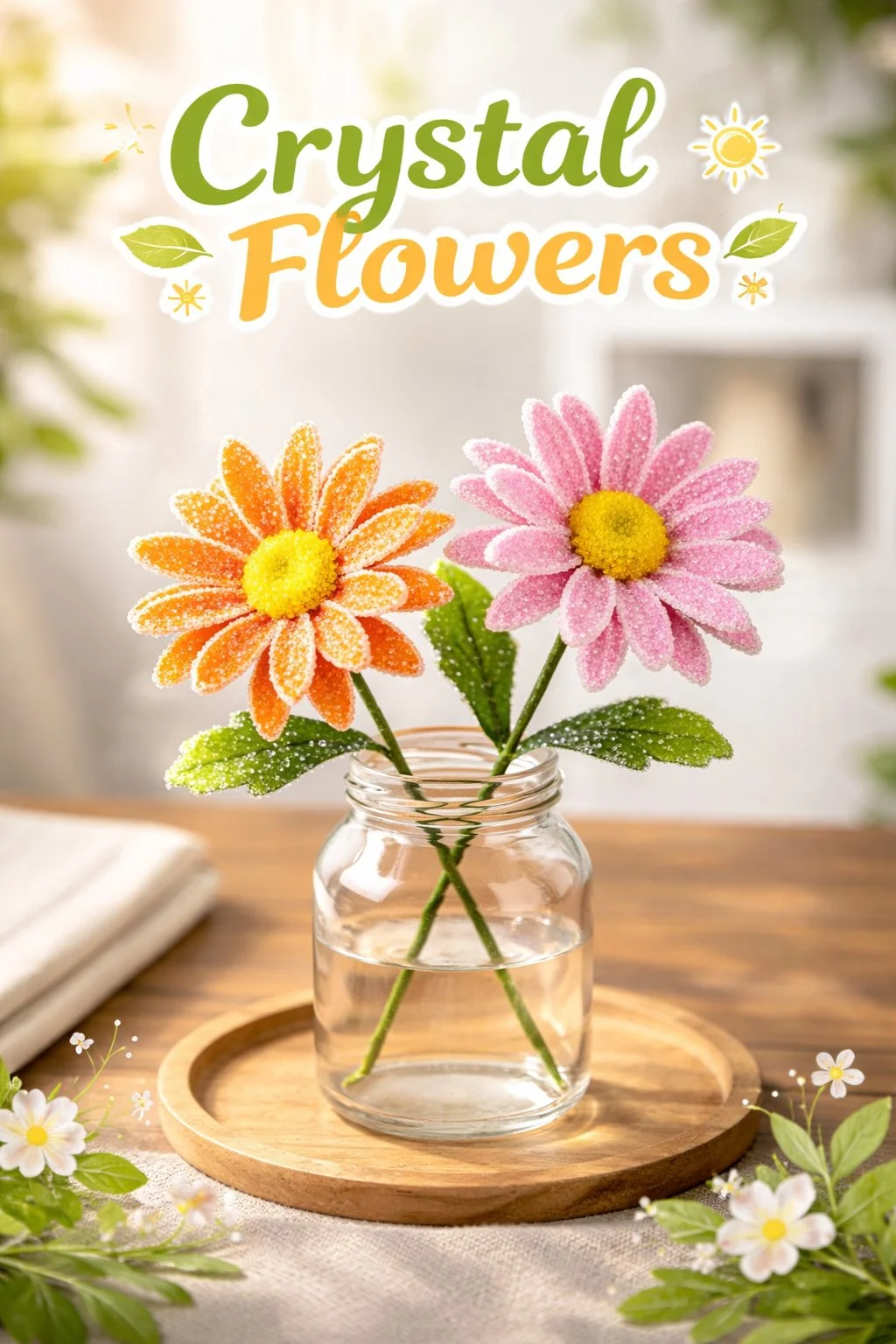
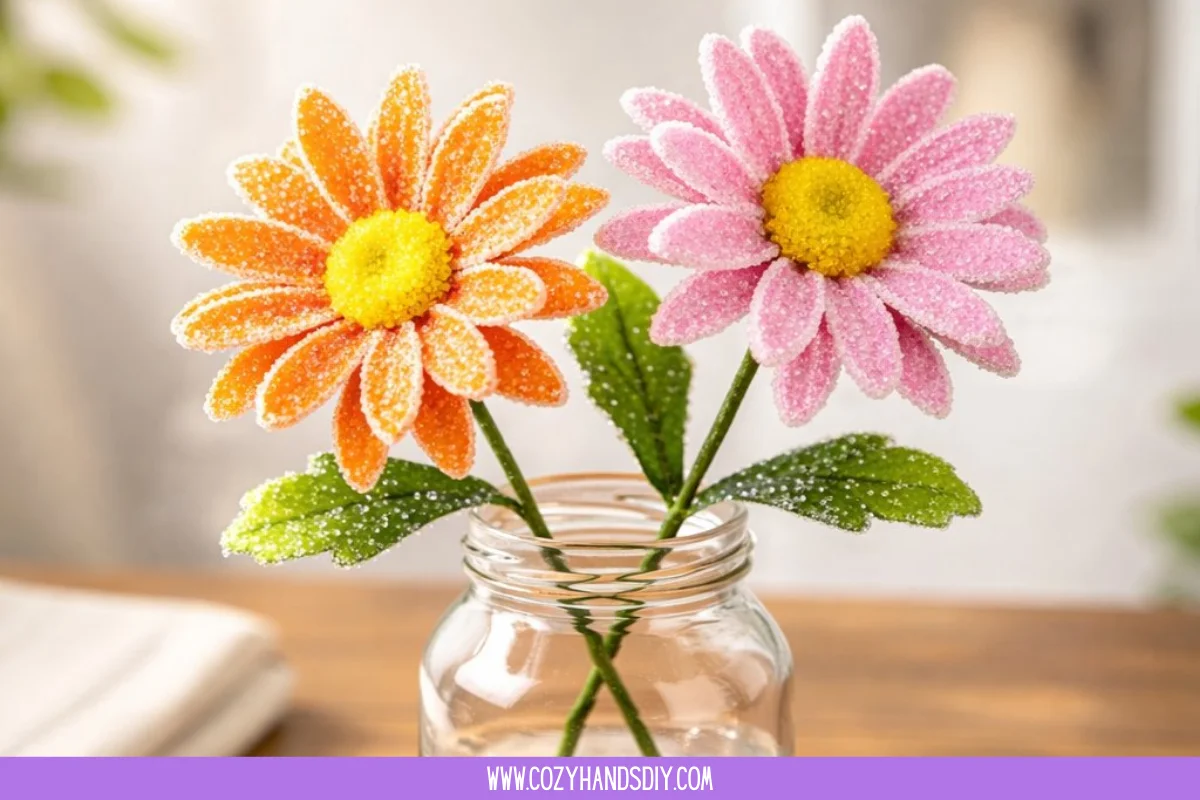
Finished Crystal Flowers work gently in small places. They catch light on a windowsill and throw soft prisms across a wooden table. You can place a single bloom in a shallow ceramic bowl on a nightstand, or group several in a low vase for a wintery centerpiece. The fragile clarity pairs well with warm textures: a wool runner, a hand-thrown cup, or a stack of weathered books.
I often place one near my reading chair. When the afternoon light leans in, the tiny crystals glow and remind me to rest the eyes and breathe. You can also use these flowers as small, tactile pins on a wrapped gift or as quiet ornaments hanging from a hook. The visual contrast between the delicate crystal structure and cozy textiles adds a pleasing, balancing note to a room.
For seasonal displays, tuck a few into a bowl with dried branches or pinecones. The crystals echo frost on winter mornings without feeling cold. You can also use them as props for mindful rituals: light a candle, set a crystal bloom nearby, and take three slow breaths. The object becomes a small anchor for repeated calm moments.
How to Store or Reuse Crystal Flowers
Store your Crystal Flowers in a dry, dust-free place. A shallow box lined with soft paper or tissue keeps them safe from knocks and humidity. Avoid closed plastic containers with trapped moisture, as that can soften some crystal textures over time.
If a flower becomes dusty, gently brush it with a soft, dry paintbrush. Do not use water to clean a crystal, as moisture may dissolve delicate edges. You can reuse the pipe cleaner stems by gently heating the tip of the pipe cleaner over a small flame and then reshaping it, or by carefully removing the crystals with tweezers and rinsing the metal stem under cool water. Dry the stem fully before reusing.
If crystals lose their sparkle, you can dissolve and regrow. Place the piece back into a new saturated solution and let crystals form again. Each cycle yields a slightly different texture and growth pattern. I keep a small labeled jar for pieces I plan to re-grow so I can track what materials make which effects.
Longevity tip: avoid placing Crystal Flowers in humid rooms like bathrooms. Low, steady humidity helps crystals remain crisp. If you live in a humid climate, store finished pieces in a sealed box with a small silica gel packet to absorb moisture.
Gentle Tips & Variations
- Invite color with restraint. A tiny dot of dye spreads slowly and creates soft washes rather than bold streaks. Color tends to concentrate where crystals cluster, giving a natural, watercolor effect.
- Try different base textures. Paper, cotton, and felt each encourage different crystal shapes. I like coffee filter petals for soft ruffles and cotton for more defined spikes.
- Create a cluster. Hang several petals at varying heights in one jar. They will grow differently and feel like a tiny garden when dry.
- Use seasonal scents. Place a lightly scented sachet nearby while your crystals grow. The scent does not interfere with crystal formation and makes the waiting time feel domestic and soothing.
- Experiment with solution strength. A slightly less saturated solution yields finer crystals, and a fuller one yields bolder growth. Keep notes in a small journal to track your favorite combinations.
I learned to invite curiosity rather than perfection. Sometimes crystals form in unexpected patches or make tiny bridges between petals. I now enjoy those quirks. They feel like evidence of the making moment, not flaws.
For more creative spins and step-by-step photos of other crystal tree projects, you might enjoy browsing more crystal tree ideas on our site.
FAQs About Crystal Flowers:
Are these crystals safe to touch?
Yes, most crystals made with Epsom salt or alum are safe to touch once fully dry. They can be fragile. Avoid touching often if you want them to last. Wash hands before and after handling to keep oils off the crystals.
How long does crystal growth take?
Growth can begin within a few hours and continue over several days. Many makers find a visible, satisfying result in 24 to 48 hours. The final drying can take another day or two depending on humidity.
Can I make these with children?
You can make them with older children under close adult supervision. Hot water and powders require careful handling. Younger children can help shape petals and choose colors, while adults handle the hot solution.
What happens if a petal touches the glass?
If the petal touches the glass, crystals will anchor there and may grow flat. That look can be lovely too. If you prefer more free-floating forms, adjust the hanger to keep the petal centered.
How do I pick the best material for petals?
Thin, porous materials like coffee filters give billowy crystalline ruffles. Cotton fabric yields stiffer, pointier growths. Try small test pieces to see which texture you prefer.
A Gentle Note Before You Go
Sit with the finished piece for a moment. Hold it near the light and notice the way your breath slows or the way your shoulders soften. Making Crystal Flowers gives you a small, visible way to practice presence. The project rewards gentle attention across time, and that slow reward becomes a kind companion in a restless day.
If you choose to make one now, make it for the simple purpose of watching and feeling. Give yourself permission to step away and return. Each check-in becomes part of the craft, and each small change tells a quiet story about time and care.
Conclusion
If you want to explore professional floral inspirations while keeping the DIY spirit, the local resource Crystal Flower Shop in Chicago offers a view into how crystal-like arrangements can dress a space. For those who prefer ready-made options or want to compare materials, you can also see a range of crystal-themed items on crystal flowers on Amazon.
PrintCrystal Flowers
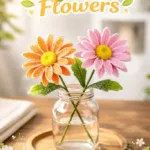
A calming DIY project that involves creating beautiful crystal flowers using simple materials and patience.
- Prep Time: 30 minutes
- Cook Time: 0 minutes
- Total Time: 1 hour
- Yield: 1 crystal flower
- Category: Craft
- Method: Crafting
- Cuisine: N/A
- Diet: N/A
Ingredients
- Clear glass jar or mason jar, clean and dry
- Boiling water
- Epsom salts or alum powder
- Paper or thin fabric petals (coffee filters, lightweight craft paper, or cotton fabric)
- Pipe cleaners or thin wire
- String or thin thread
- Pencil or wooden skewer
- Food coloring or diluted watercolor paint (optional)
- Small tray or towel to catch drips
- Gloves or cloth to protect hands
- Tweezers or long wooden skewer for adjustments (optional)
Instructions
- Shape the base by folding a coffee filter or piece of thin cotton into a petal or flower shape around a pipe cleaner stem.
- Form the stem and hanger by bending a pipe cleaner into a stem and attaching the petal, then wrapping a small length of thread around the stem tip.
- Pour boiling water into your jar until it is three quarters full and stir in Epsom salts or alum slowly until they no longer dissolve.
- Add color gently by dipping a toothpick into food coloring and touching it to the surface of the solution.
- Lower the petal into the jar so it floats without touching the sides, resting the pencil on the jar rim.
- Wait and check the growth of the crystals after a few hours and then once a day.
- Remove the petal when the crystals reach the desired look and let excess solution drip back into the jar.
- Finish by trimming any rough edges on the pipe cleaner stem and setting the flower upright.
Notes
You can substitute similar items; for different textures and effects, use other materials for petals. Safety note: handle hot water with care and wear gloves.