

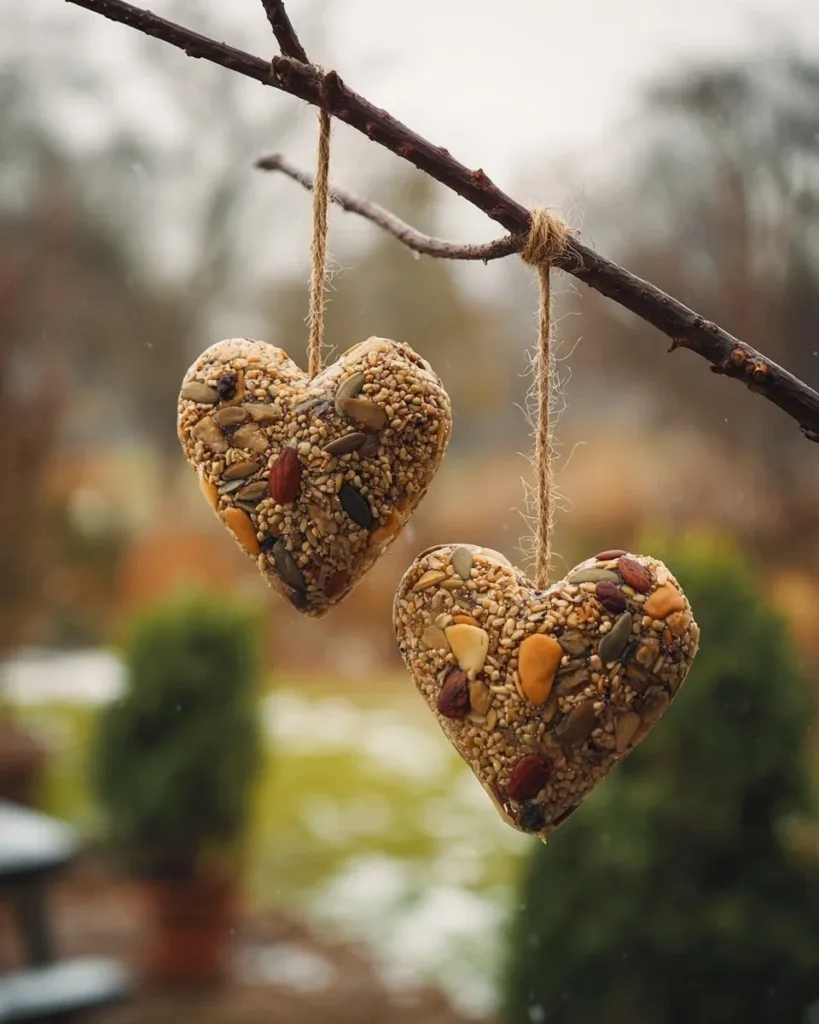
The cold light of a late winter morning filters through the kitchen window and lands on a small heart of birdseed resting on the counter. The seed feels cool and slightly gritty under my fingers. I press it gently into a mold and breathe in the warm, toasty scent of sunflower seeds and oats. Making Valentine Bird Seed Feeders like this slows the world down for a little while. If you have tried similar projects, you might find this kind of making as soothing as the simple fruit and seed feeders in my other posts DIY fruit seed bird feeders.
The Quiet Joy of Making Valentine Bird Seed Feeders
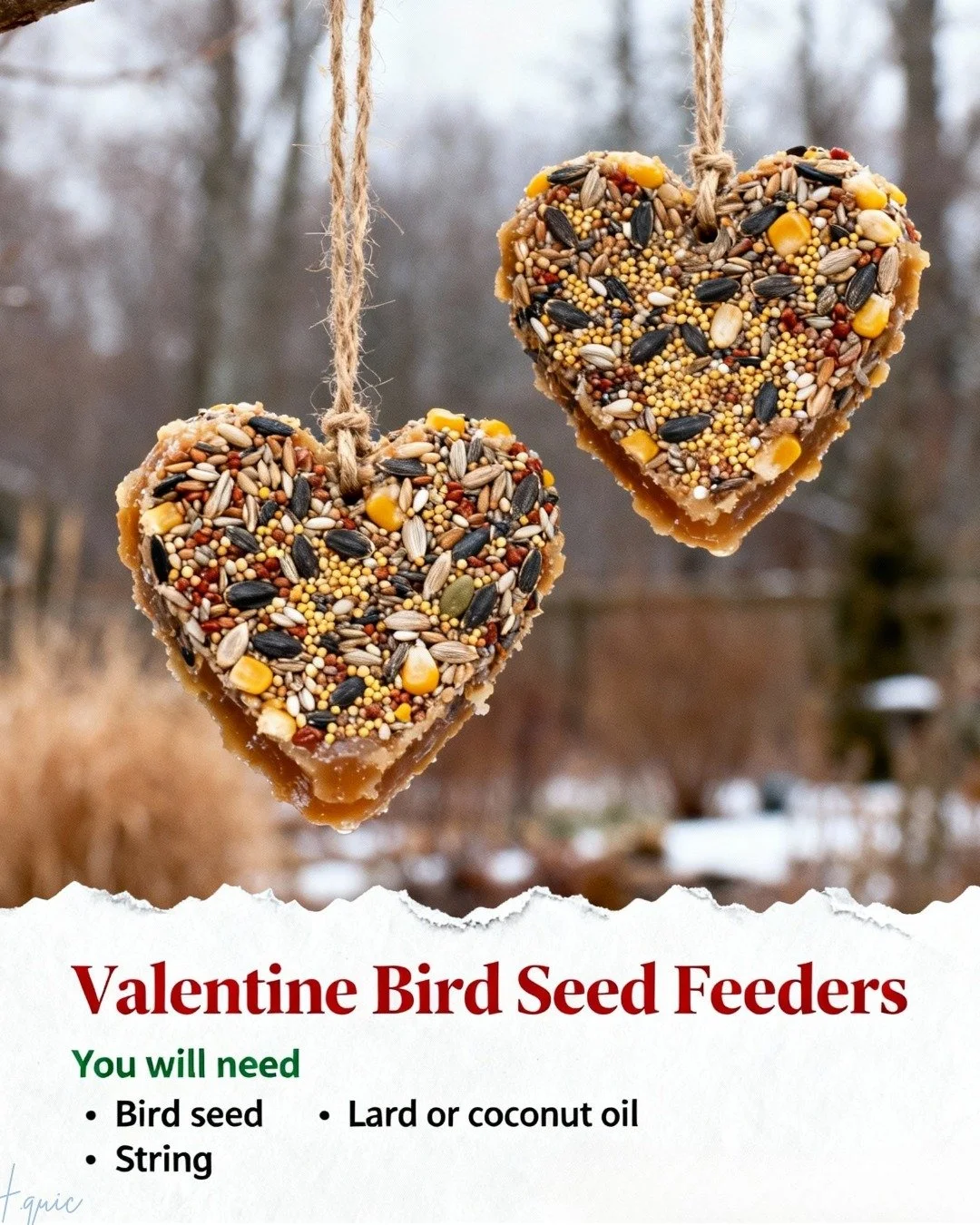
There is a calm shape to this craft. You mix soft, sticky ingredients, press them into a heart, and watch as small granules become one small object meant for birds. The textures invite a slow focus. Seeds shift and clump. The ribbon thread slides like a quiet river through the hole you make. That steady, small rhythm helps you come back to the present.
This project connects you to birds in a gentle way. You make something edible, simple, and seasonal. Hanging a heart outside gives the yard a little kindness to offer the birds. It also gives you a moment to stand with your cup of tea and notice movement in the trees. The act of creating feels like a tiny offering. It helps soothe a busy mind.
I like how this craft works well with children and quiet adults alike. If you enjoy making ornaments from birdseed, you will notice the same simple pleasures in this heart-shaped version, as with these smaller projects birdseed ornaments. The process does not require special skills. It does ask for patience, a light touch, and a gentle hand.
A Gentle Look at the Process
This project breaks down into soft, clear movements. You will stir, press, cool, and tie. Each movement asks for a little intention.
Start by feeling the ingredients. Sunflower seeds feel smooth and round. Rolled oats feel flat and papery. Peanut butter gives a warm, pliable texture. Melted gelatin or an alternative binder will steam gently and smell faintly meaty, which birds find appealing. Stirring these together creates a warm, fragrant paste that promises to hold the seeds together.
Pressing the mix into the mold gives a small, satisfying resistance under your palms. You will press down slowly, feeling the mix compact and settle into corners. When you flip the mold and release the heart, you will notice the edges are tender and crumbly in a reassuring way, like a shortbread cookie just out of the oven.
Finally, hanging the hearts introduces movement. The little ornaments swing when a bird lands. You will hear a small flutter and see a brief pause in the air. That tiny scene often feels like the whole point of making them.
Materials You’ll Need
- 1 cup sunflower seeds, shelled (easy to find at grocery or pet stores)
- 1 cup mixed birdseed or small seeds like millet (substitute-friendly)
- 1 cup rolled oats (adds body and texture)
- 1/2 cup smooth peanut butter or sunflower seed butter (binds and adds scent)
- 2 to 3 envelopes unflavored gelatin or 2 tablespoons agar flakes dissolved in warm water (gentle binder; see notes)
- 1/4 cup warm water (to dissolve gelatin or agar)
- Heart-shaped silicone mold or cookie cutter and shallow tray (not sharp, safe for hands)
- Ribbon or twine, about 6 inches per heart (easy to hang)
- Small spoon and mixing bowl (wooden or heat-proof)
- Wax paper or parchment for drying (keeps things tidy)
- Optional natural decorations like crushed cranberries or oats for topping (adds color and gentle scent)
Note on binders: Gelatin gives a firm set and a mild scent that attracts birds. Agar works for a vegetarian alternative but may set differently. For a no-heat option, try apple sauce or mashed banana mixed with a little flour, though these can mold faster and need to go out the same day.
Step-by-Step Directions
Warm the peanut butter gently in a small bowl until it softens and smells warm. Stir slowly with a spoon so it becomes silky and easy to mix.
Add the sunflower seeds, mixed birdseed, and rolled oats to the bowl. Watch the seeds shift and listen to the small crackles as they meet the warm butter.
Dissolve the gelatin in the warm water, stirring until it looks clear and slightly glossy. If you use agar, dissolve it according to the packet and let it sit until thick.
Pour the dissolved gelatin or agar into the seed mix in a steady stream while stirring. Move slowly so the seeds absorb the binder and the mix becomes cohesive.
Let the mixture cool a little until it feels pleasantly warm rather than hot. Test a small bit between your fingers to make sure it binds without burning.
Press the mixture firmly into the heart-shaped mold. Push into corners and smooth the top with the back of a spoon. Feel the mix compact under your palm.
Thread a loop of ribbon or twine through the center of the mold before the mix sets fully, or press a small straw into the top to create a hole later. Make sure the loop sits with a little extra length so birds can perch around it.
Scatter a few decorative oats or crushed cranberries on top and press them in lightly. These touches soften the heart visually and add a small burst of color.
Cover the mold with wax paper and place it in a cool spot or the refrigerator for two to four hours until it sets firm. The air will feel still and cold around the chilled shapes.
Gently release the heart from the mold. If needed, run a warm, damp cloth around the edges to ease it free. Hold the heart with both hands and feel its weight and texture.
Tie a small knot at the top of the ribbon or twine loop, leaving a short tail for hanging. Trim any excess string with scissors and tuck the knot neatly under the ribbon.
Hang the heart outside in a sheltered spot, like a low branch or a hook near a window. Wait quietly and watch for small visitors. Bring a mug, sit nearby, and let your breath slow as you listen.
Enjoying the Finished Piece
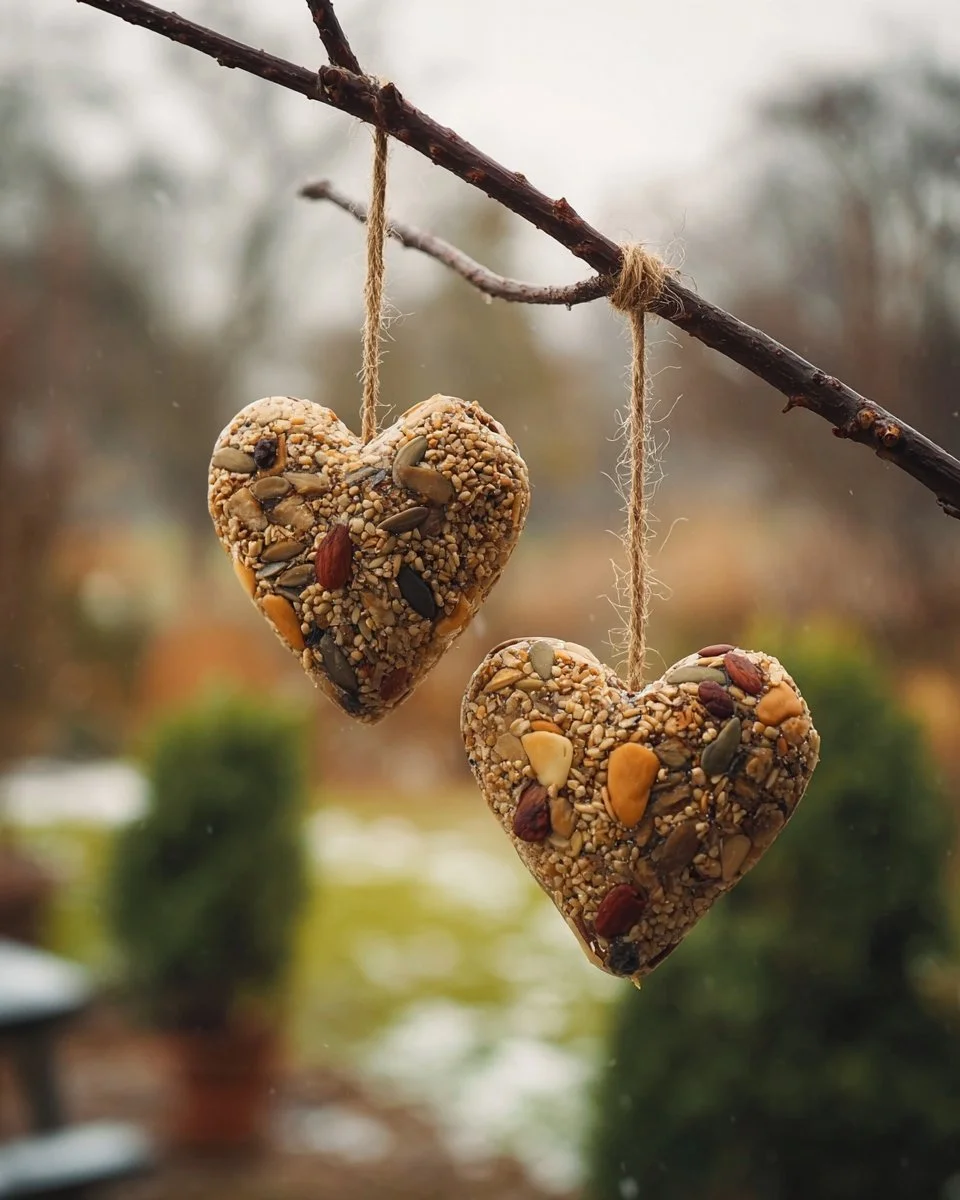
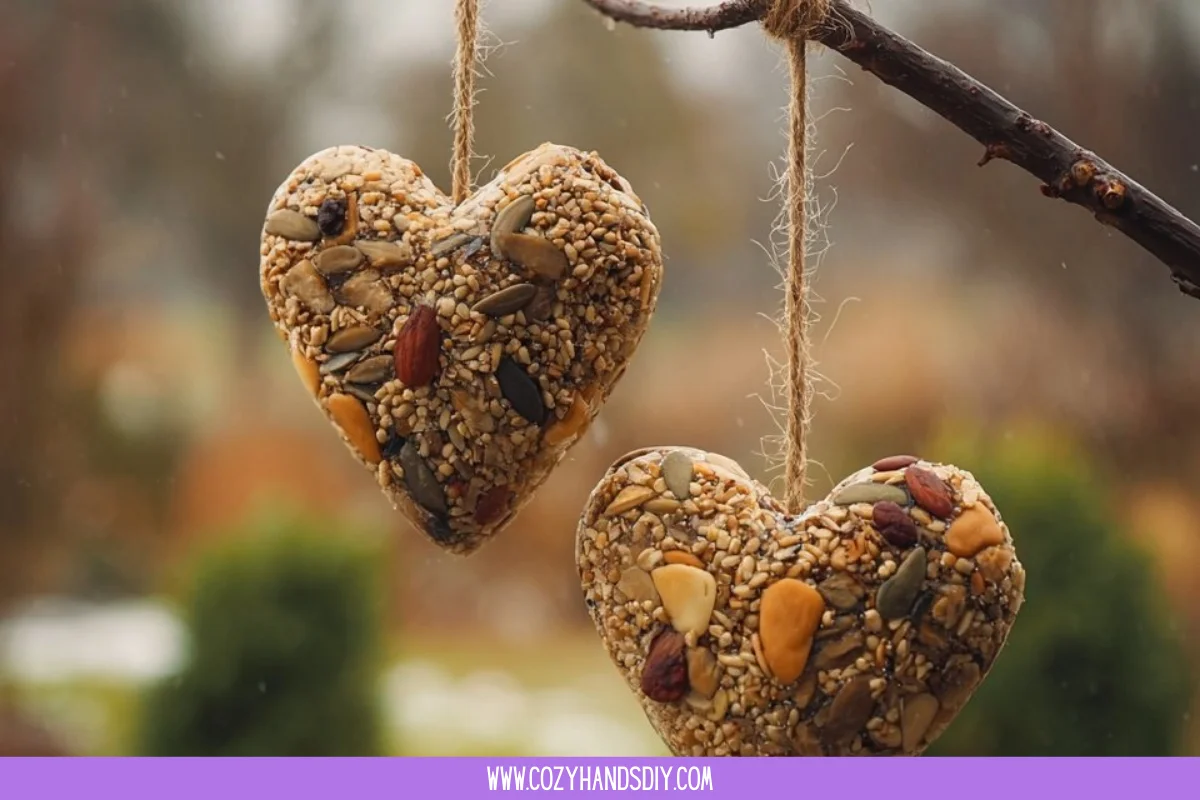
Seeing a small heart sway in the garden brings a plain, gentle joy. It changes the way you notice the yard. Instead of scanning for big signs, you look for small movement, for a flash of color, for the quick tilt of a head. Those moments hold more feeling than they often let on.
Place the heart at eye level so you can watch from a short distance. The ribbon will catch the light and move in a slow, soft rhythm. If a bird sits on it, you will hear a shuffle and a delicate pecking sound. That sound feels quiet and intimate.
You can hang several hearts in a small cluster to turn the branch into a tiny gallery. The birds may prefer one heart over another, and you will learn their little habits. If you keep your hands warm and your movements slow, they will return again and again.
How to Store or Reuse Valentine Bird Seed Feeders
Store unused hearts in a cool, dry place, wrapped loosely in wax paper. They last longer if you keep them away from direct sun and damp air. If you notice any soft spots or an odd smell, discard them. Do not compost any hearts that contain large pieces of peanut butter that attracted moisture.
If a heart softens outdoors, you can gently dry it by moving it to a drier, shaded spot. Birds will sometimes nibble the top layers and leave the center. You can crumble what remains into a feeding tray or mix it into a new batch as small bits.
Reusing the ribbon is easy when the heart finishes. Slip the ribbon off the remainder of the heart if it remains intact, and wash it by hand with mild soap. Let it air dry fully before using it again. Small loops of twine make nice tags for future projects or other hanging crafts.
If you want to keep a heart as a memory instead of feeding it, seal it in a clear jar as a tiny winter keepsake. Remember that natural ingredients can degrade over time, so keep it in a cool place and check it every few weeks.
Gentle Tips & Variations
Use sunflower seed butter if a nut-free option feels safer. It provides the same smooth bind and friendly scent for birds.
Swap the heart shape for small circles or stars if you do not have a heart mold. A simple cookie cutter and a tray work well for shaping. Try this with other simple shapes used in seasonal feeders like these fruit and grain styles fruit and grain bird feeders.
Add a touch of color with dried, crushed berries for a natural, muted blush. These bits make the hearts look gentle and handmade rather than bright and artificial.
Make smaller hearts for little hands. Children love pressing the mixture into tiny molds. For an easy companion activity, pair this with a simple glue-gem craft such as this valentine idea how to make valentine glue gem hearts and let kids decorate while you finish the feeder mix.
Try using an ice cube tray as a mold for quick little hearts. They set faster and fit in the palm. The small size offers a faster payoff and a softer rhythm for crafting in short bursts.
FAQs About Valentine Bird Seed Feeders
Q: Will the birds eat the peanut butter in the mix?
A: Yes. Peanut butter provides fat and energy that birds appreciate, especially in colder months. It also helps the seeds stick together. If you worry about allergies, use sunflower seed butter as a bird-friendly alternative.
Q: How long will a heart last outside?
A: The life of a heart depends on weather and bird activity. In dry, cool weather, it can last several days to a week. In warm or wet weather it may soften and need replacing sooner. Watch them and replace when they get soggy or moldy.
Q: Are the binder options safe for birds?
A: Gelatin and agar are safe when used in small amounts as a binder. Gelatin dissolves into animal protein that birds accept easily. Agar works as a vegetarian option but may not hold as long in warm weather. Avoid chemical binders or anything with salt or sugar added.
Q: Can I make these without a mold?
A: Yes. Press the mix into a shallow cup lined with wax paper and then invert it onto a tray to set. Or shape small patties by hand and press a hole through the top for hanging. The shapes will look rustic and sweet.
Q: Do I need to add water if the mix seems dry?
A: Add water a teaspoon at a time until the mixture holds together when pressed. Be careful not to overdo it. A slightly damp mix will set firmer than one that contains too much liquid.
A Gentle Note Before You Go
When you place a heart on a branch, you offer a tiny, quiet kindness. You also invite a moment of stillness into your day. Let this making be about the small, sensory pleasures: the cool seeds under your fingers, the slow scent of peanut butter, the soft clack of a spoon on a bowl. These are simple parts of a practice that ask you to slow down and notice.
Making with intention helps you tune into weather, light, and the birds that visit. It gives you a small, repeatable ritual that fits into a morning or an afternoon. Keep your tools close, your molds ready, and the ribbon soft in a drawer so you can return to this calm making whenever you need it.
Conclusion
If you would like more preschool-friendly ideas for birdseed hearts, see Preschool Valentine’s | Homemade Bird Seed Feeders for a cheerful, hands-on version. For a step-by-step visual guide on shaping birdseed hearts with toddlers, try this helpful resource Birdseed Hearts for Valentine’s Day – Entertain Your Toddler.
Thank you for sharing this quiet making time. I hope your Valentine Bird Seed Feeders bring you moments of calm and small, bright visits from feathered friends.
PrintValentine Bird Seed Feeders
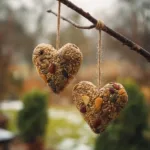
A delightful and simple craft to create heart-shaped feeders for birds using seeds and natural ingredients.
- Prep Time: 15 minutes
- Cook Time: 120 minutes
- Total Time: 135 minutes
- Yield: 4 hearts
- Category: Craft
- Method: Crafting
- Cuisine: N/A
- Diet: Vegan
Ingredients
- 1 cup sunflower seeds, shelled
- 1 cup mixed birdseed or small seeds like millet
- 1 cup rolled oats
- 1/2 cup smooth peanut butter or sunflower seed butter
- 2 to 3 envelopes unflavored gelatin or 2 tablespoons agar flakes dissolved in warm water
- 1/4 cup warm water
- Heart-shaped silicone mold or cookie cutter
- Ribbon or twine, about 6 inches per heart
- Wax paper or parchment for drying
- Optional natural decorations like crushed cranberries or oats for topping
Instructions
- Warm the peanut butter gently in a small bowl until it softens.
- Add the sunflower seeds, mixed birdseed, and rolled oats to the bowl.
- Dissolve the gelatin in the warm water, stirring until clear.
- Pour the dissolved gelatin into the seed mix while stirring.
- Let the mixture cool a little until pleasantly warm.
- Press the mixture firmly into the heart-shaped mold.
- Thread a loop of ribbon through the center of the mold before it sets.
- Scatter some decorative oats or crushed cranberries on top and press in lightly.
- Cover the mold and place it in a cool spot for 2 to 4 hours.
- Gently release the heart from the mold.
- Tie a small knot at the top of the ribbon for hanging.
- Hang the heart outside and enjoy watching the birds.
Notes
Store unused hearts in a cool, dry place wrapped in wax paper. If a heart softens outdoors, gently dry it by moving it to a drier spot.