

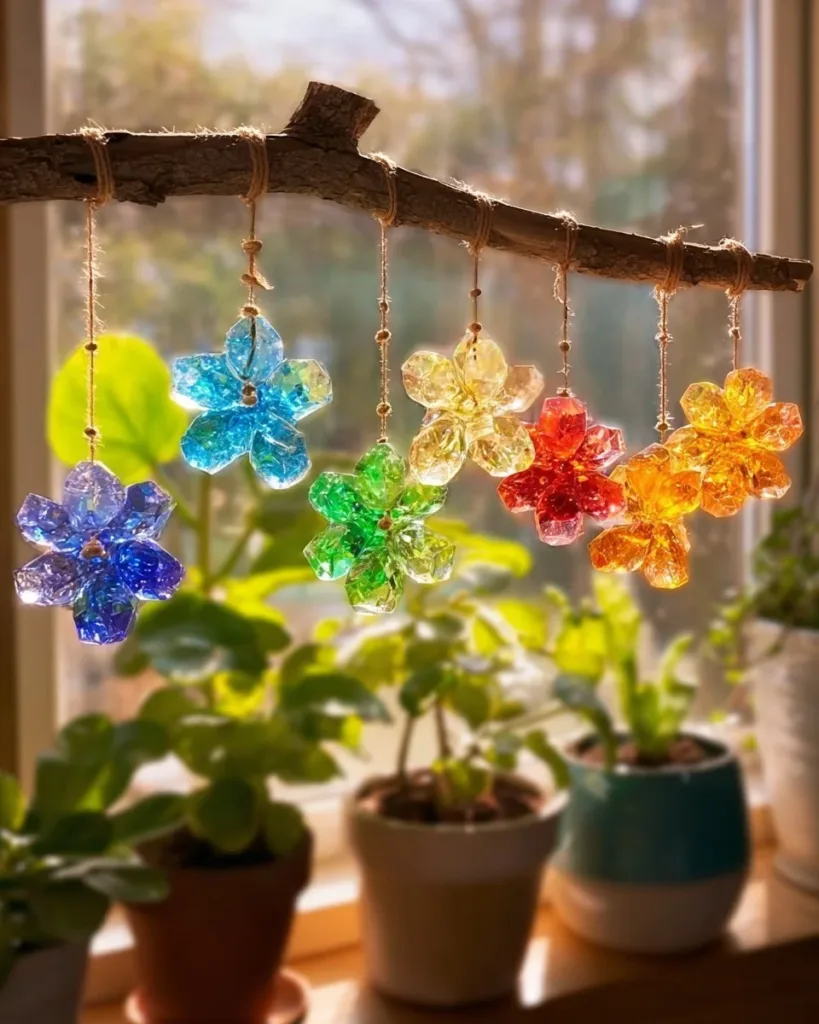
A warm sunbeam slips across my work table and catches the tiny facets of a rainbow crystal. I breathe in the soft, cool air and watch color bloom across the surface like a quiet tide. The glass feels smooth and slightly warm from my hands as I turn it slowly, noticing the little ridges and the way light pools in the hollows. Making Rainbow Crystals like this slows my thinking, one careful movement at a time, and reminds me that small, tactile acts can steady the whole day. I often return to these slow moments when I want something gentle, beautiful, and steady.
The Quiet Joy of Making Rainbow Crystals
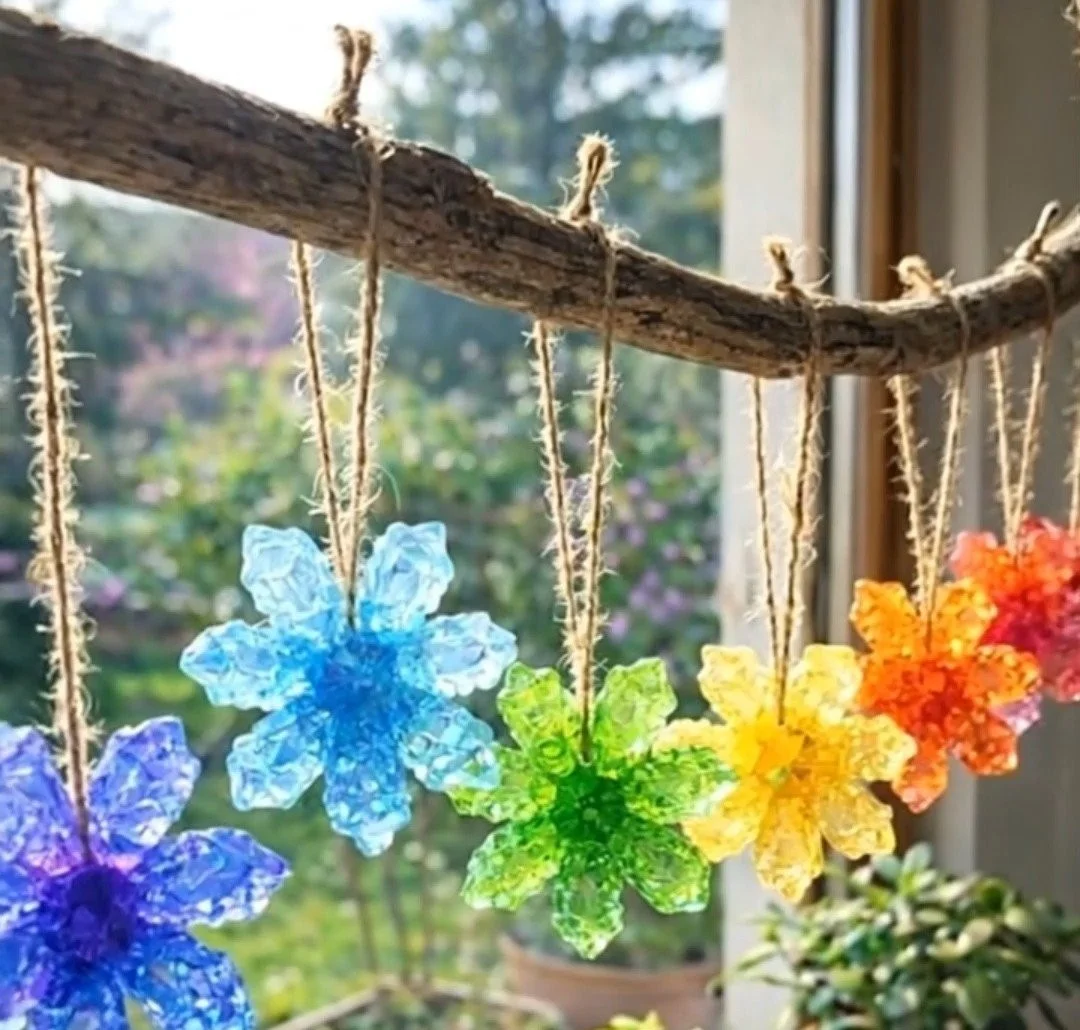
This project invites a kind of slow noticing. When you make Rainbow Crystals, you spend time with subtle textures, with the bright pinch of color, and with the patient wait while crystals form. The process asks you to feel and observe rather than rush. It rewards still hands and attentive eyes.
I keep a small collection on a windowsill and reach for them when I need a break. Their prismatic shimmer catches the room and reminds me of sunlight on water. Making them also connects to home rituals mixing solutions, watching growth, cleaning up with care. These acts nestle into daily life and offer a calm pause.
If you want a fuller how-to or ideas for different methods, visit our Rainbow Crystals main guide where I collected gentle variations and reflections.
A Gentle Look at the Process
Making Rainbow Crystals unfolds in quiet stages. First you prepare a clear solution or mold, then you add gentle color and let time do the shaping. The initial motions feel fluid and warm when you stir, and later the work becomes more visual, watching tiny points of light blossom into structure.
There is sound here too: the soft chime of a spoon against glass, the whisper of water as you pour, the faint tick of a drying surface. I find that these sounds anchor me. The rhythm of measuring, pouring, and waiting becomes a slow ritual. If you want a step-by-step approach for a home-friendly method, check this easy how to make them at home guide that I keep for reference.
Because the process asks patience, I advise finding a small corner of calm. A tray, a towel, and a timer help. A quiet playlist or the sound of a kettle on low can make the time feel companionable rather than empty.
Materials You’ll Need
- Clear glass jars or small molds, easy to find at craft stores or reuse from the kitchen.
- Hot water, the kind you heat slowly and hold with care.
- A soluble crystal-forming material (borax or sodium sulfate) or a baking soda method for a gentler texture.
- Gentle food coloring or liquid watercolors, optional and easy to vary.
- Wooden sticks or pipe cleaners for crystal growth, simple and flexible.
- A spoon for stirring, preferably wooden to keep the action quiet.
- Small tweezers for handling finished pieces, optional for delicate work.
- A shallow tray or plate to catch drips, helpful and tidy.
- Paper towels and a soft cloth for gentle drying and touching.
- Safety items: gloves if you prefer, and a child-safe space if you craft with little ones.
I like to keep a printed list beside me. For the baking soda-friendly approach, these materials pair well with the method in the baking soda crystal forest instructions that emphasize soft textures and safety.
Materials matter because they shape how the crystals form. Borax makes clear, faceted structures; baking soda yields softer, powdery petals. Choosing one or the other changes the tactile finish and the rhythm of the work.
Step-by-Step Directions
- Prepare your workspace and warm your water slowly. Lay down a tray and towel, place jars within easy reach, and notice the warmth of the cup you hold.
- Measure the crystal material by spoonfuls and add to the hot water. Stir slowly until mostly dissolved, listening to the soft stir and watching the liquid clear.
- If you use color, add a drop or two now. Mix gently and watch the color breathe into the solution in thin, calm ribbons.
- Attach your crystal-forming base (pipe cleaner, stick, or seed) to a pencil and suspend it in the jar so it does not touch the sides. Ensure it hangs steady and float your senses on that steadiness.
- Set the jars in a quiet place where they can sit undisturbed. Cover loosely if you want to reduce dust, but allow air to reach the surface.
- Wait with gentle attention. Check after a few hours for tiny points forming. The first signs feel like catching a secret: a grainy glimmer along the surface.
- Let the crystals grow for 24 to 48 hours, sometimes longer. If you see excess color or cloudiness, give the jars a gentle tilt and a soft spoon to coax clarity.
- When crystals reach a size you like, lift them slowly. Use tweezers for delicate bits and feel the cool surface with your fingertips through a cloth.
- Rinse briefly in cool water if you like a smoother finish. Pat dry on a soft cloth and place on a plate to finish drying in a calm corner.
- Take a moment to label or photograph your pieces. The act of naming them helps the making become memory.
Each step asks for small care. I offer these steps as a guide rather than a rule book. Trust your hands and your sense of pace.
Using Rainbow Crystals in Everyday Life
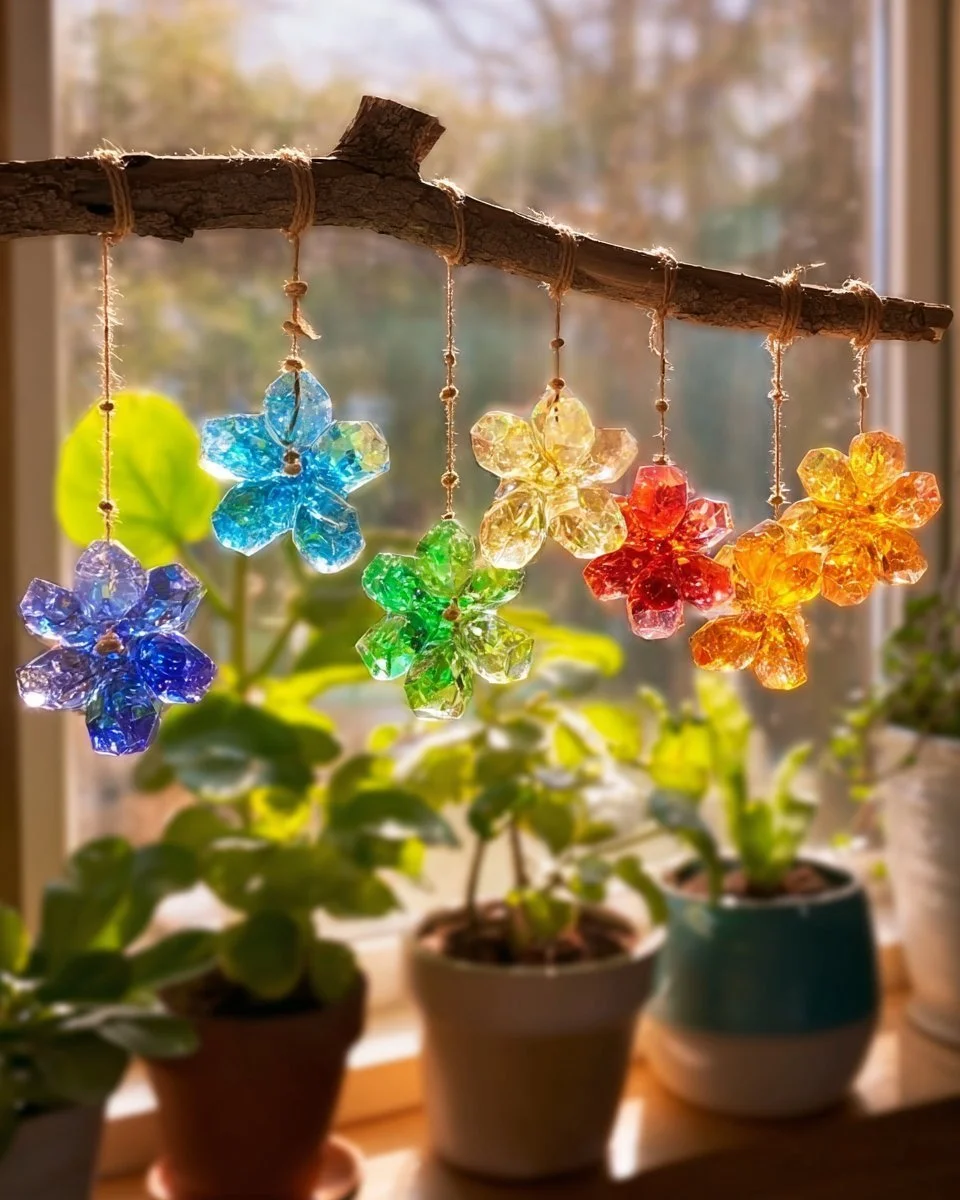
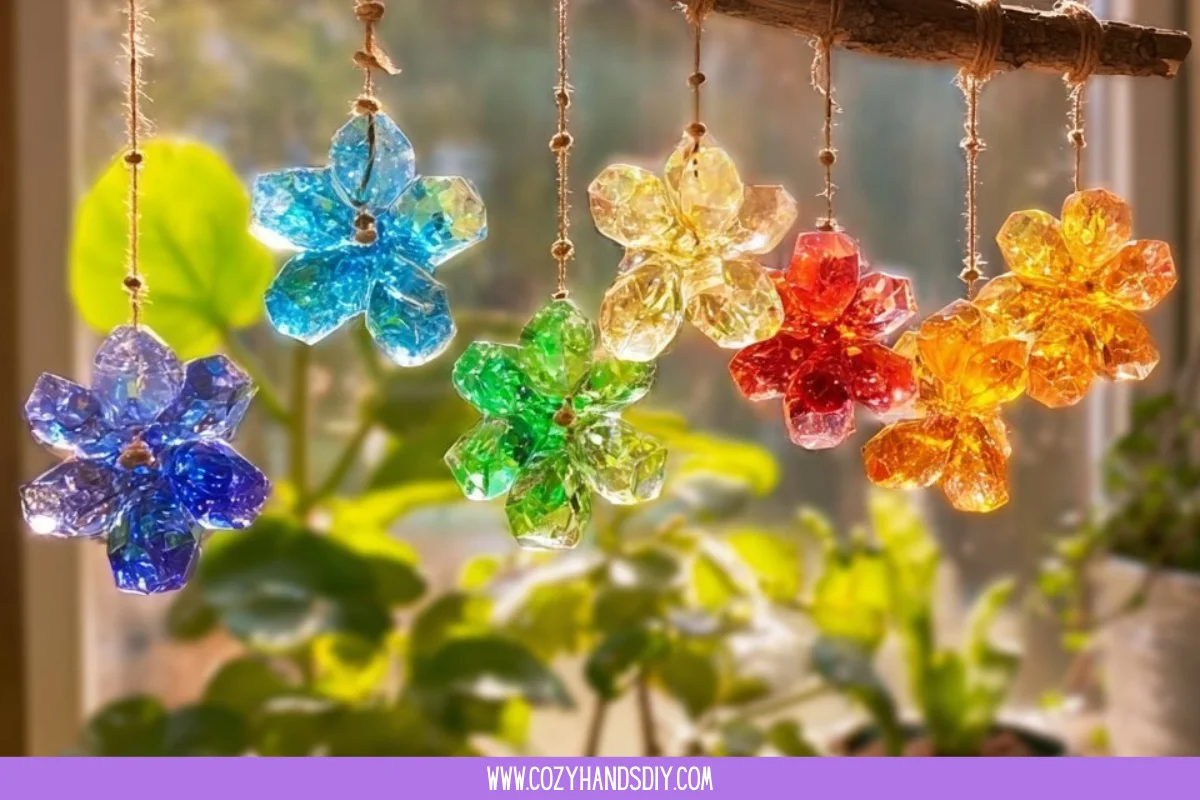
The finished crystals become tiny beacons around the home. I place them on a sill where morning sun hits, and the small rainbows move across the room as the light changes. You can tuck them into a low shelf, a jar of mixed textures, or a gift box for someone who could use a quiet joy.
In practice, I keep a small bowl by my bedside with two or three pieces to touch before sleep. Their cool, smooth surfaces help settle my fingers and bring me back to my breath. You might also use a single crystal as a mindful object while journaling, holding it when you want to pause or collect a thought.
For seasonal displays, group crystals by color in shallow dishes. Arrange them with dried flowers, soft paper, or smooth pebbles. The visual contrast invites slow looking. If you craft with children, let them sort by color or trace light across the facets with a small flashlight. These are gentle invitations to presence, not rigid activities.
If you prefer, wear a very small, well-finished crystal as a pendant or place one inside a snow globe-style ornament. Smooth the edges and secure the piece well. The tactile reminder can support calm in rushed moments.
How to Store or Reuse Rainbow Crystals
When you plan to keep crystals for later, treat them like small treasures. Store them in a shallow box lined with soft cloth. Lay pieces individually so they do not knock and chip. The cloth muffles sound and keeps edges gentle.
If a crystal loses color or shows residue, rinse it in warm water and allow it to air dry on a soft towel. For powdered or fragile crystals, consider a loose seal in a glass jar to keep them dust-free without crowding.
Reuse can be creative. Broken bits make charming accents in jars of sand or small terrariums. Ground-up pieces mixed into thin glue can add sparkle to collage work. I once mixed small fragments into handmade paper; the light caught the fibers in a new, cozy way.
If you must dispose of material from a solution with borax, follow local guidelines. I often dilute and neutralize small amounts before carrying them to a secure waste step. Be honest about safety: keep crystals and solutions away from curious pets and children unless the method uses fully safe, edible materials like baking soda.
Gentle Tips & Variations
- Invite color slowly. Add one drop and let it spread. You can always deepen the hue, but gentle color often reads as more soothing.
- Try different bases. Pipe cleaners yield branching shapes; string can create linear growth. Each base guides the crystal’s personality.
- Swap materials for texture. If you want softer, powdery crystals, use baking soda. If you seek clear, faceted growth, a borax approach will give that look.
- Pause and photograph. A soft photo session during growth helps you notice tiny stages you might otherwise miss. Use natural light and a steady hand.
- Make a ritual around checking. Set a timer for short, mindful visits one to watch the first bloom, another to note the mid-point, then a final slow lift. Each visit becomes a small ceremony.
These variations function like invitations. I often choose one or two to try rather than all at once. That keeps the process calm and open.
What I’ve Learned While Making This
I learned to slow down because the crystals demand patience. The first time I rushed, my results broke or clouded. I remember holding a half-formed cluster in my palm and thinking how small the loss felt; it taught me to accept imperfections. Later pieces, made with softer hands and softer timing, turned clearer and felt more intimate.
I also learned to listen to materials. Hot water behaves differently in different seasons. In colder rooms, crystals take longer to start. Food coloring disperses unpredictably in high saturation. These small lessons changed how I plan my sessions. Now I keep a notebook for notes on temperature, water quality, and color ratios. It reads like a private field guide.
Safety became part of my learning, too. I store strong chemicals away from children and label jars clearly. I learned to wear gloves when handling certain materials to protect my skin from repeated exposure. These measures let me enjoy making with confidence.
Finally, I learned that making this way becomes a gentle meditation. Each stage asks for a tiny attention and returns a subtle joy. The act of waiting, watching, and tending becomes as meaningful as the finished pieces.
FAQs About Rainbow Crystals
Are Rainbow Crystals safe to make with children?
Many methods adapt well to children, especially those that use baking soda and food coloring. Supervise closely, keep strong chemicals out of reach, and turn the session into a shared, slow ritual rather than a hurried experiment.
How long does it take for crystals to form?
You often see small points within hours, but most projects reach a satisfying size in 24 to 48 hours. Temperature and solution concentration influence speed, so expect variation and plan for gentle waiting.
Can I make crystals without borax?
Yes. Baking soda methods and other household materials yield softer, pretty results. They may feel powdery rather than faceted, but they support the same calming making process with lower safety concerns.
How do I stop crystals from breaking when I remove them?
Lift slowly and support the base. Use tweezers for small areas and give the piece a quick rinse to remove loose granules. Dry on soft cloth and handle with care until fully set.
Can I reuse the solution?
Reuse depends on the material. Some solutions lose potency after one use. For safety and predictability, using fresh solution often gives the best, clearest growth.
A Quiet Closing Thought
This work asks you to move slowly and to honor tiny changes. The making of Rainbow Crystals brings a steady kind of wonder: small actions resulting in visible transformation. In a busy life, these quiet sessions invite a pause. They remind you that time spent together with simple materials can feel nourishing and complete.
If you feel inclined, let this project be less about perfect results and more about the feeling of having made something with your hands. Keep a small shelf, a gentle jar, or a notebook to hold your pieces and your moments. Over time, the repetition becomes comforting and the crystals become quiet companions in your home.
Conclusion
If you want a hands-on tutorial to grow colorful crystals with simple household materials, try this detailed activity that guides you through the steps to Grow Your Own Rainbow Crystals for a science-friendly approach. For ready-made options or inspiration from commercial varieties, you can browse selections offered at Rainbow Crystals – Amazon.com.
PrintRainbow Crystals
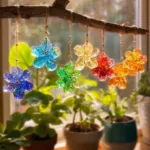
A gentle and calming project to create beautiful rainbow crystals.
- Prep Time: 15 minutes
- Cook Time: 1440 minutes
- Total Time: 1455 minutes
- Yield: Variable (depends on the size and number of crystals formed)
- Category: Craft
- Method: Crafting
- Cuisine: N/A
- Diet: N/A
Ingredients
- Clear glass jars or small molds
- Hot water
- Soluble crystal-forming material (borax or sodium sulfate)
- Gentle food coloring or liquid watercolors (optional)
- Wooden sticks or pipe cleaners for crystal growth
- A spoon for stirring
- Small tweezers for handling finished pieces (optional)
- A shallow tray or plate
- Paper towels and a soft cloth
- Safety gloves (optional)
Instructions
- Prepare your workspace and warm your water slowly. Lay down a tray and towel, place jars within easy reach.
- Measure the crystal material and add to the hot water. Stir until mostly dissolved.
- If using color, add drops and mix gently.
- Attach your crystal-forming base to a pencil and suspend it in the jar without touching the sides.
- Set the jars in a quiet place and cover loosely if needed.
- Wait for crystals to form, checking after a few hours.
- Let the crystals grow for 24 to 48 hours.
- Once ready, lift them using tweezers and optionally rinse in cool water.
- Label or photograph your pieces once finished.
Notes
This project is peaceful and allows for careful observation and patience. Consider adding gentle colors and using various materials for different textures.