

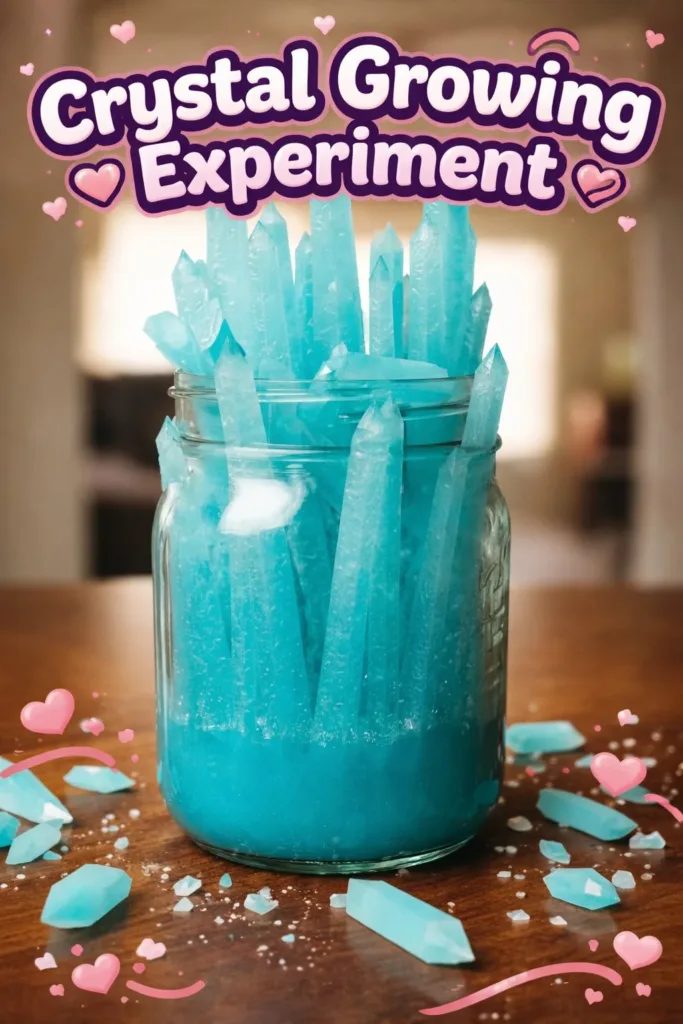
The late afternoon sun slips through a small window and rests across my work table in a warm stripe. I set a simple jar of clear liquid down and watch tiny glints form along a suspended string. The slow bloom of a Crystal Growing Experiment asks me to breathe with it, to notice the soft hush as crystals take shape and the gentle cool of glass under my palm.
Why Crystal Growing Experiment Feels Comforting to Create
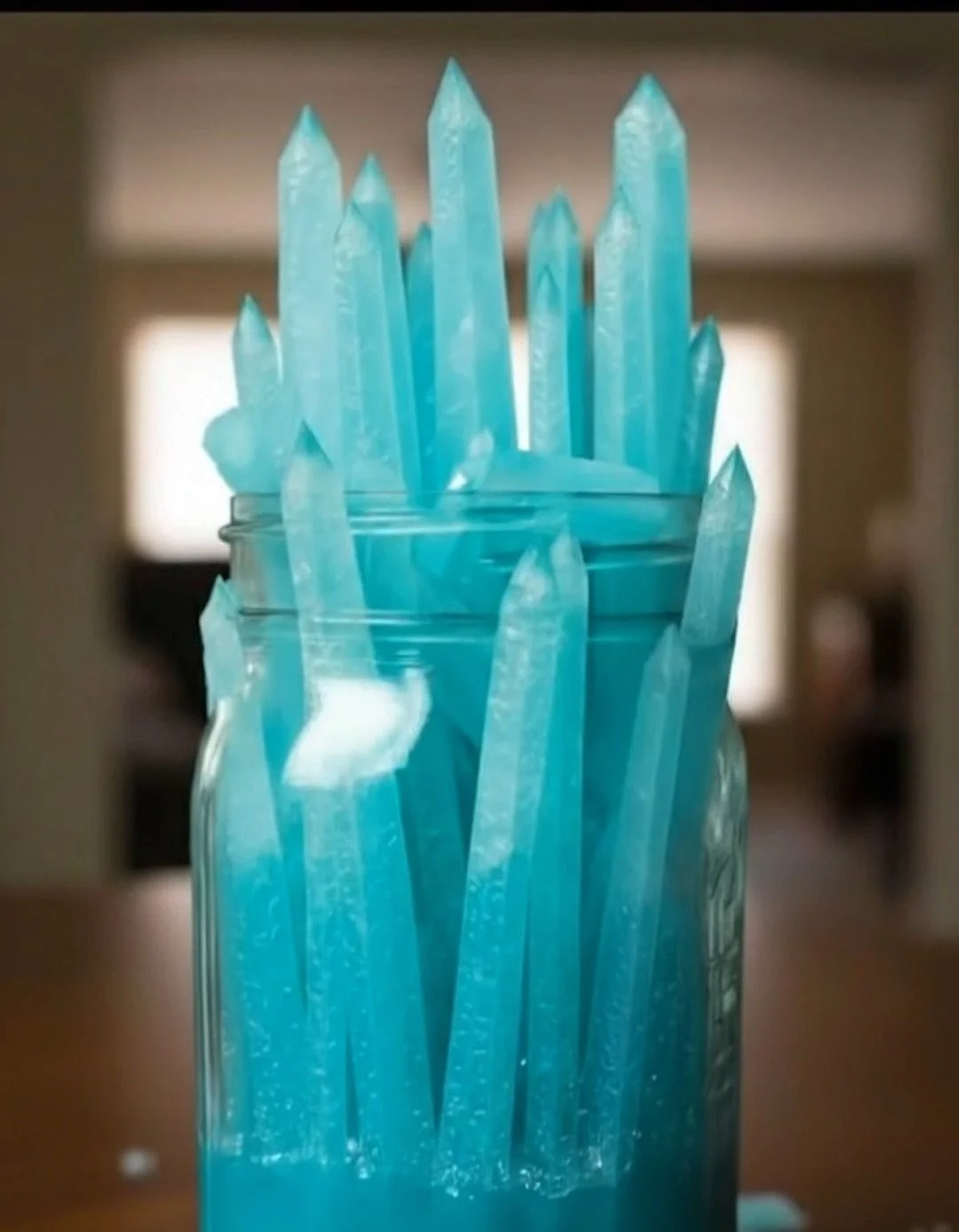
There is a quiet rhythm to growing crystals that soothes the mind. You mix warm water and a few handfuls of powder. You watch clear solution become speckled with micro-edges and then open into facets that catch light. The process asks for patient attention rather than speed. That stillness brings a small, steady calm.
This experiment invites sensory focus. You feel the smoothness of glass, the warmth of stirring, the slight grit on your fingers, and later the crisp snap of a formed crystal. Those small, physical moments make a project feel grounding. I return to it on low-energy afternoons when I want my hands busy and my thoughts gentle.
If you like other cozy making, you might enjoy another one of my projects that explores texture and warm countertop science in a similar way: growing crystal heart ornaments. It lives in the same slow-making family and often sits beside my jars when I’m experimenting.
The Flow of Making Crystal Growing Experiment
Before you gather materials, imagine the movements you will make. You will heat water, dissolve a substance until the solution looks glassy, and then pour it into a jar. You will tie a string or shape an armature from pipe cleaners, and you will suspend it so crystals can form where movement is calm. The motion of stirring has a rhythm like a lullaby. The air tightens a little around the warm bowl, and you listen to the tiny, satisfying clink as spoon meets glass.
Visually, expect gradual change. At first the solution looks like clear syrup. After a day or two, tiny points appear like frost on a window. Over several days they grow outward, facet by facet. The experiment rewards slow observation. Keep a small notebook by the jars and note what you see each morning. If you enjoy other gentle crystal projects, you may find ideas in a related set of step-by-step tree shapes here: baking soda crystal growing tree.
Materials You’ll Need
- Jar or glass container, clear and clean (easy to find)
- Heatproof bowl or saucepan for mixing warm water
- Spoon for stirring, wooden or stainless steel
- Measuring cup (optional)
- Crystal-forming substance: choose one
- Alum powder (clear, forms bright faceted crystals)
- Borax (fast, snowflake-like crystals; not for ingestion)
- Sugar (for edible rock candy; gentle and familiar)
- Baking soda (softer, interesting textures; optional)
- String or cotton thread (to suspend crystals)
- Pipe cleaners or small twigs for shaped armatures (optional)
- Clothespins or chopsticks to rest across the jar rim
- Paper or tray to protect your surface
- Thermometer (optional, helpful when using very warm water)
- Gloves and safety glasses if you use borax (safety-first)
- Labels and a small notebook for observations (cozy and useful)
Notes: I list several substance options so you can choose one that fits your comfort level. Sugar gives edible results and feels familiar. Alum creates large, sparkly crystals that photograph beautifully. Borax works quickly but requires extra care around pets and little ones. Baking soda yields delicate textures and pairs well with shaped armatures.
Step-by-Step Directions
- Prepare your workspace and jar. Lay down a paper tray to catch spills and choose a clear jar so light can enter.
- Warm water until hot but not boiling. The water should feel very warm to the touch. Pour it into a heatproof bowl.
- Add your chosen substance slowly while stirring. Watch the powder disappear into the water. Keep stirring until it looks nearly clear.
- Test saturation. Add small pinches of the substance until no more will dissolve and a thin film or tiny crystals begin to form in the bottom when the solution cools a little.
- Let the mixture settle a few minutes, then skim any solids from the surface. Pour the clear solution into your jar with a steady hand.
- Prepare a string or pipe cleaner shape. Tie the string to a clothespin or rest the pipe cleaner on chopsticks so it suspends in the middle of the jar without touching the sides.
- Place the suspended armature into the jar. Adjust so it hangs freely. Cover the jar loosely with a paper towel to keep dust out while letting air exchange.
- Move the jar to a calm spot with indirect light. Avoid windowsills with heavy drafts or direct sun. Crystals grow best in stable conditions.
- Check the jar daily. You will see tiny nodules at first. If a crust forms on the surface, gently remove it with a spoon to keep the interior growth clean.
- After several days to a week, lift the armature carefully. Rinse gently with cool water to remove loose crystals. Let the finished piece dry on a paper towel.
- If you like, repeat the process to grow additional layers. For layered growth, re-suspend the dried piece in fresh solution and allow it to build more facets.
- Record what you notice in your notebook. Note smells, temperatures, and the pace of growth. These small observations help you learn for the next gentle experiment.
Enjoying the Finished Piece
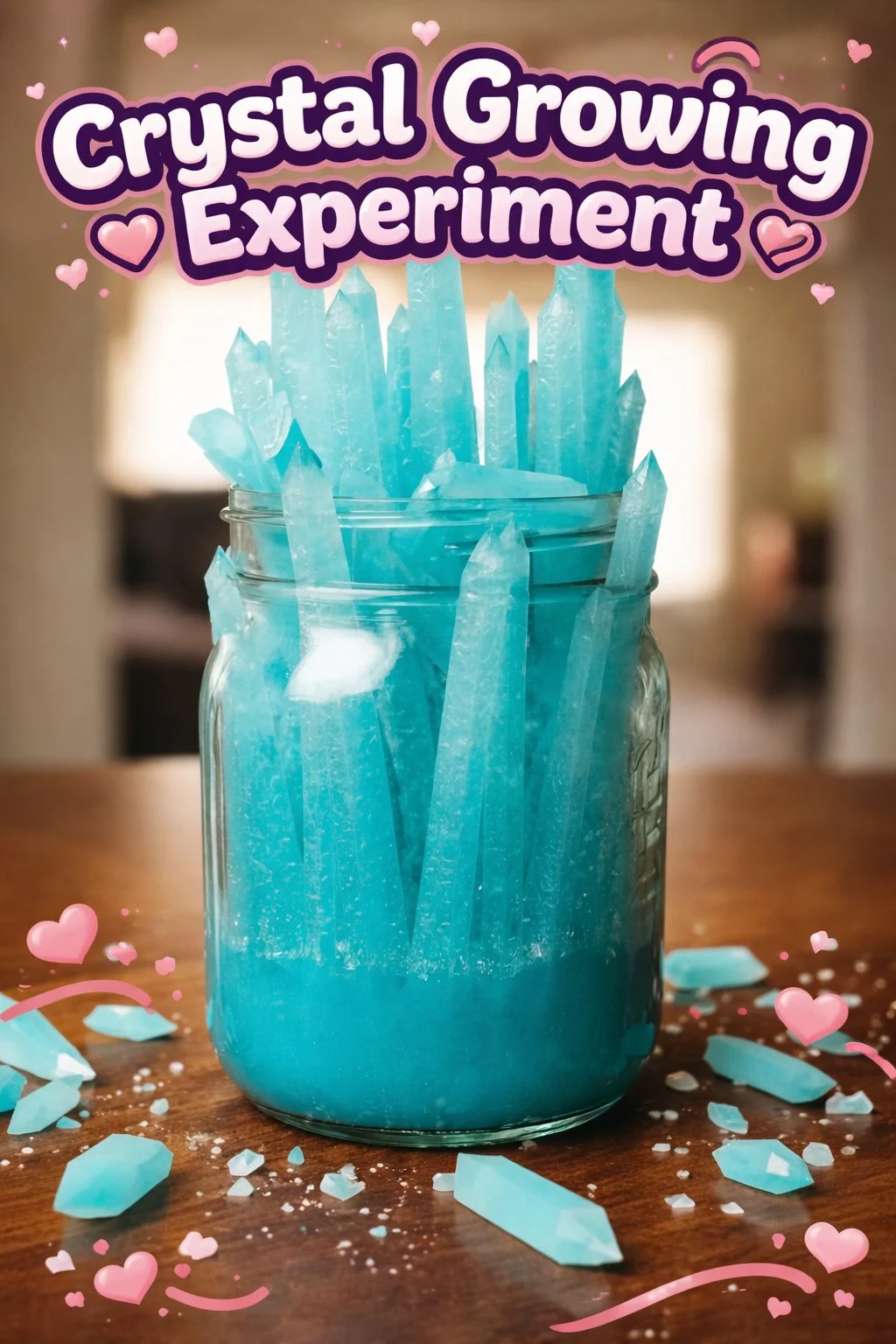
When your crystals finish their slow forming, they feel surprising in hand. Some are glass hard and catch light like cut gems. Some have a softer, sugar-crisp break when you press them. The textures invite careful exploration. You may trace a fingertip along an edge and feel the tiny ridges that formed from pooling solution.
Display them where light can play. A small group on a windowsill or shelf brings gentle sparkle to a room without shouting. I often nest a single crystal on a small wooden dish near my reading chair. The way it glows in soft lamp light feels quietly celebratory.
If you make smaller ornaments, you can thread them onto ribbon and hang them in dim corners so they reflect small pinpoints of light. For ideas about creating shaped crystal pieces with a pink, soft aesthetic, see a playful heart variation that pairs well with this experiment: growing crystal pink hearts.
Making This DIY Last
Crystals themselves hold indefinitely when dry and kept away from humidity. To keep your work intact, handle gently and avoid placing it where it might absorb moisture, such as a steamy bathroom or an uninsulated window in winter.
If you need to move a piece, carry it on a flat surface. Set it on soft cloth when you dry it to avoid small chips. For longer preservation, place finished crystals in a glass cloche or a small box with silica gel packets to reduce moisture.
If you grow edible sugar crystals, store them in an airtight jar. They will keep for weeks if dry but will become sticky in humid air. For borax and alum crystals, keep them out of reach of children and pets. Label them clearly if you display them around family members who might assume they are edible.
When a crystal dulls or gathers dust, clean it by gently brushing with a soft, dry paintbrush or by floating it briefly on cool water then allowing it to dry fully. Avoid strong cleaning solutions that could dissolve delicate facets.
What I’ve Learned While Making This
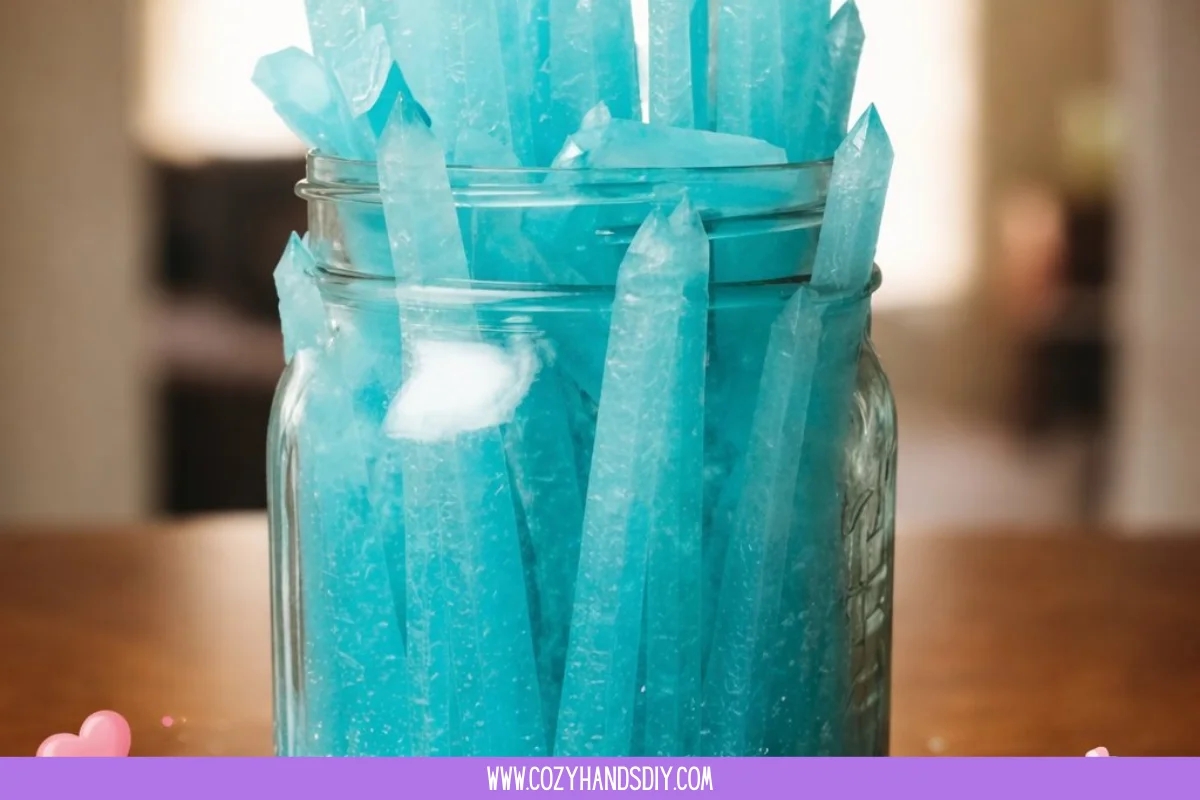
I have a few small lessons from many slow afternoons with jars.
- Patience shapes beauty. Some experiments take days to show much change. I learned to tuck jars in a quiet corner and visit them like a small ritual rather than a task.
- Temperature matters. Warmer water dissolves more of the substance and gives crystals room to grow when the solution cools slowly. I now keep a thermometer handy to maintain consistency across batches.
- Tiny imperfections become character. A stray bubble or an unexpected cluster often looks charming. Those little surprises turn a controlled experiment into a living, personal piece.
- Safety first, always. When I first used borax, I learned to wear gloves and to keep pets away from the jars. That simple practice prevented accidental exposure and let me enjoy the experiment without worry.
If you like experimenting with baking soda styles, you might enjoy the texture-focused trees I have made and tested: baking soda crystal growing trees. They taught me how armature shape guides growth and how patience alters texture.
Gentle Tips & Variations
- Try different solutions. Use sugar for edible crystals and alum for clear, sparkly growth. Treat each choice as a palette rather than a rule.
- Make a small colony. Grow several jars at once with slight differences in temperature, concentration, or armature shape. Compare them gently like tasting different teas.
- Add color slowly. If you want a tint, add a tiny amount of food coloring to sugar solutions or water-soluble dye to alum. Start with a drop. The color deepens as crystals form, often in unpredictable but lovely ways.
- Shape the core. Twist a pipe cleaner into a spiral or create a wire frame for geometric growth. The structure becomes a skeleton for the crystals and influences how facets form.
- Keep a ritual. Light a candle, make a cup of tea, and observe once a day. The ritual helps you stay present and notice small changes.
Each tip invites experimentation, not perfection. Let curiosity lead.
FAQs About Crystal Growing Experiment
How long will it take to see crystals?
You will usually see tiny crystal nodules in 24 to 48 hours. More substantial growth takes several days to a week. The pace depends on solution concentration and room temperature.
Are these crystals safe around children?
That depends on your chosen substance. Sugar crystals are edible and safer for supervised children. Borax and alum are not food and should stay out of reach. I always label finished pieces and use a closed display when young children are present.
Can I reuse the solution?
You can sometimes reuse leftover solution for another round if it still dissolves slightly when warmed. Often the best results come from freshly prepared, fully saturated solutions.
Why did my crystals look cloudy?
Cloudiness can come from impurities, dust, or too-rapid cooling. Strain the solution before pouring and cover the jar loosely to reduce airborne particles. Slow cooling helps clearer facets form.
How do I get bigger crystals?
Use a hotter, more saturated solution and let it cool slowly in a stable place. Suspend a seed crystal to encourage growth onto that surface rather than forming many small crystals across the jar.
A Gentle Note Before You Go
Sit with your finished piece for a few minutes. Notice how the light finds unexpected planes. Feel how present those small hours of tending make you. Making crystals offers a patient reward: a thing that grew quietly under your care, proof that slow attention changes the world in small, beautiful ways.
Conclusion
If you want a deeper, hands-on guide to the science behind crystal formation and clear instructions for different methods, I often consult educational resources to refine my practice. A clear overview of methods and the chemistry behind them lives at How to Make Crystals: Grow Your Own Crystals, which I find helpful for learning why solubility and temperature matter. For museum-style experiment inspiration and classroom-friendly steps that translate well to a cozy home setup, see the thoughtful pairing of science and craft at STEM Experiment: Grow Your Own Crystals | Springfield Museums.
Thank you for spending this slow project with me. Keep a small notebook, a warm cup, and a steady breath nearby the next time you set a jar down. The process will teach you to notice small changes and to value quiet, attentive making.
PrintCrystal Growing Experiment
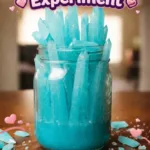
A soothing DIY project that invites you to grow beautiful crystals from various substances, combining science and art for a calming experience.
- Prep Time: 10 minutes
- Cook Time: None
- Total Time: 7 days
- Yield: Various sized crystals
- Category: Educational
- Method: Experimentation
- Cuisine: N/A
- Diet: N/A
Ingredients
- Jar or glass container, clear and clean
- Heatproof bowl or saucepan
- Spoon for stirring
- Crystal-forming substance: Alum powder, Borax, Sugar, or Baking soda
- String or cotton thread
- Pipe cleaners (optional)
- Clothespins or chopsticks
- Paper or tray
- Thermometer (optional)
- Gloves and safety glasses (if using borax)
- Labels and a small notebook
Instructions
- Prepare your workspace and jar. Lay down a paper tray to catch spills and choose a clear jar.
- Warm water until hot but not boiling, and pour it into a heatproof bowl.
- Add your chosen substance slowly while stirring until it looks nearly clear.
- Test saturation by adding small pinches of the substance until no more will dissolve.
- Let the mixture settle for a few minutes, skim any solids, and pour the clear solution into your jar.
- Prepare a string or pipe cleaner shape and tie it to a clothespin to suspend in the jar.
- Cover the jar loosely with a paper towel and move it to a calm, stable location.
- Check daily for growth and gently maintain the interior of the jar.
- After several days, lift the armature and rinse gently to remove loose crystals.
- Record your observations in your notebook.
Notes
Choose a crystal-forming substance that fits your comfort level; sugar is safe and edible, while borax requires caution.