

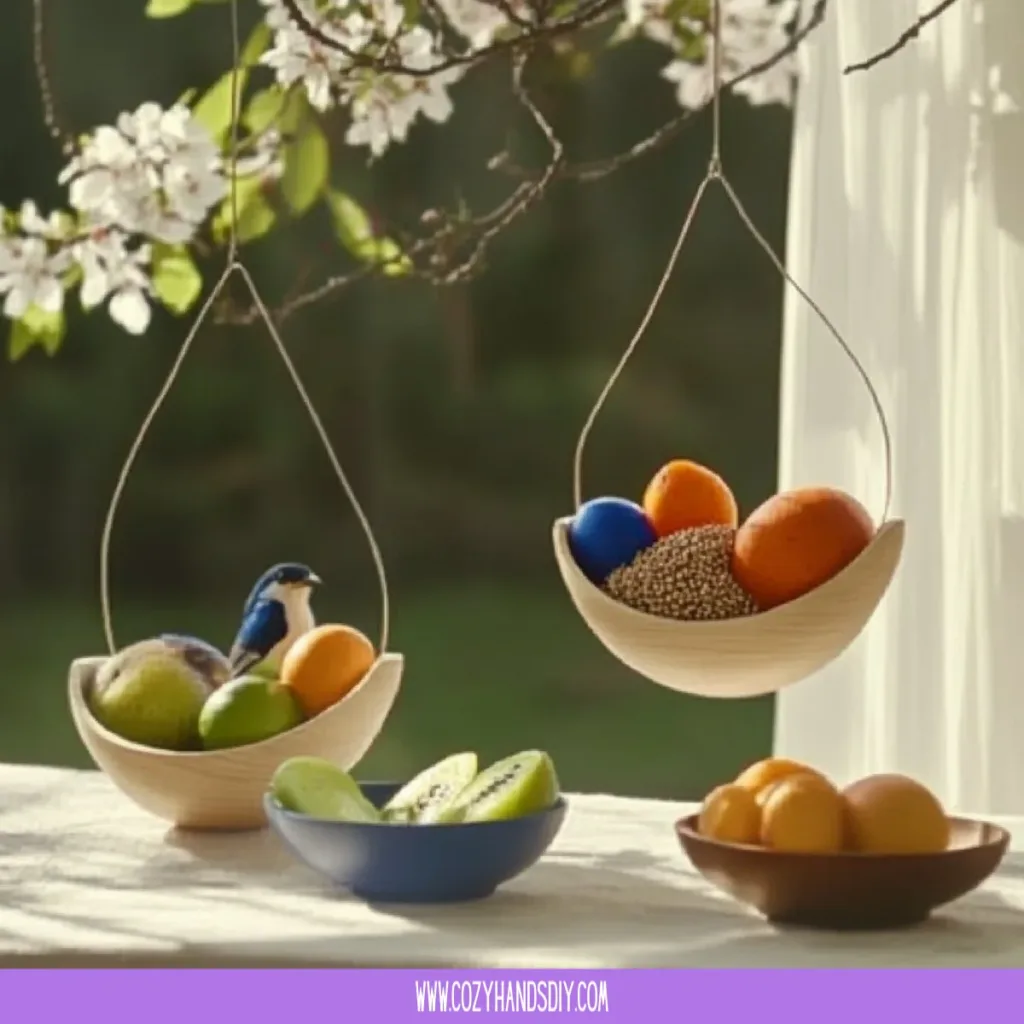
A cool breath of morning air, the soft weight of an orange in your palm, and the quiet rhythm of seeds being scooped into a bowl. Your hands move in a slow loop, pressing fruit and grain together until the pieces feel cozy and held. This is DIY Fruit and Seed Bird Feeders, a small making ritual that tucks a gentle pause into the day and invites birds to share your window light. If you want a grain-based option to pair with these fruit feeders, I often return to our fruit and grain bird feeders tutorial for simple, homey ideas.
Why DIY Fruit and Seed Bird Feeders Feels Comforting to Create
Making something for birds slows the mind because it asks only for presence. You measure by feel, not by a clock. You notice textures: the softness of banana, the grainy sparkle of millet, the cool wetness when you press rind and seed together. These small sensory moments ground a restless mind.
The project also invites quiet connection. You prepare food with calm hands and then leave it gently in the yard. There is a soft wait that feels like listening. When a robin or tit hops to the feeder, you get a little gift of attention in return. That exchange feels nourishing in a different way than the finished object alone.
This craft asks for simple, homey tools rather than special gear. That keeps the barrier low and the focus on gentle making. If you enjoy making small, luminous things for your space, you might like how this project pairs with other cozy crafts like our cotton candy glow jars. Both projects encourage slow hands and soft light.
I write from many afternoons spent on a small porch table, fingers sticky with fruit juice, watching tiny beaks test a new treat. Some experiments succeeded right away. Others taught me to be kinder to ingredients and to the birds themselves. Those lessons shape the simple steps below.
A Gentle Look at the Process
Before we gather supplies, let’s picture the flow. You pick ripe fruit that feels tender but not falling apart. You wash your hands and the fruit, and set out a bowl for the seeds. You mix, press, and shape slowly. There are moments to pause and step back, a chance to breathe and listen.
You will also make small decisions about texture. A firm apple ring holds seeds differently than a soft pear half. You will learn how much pressure makes the feeder hold together without compacting the seeds so tightly that birds cannot peck them free. The sounds of the project matter too: a quiet scrape of a spoon, the soft pop of seeds settling into fruit crevices.
This is not a race. It is a ritual. Moving slowly helps you notice the birds you attract and the ways your hands remember the process. If you want to make a set for a window display, the gentle, repetitive motion of threading and hanging becomes almost meditative.
Materials You’ll Need
- Fresh fruit: oranges, apples, pears, bananas (unsprayed if possible)
- Unsalted birdseed mix: small seed blends work best for many species (easy to find)
- Natural twine or jute: strong and weather-resistant (substitute-friendly)
- Wooden skewers or small sticks: for anchoring or perches (optional)
- Small bowl for mixing: simple, easy to clean
- Spoon for scooping: metal or wooden, whichever feels nicer in your hand
- Cookie cutter or small knife: for shaping fruit rings or rounds (use safely)
- Small tray or plate: to rest finished feeders before hanging
- Refrigerator space or cool spot: to keep fruit fresh before use
- Paper towels or a clean cloth: for gentle wiping and cleanup
If you enjoy adding ornament, consider pairing your display with sun-catchers or small windowsills that catch light; for ideas, see our mandala bioplastic suncatchers. They offer a soft backdrop for birds and feeder shapes.
Step-by-Step Directions
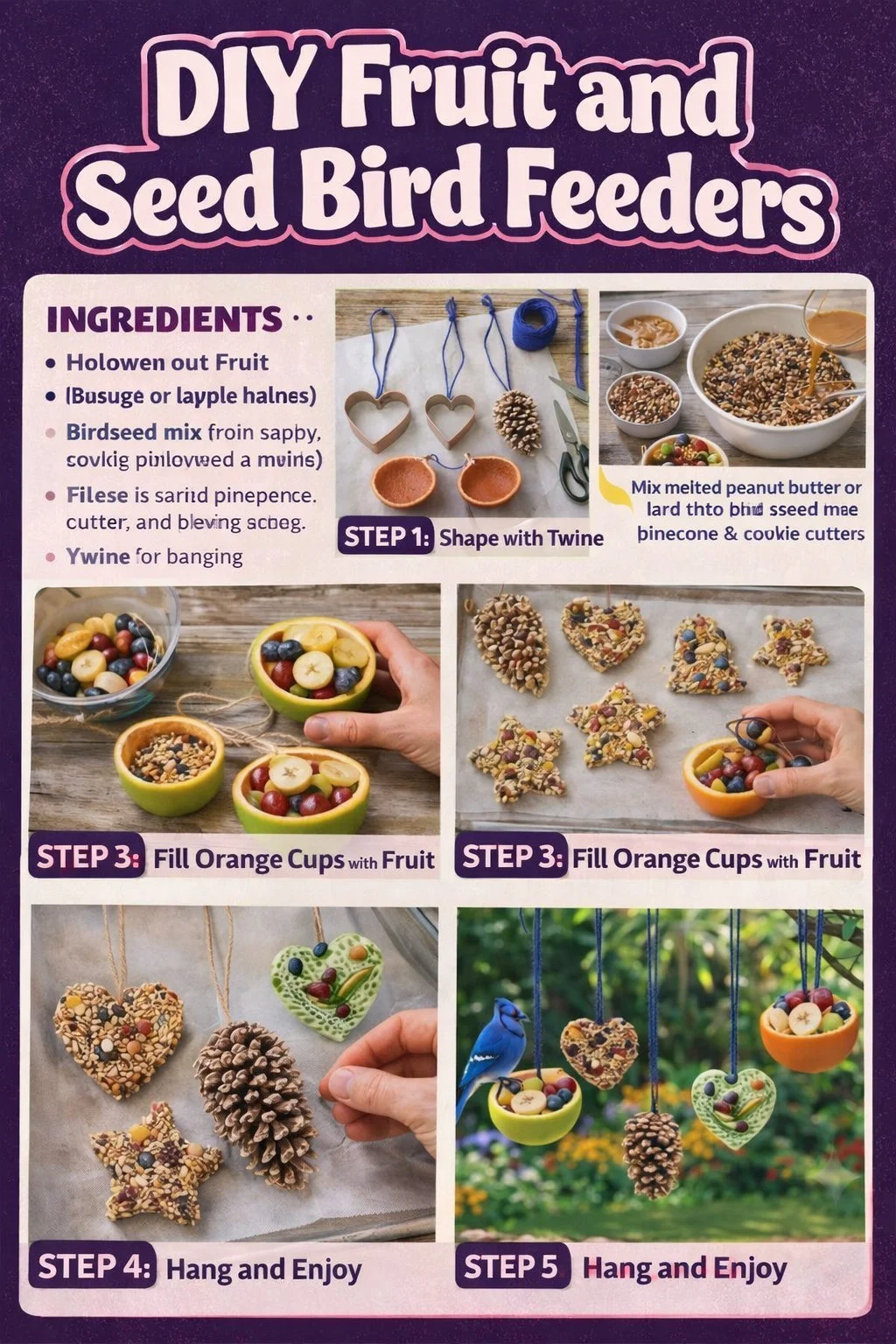
- Wash your hands and the fruit slowly.
Feel the cool skin and inhale the faint scent of citrus or apple.
A clean start keeps the feeders safe for birds. - Prepare a small, tidy workspace.
Lay a cloth or tray to catch drips.
Set the seed bowl and tools within easy reach. - Cut the fruit into the shape you prefer.
Slice oranges into thick rings or halve apples for shallow bowls.
Take your time and enjoy the simple rhythm of cutting. - Remove any large seeds or cores.
Scoop gently with a spoon, leaving space for seeds to nestle.
The bowl or ring should feel slightly hollow and comfortable to hold. - Spoon birdseed into the fruit cavity.
Let seeds pile softly and fill the hollow to a natural edge.
You want loose texture that birds can peck at with ease. - Press the seed in just enough to stick.
Use the back of the spoon or your fingers with light, even pressure.
The seeds should hold but still separate under a bird’s beak. - Thread twine through the fruit or around it.
For rings, loop the twine through the center and tie a secure knot.
For halved fruit, gently tie twine around the middle to create a cradle. - Add a small stick for a perch if you like.
Slide a skewer through the fruit or rest it in the seed bed.
Birds appreciate a tiny place to land and steady themselves. - Place feeders on a plate and chill briefly if the fruit is soft.
A short rest in a cool spot firms the fruit and helps seeds adhere.
This step is especially helpful on warm days. - Hang the feeders in a sheltered spot, out of direct wind.
Choose a place birds will visit and you can watch from a calm distance.
Step back and breathe as the space waits for visitors. - Replace or refresh feeders every few days.
Remove any spoiled pieces and offer fresh options.
This keeps your yard healthy and welcoming. - Observe gently and note what works.
Different birds favor different fruit and seed combinations.
A notebook or soft sketch can be a quiet companion to the project.
Bringing DIY Fruit and Seed Bird Feeders Into Your Space
Set the feeders near a window where you can watch without startling birds.
A small table with a warm mug and a chair becomes a daily pause.
I like to keep a soft blanket nearby and a pen to jot down which birds visit.
You can also hang a cluster of feeders at varying heights.
This creates a layered look that feels like a tiny orchard.
When light falls through orange slices, the space warms in a way that invites slow, steady watching.
Place feeders where you can easily change them.
A hanging hook near a porch or a low tree limb works well.
Keep a small bucket for worn materials so cleanup feels simple and tidy.
If your yard gets busy with many visitors, consider rotating feeders.
Offer fruit in the morning and seed-only in the evening, or alternate locations each day.
This rhythm helps birds discover new treats without overwhelming a single spot.
If you enjoy colorful accents near your feeders, try adding light catching pieces from other crafts. I like using a colorful bioplastic suncatchers recipe on a nearby pane to add gentle color to the scene. They play with light without competing with the birds.
Making This DIY Last
Freshness matters more than elaborate construction.
Replace fruit every two to three days in warm weather and every three to five days in cool weather.
This prevents fermentation and keeps birds healthy.
Store leftover seeds in a cool, dry place.
A sealed jar or bag keeps pests and moisture out.
If you use unsalted fat or suet in cold months, freeze portions to keep them fresh longer.
When removing feeders, compost fruit when possible.
Composting returns those simple materials to the soil and closes the little loop the way nature intended.
Wash tools and lines with warm, soapy water between uses to keep everything clean.
Inspect hanging twine regularly.
Weather wears rope and jute over time, so swap them out if they fray.
A secure hang keeps birds safe and your feeders intact.
If you want to keep impressions of your making, photograph a few moments.
A close shot of pressed seeds and fruit rings can be a quiet reminder of the hands-on time you gave the garden.
What I’ve Learned While Making This
Invite variation as an experiment rather than a worry.
Some birds prefer orange; others love apple. Try small batches to learn local favorites.
Observe over several weeks to notice patterns.
Work with what’s available.
If you only have bananas, use firm ones and press seeds into shallow slices.
When ingredients change with the seasons, let the project adapt too.
Be kind to wildlife and avoid harmful ingredients.
Never use salted or seasoned human food.
Keep chocolate, avocado, and anything spoiled well away from feeders.
Make small adjustments for messy weather.
On wet days, hang feeders under eaves or porch roofs.
If birds come in heavy rain, plan a sheltered spot that still feels open to them.
Treat the craft as a shared ritual.
Invite a friend to press seeds with you, or leave a quiet note about the process for a child.
These small shared moments make the work feel softer and more meaningful.
FAQs About DIY Fruit and Seed Bird Feeders
u003cstrongu003eWhat fruit is safest for birds?u003c/strongu003e
u003cpu003eMost common fruits like apples, pears, and oranges are safe when fresh and unsweetened.u003cbru003eAvoid fruit that looks fermented or moldy, and do not offer fruit with pits that some birds cannot handle.u003c/pu003e
u003cstrongu003eCan I use peanut butter or suet with fruit?u003c/strongu003e
u003cpu003eYou can use natural, unsalted peanut butter in small amounts to help seeds stick.u003cbru003eIf you offer suet, make sure it is bird-safe and not mixed with salted or seasoned bits. Keep suet portions small and replace often.u003c/pu003e
u003cstrongu003eHow do I attract a variety of birds with these feeders?u003c/strongu003e
u003cpu003eOffer a mix of seed types and fruit shapes. Small seeds attract finches and sparrows, while fruit pieces draw thrushes and waxwings. Change heights and locations gently to give different species access.u003c/pu003e
u003cstrongu003eAre there safety concerns I should know?u003c/strongu003e
u003cpu003eYes. Keep feeders clean, change offerings regularly, and avoid using cords or hooks that could tangle birds. Choose natural twine and snip loose ends to reduce entanglement risk.u003c/pu003e
u003cstrongu003eHow can I tell if a feeder has gone bad?u003c/strongu003e
u003cpu003eLook for mold, an off smell, or unusually soft texture. If any sign appears, remove the feeder and compost it. A quick check each day during warm weather will keep birds safe.u003c/pu003e
A Gentle Note Before You Go
This project is not about perfection. It is about the slow pleasure of making, the tiny gift of food, and the shared quiet that follows. When you press seeds into a citrus ring or thread twine through a pear half, you practice small acts of care that ripple out to the birds and back to you. Take your time. Notice the feel of materials, the light through fruit, and the small, bright moments when a bird lands.
Conclusion
If you want more shaped ideas and patterns, the DIY Shaped Birdseed Feeders guide has playful templates that can inspire new shapes and hanging styles in your garden. For a range of simple bird feeder projects and a friendly how-to gallery, the DIY Bird Feeders Always & Whatever page offers clear ideas and tips to expand your making.
Thank you for bringing slow, kind hands to this small craft. May your feeders bring soft visits and steady calm.
PrintDIY Fruit and Seed Bird Feeders
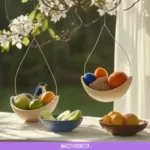
A gentle crafting ritual to create bird feeders using fresh fruit and seeds, inviting a pause into your day while attracting local birds.
- Prep Time: 15 minutes
- Cook Time: 0 minutes
- Total Time: 15 minutes
- Yield: 4-6 feeders
- Category: Craft
- Method: Crafting
- Cuisine: N/A
- Diet: N/A
Ingredients
- Fresh fruit: oranges, apples, pears, bananas (unsprayed if possible)
- Unsalted birdseed mix (small seed blends)
- Natural twine or jute (strong and weather-resistant)
- Wooden skewers or small sticks (optional for perches)
- Small bowl for mixing
- Spoon for scooping (metal or wooden)
- Cookie cutter or small knife (for shaping fruit rings)
- Small tray or plate (to rest finished feeders)
- Refrigerator space or cool spot (to keep fruit fresh)
- Paper towels or a clean cloth (for cleanup)
Instructions
- Wash your hands and the fruit slowly.
- Prepare a small, tidy workspace.
- Cut the fruit into the shape you prefer.
- Remove any large seeds or cores.
- Spoon birdseed into the fruit cavity.
- Press the seed in just enough to stick.
- Thread twine through the fruit or around it.
- Add a small stick for a perch if desired.
- Place feeders on a plate and chill briefly if the fruit is soft.
- Hang the feeders in a sheltered spot.
- Replace or refresh feeders every few days.
- Observe gently and note what works.
Notes
This project helps you connect with nature while providing food for birds. Replace fruit every 2-3 days in warm weather to keep birds healthy.